Captain of his ship

It is his hands I notice first. They are small, the fingers delicately occupied.  In company shirtsleeves, he is sitting in his captain’s chair and he is working the joysticks of this tourist boat.

The chair is deeply upholstered in fawn leather and it holds him firmly and comfortably. Here is a man at home in his world.

I am standing in the doorway of the wheelhouse, curious to see how the boat is run. It is really a small ship – 56 passengers this trip.

The captain, for this is he, carefully maneuvers us past a set of all-too-solid rocks. I want to say ‘then he relaxes’ but I never see him when he isn’t relaxed. A wide oval face beneath a wind-blown shock of silvering hair turns towards me and grins broadly – a wide welcoming smile. “Come in, come in. Come out of the weather.” A heavy New Zealand accent.

He sits before two large screens showing gps and radar positions, plus digital readouts of the minute details of both engines. Irreverently I wonder whether he has digital readouts for every piece of equipment on the ship including the toaster in the galley. Here is a man who can handle the technology, a seaman who has dispensed with a ship’s wheel and runs this large, elegant machine with two joysticks and a mouse. Clever.

Clever, yes, but he needs to be more than clever, he needs to be master of this environment. Technology is not enough. We are in the very south west of the South Island of New Zealand. This stretch of water is where the great explorers of the 18th century – the English, the French, the Dutch, the Portuguese all tried to gain a foothold. And on this particular stretch of coast, nobody did. It is uninhabitable. The rocks, the lack of soil, the way the vegetation grows. Their density and their lack of anchorage to the rock beneath mean trees eventually grow too big to hold on and fall to the waters below taking other trees with them. In this rain-forest environment, the whole fecund process starts all over again – first moss, then smaller plants and so on. This is raw country where the weather and the waters are unpredictable – hidden rocks, variable currents. Up-to-the-minute technology or not, it takes an experienced seaman to navigate here.

We have one, in this shortish, slightly over-weight – (I notice the cake and the coffee brought up from the galley!), genial man. He doesn’t stop talking. Here is someone who really enjoys this place and his work in it and wants everyone else to enjoy it too. He talks of the marine life, the terrain, the history. He talks about this boat and previous boats and adventures that occurred. He talks to his passengers but he also takes time to run through a crew-member’s questions about an upcoming exam. They go through the various readouts on the screens and worry over minute discrepancies. He acknowledges, with slight irony, that now everything is monitored, the minutest changes are noted and worried over whereas before nobody would have noticed unless there was an obvious, major problem.

I am sure he has a wife, a car and a lawn-mower at home and knows other sides of life,  and maybe, just like the rest of us, he isn’t the perfect paragon of virtue, but here he is in charge. He has accepted responsibility for his passengers, his crew and his boat. He steps up to the mark every day. There is art as well as science to his work. He shares his enjoyment. I admire the guy. Good on him.
 

A brief story about a letter

How I wish I hadn’t opened this. I can’t help myself.

‘. . . the deepest sympathy on the loss of your husband . . .’

Now I’m going to have to tell her.

‘. . . death from concussion came instantaneously . . .’

She can see me through the window. She sees my approaching tears. I see the look in her eyes.

‘We miss him very much. He was a good soldier . . .’

She is at the door, one hand over her mouth.

‘War is a hard game and we do not know from one day to another who is next. It is hard for those left at home, but ‘greater love has no man but this that . . .’

Softly, “Mum . . . It’s Dad . . .”


Loss

It is 1966. It was New York. It is humid. Buildings tower above. Traffic shuffles and hoots next to me. My baggage is getting heavier. I am walking slowly. People push past me. I am 18 years old, 3000 miles from home, in an unfamiliar country, knowing no one in this city.

Hot, sticky, tired and not sure where I am, I need to check my directions and recoup. I turn off the busy road, down a street that seems quieter. It is quieter –  a lot, lot quieter, and very run-down compared to where I was two minutes before – rubbish in the gutters, unemptied bins, peeling paint. There are people standing in doorways looking at me. Imagined or real, the mood changes from one of hustle and bustle back there to a quiet menace here, I don’t want to walk any further down this street. I need to quickly check where I am and go.

So I reach in my pocket for my address book – the one with all the the addresses and all the telephone numbers I had prepared for the planned $99/99 day Greyhound exploration of the US – the one I had checked last evening  – the one I had written directions to the bus station in – the one with the map slipped inside the cover.

No address book – not anywhere; not in my pockets, not in the outside pockets of my back-pack not in the outside pockets of my case.

You know the feeling. The mind starts to reel, there’s a tightening in your tummy just beneath your ribs, a virtual door slams, never to be opened again – a feeling that always casts a deep shadow and always seems to be the first time you have felt it. Not true, of course. Loss happens from the very beginning of our lives and part of maturing is to find ways of handling it. When I was young, I was bad at it. Now I am older I am still not good. And the losses now are big ones – family, friends, acquaintances passing on, and familiar landmarks lost to ‘progress’. They come along in a steady, unwelcome procession.

Now I am standing in a street that has danger written all over it and I find myself rummaging in my suitcase in front of the very people I am concerned about. No luck, no address book, people still staring at me.

Time to get it together – think, think, think, and get out of here. So I do.

What do I do? I remember a distant relative in Point Pleasant, New Jersey, go back to the main street, ask a newspaper seller the way to the bus station, find a phone booth with the standard mountain of phone books and eventually find their address. I hadn’t lost my bus ticket so I get on the next bus to New Jersey and out of New York pretty darn quick.

There is a moment when a loss hits you, then there is a short or long period when you come to accept it and work out how to handle it and then there is another period when you live with it.

Whatever else it does,  loss lasts for ever. What you do with it counts.

To be continued . . .


Back to studying

For those who tune into this blog occasionally and are wondering why I am dodging around topics, it’s because I am doing a short course with WordPress – Writing 101. It lasts a little under three weeks and involves participants posting a blog most days. The topics are varied and a little out of my usual line. My intention is to get back to a writing habit that I lost over the past year. Bear with me, something good will come from it.

~~~

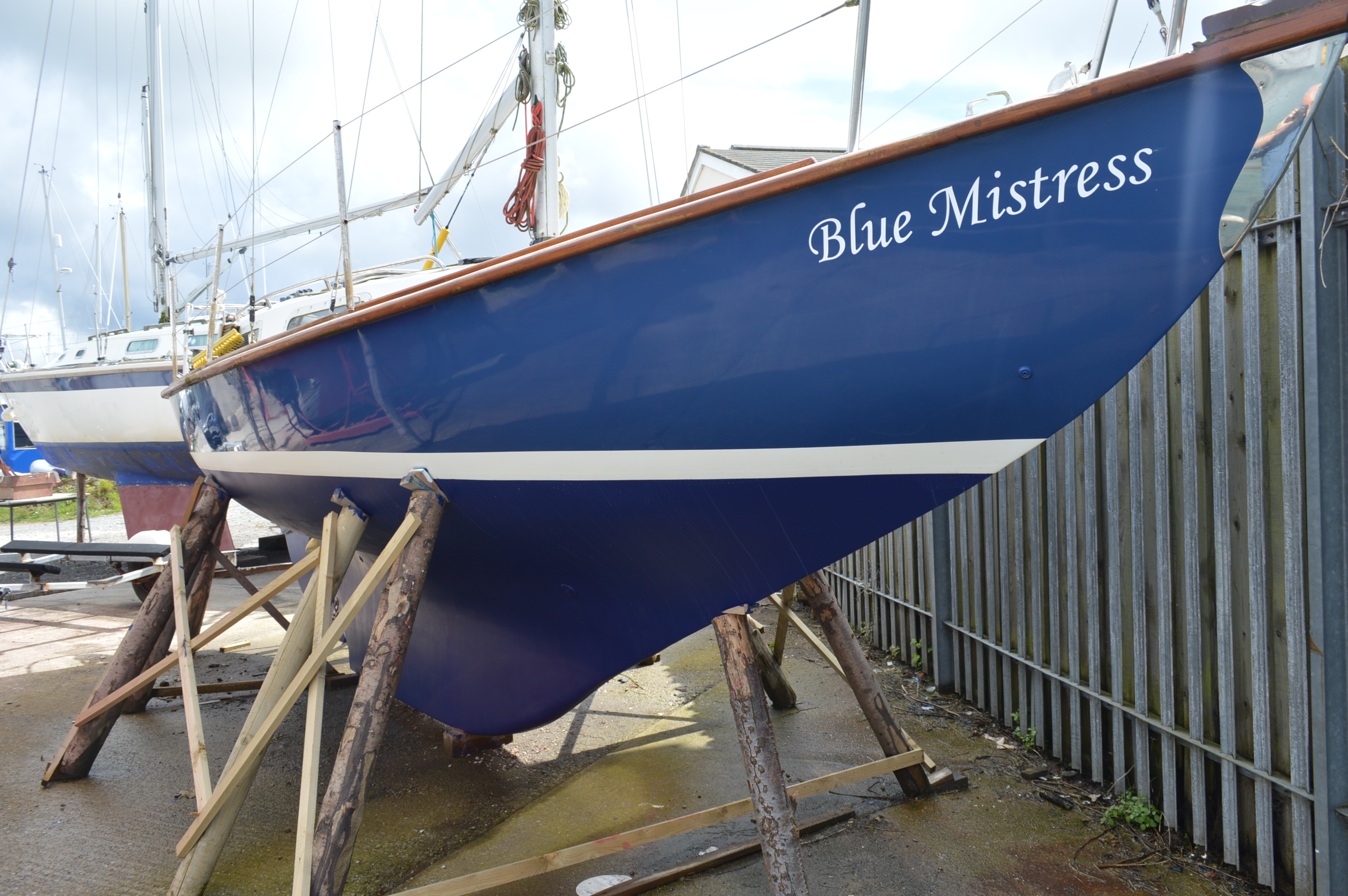
For those who are wondering what has happened to Blue Mistress, the refit is nearly complete. A lot has been done in between longish pauses and I see the chance to get back in the water in the next two weeks. The boat is looking good but needs to be afloat!

DSC_4002

DSC_3994

~~~

And if you are also wondering when I am going to talk about New Zealand, it will come. In the meantime, this is the Bay of Islands where Webb Chiles (see below) is headed.

DSC_3509

~~~

If you are not following Webb Chiles, you should be. Aged 72 and circumnavigating in a boat smaller and lighter than Blue Mistress. It is his sixth time round, I believe. He prefers the solitude of single-handed sailing and was reluctant to fit the Yellowbrick – technology impinging on personal space. In the meantime, we have the privilege of sitting back and admiring. He has been sailing at over five knots for most of the voyage. Fair winds to him.

You can follow him here http://my.yb.tl/gannet

(All images taken by Bill Whateley)


Three songs

It’s no good talking about the three most of this or the three best of that because they change – with age, with health, with mood, with time. But I can think of a number of songs I have liked and still do and I can bring three to the fore right now.

At school, aged 16 or so, I heard down a long bleak corridor, a man with a deepish, sonorous voice singing about a woman called ‘Suzanne’ – singing in a way I had never heard anyone sing before. A fellow pupil who was always ahead of the game when it came to music had bought yet another new LP. With him around, we were always moving on – listening to Elvis and forgetting Cliff Richard, finding the Rolling Stones and knocking the Beatles; Dylan and Baez were in there too. The great debates of school – which group/singer do you like the best? Tenuous friendships could be won or lost with the answer.

Anyway, Leonard Cohen was the man for me then and has remained so for all of fifty years. His lyrics hint at a world out there that I never quite entered – well, perhaps a little, but only a little. He has carried me forward and given thought and pleasure in equal quantities. He is still out there singing.

Coincidentally, his current partner, Anjani, sings another song that is with me right now – hers is one of the current batch of CDs that are in favour in this house. The song is, appropriately, ‘Thanks for the Dance’. Just before we left the South Island of New Zealand in April, we spent an enjoyable night with friends in Richmond. During the evening, a DVD of Anjani singing this song was on the screen. It reminds me of our time in New Zealand, of the friends we made and remade and beyond that it reminds me of Leonard Cohen towards whom I guess the song was aimed.

The third is not a single song but a series of songs that always get to me – the songs of exile. It doesn’t particularly matter where the singer comes from, it’s that yearning for home that grabs me. The Irish have the edge on these – the ‘Mountains of Mourne’ is a particular favourite. From Cornwall, it’s ‘Lamorna’ that makes me pause and remember, but it could equally be ‘Little Lize’ and ‘Camborne Hill’ or even ‘Trelawney’ itself. Paradoxically, the inner sadness that these songs bring tends to revive the spirit – or perhaps renew it. Like tears – the feeling is better afterwards – a catharsis – maybe all music has a large cathartic element.

Mendelssohn wrote that you can’t put music into words, not because it is vague but because it is too precise for words. Maybe we all need the music.


Headland

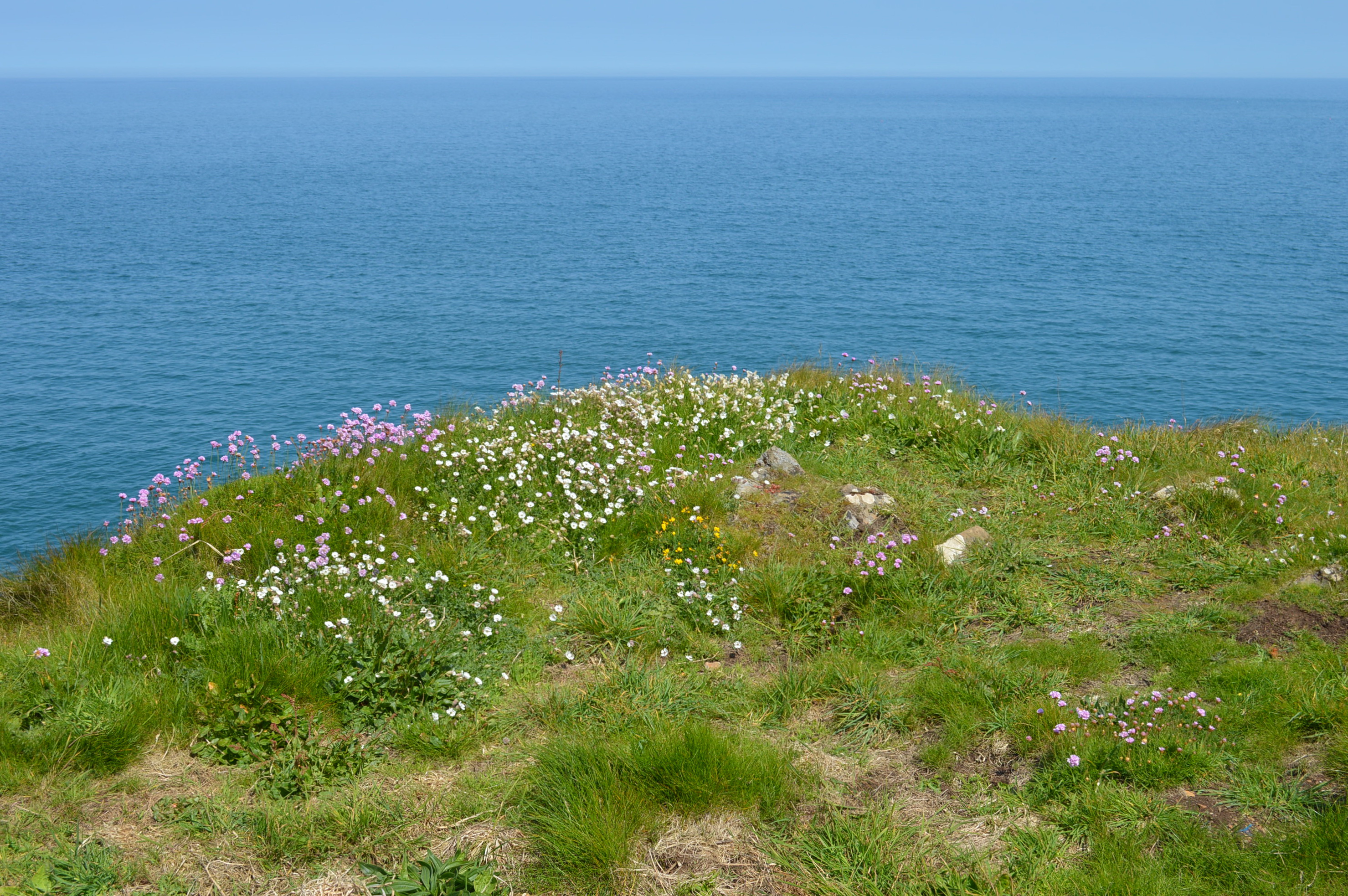
The grass here is sparse. It is not the lush green grass of a farmer’s field nor the tight tidy grass of a football pitch. No, this grass is short and stiff and twisted by the weather, the ground around it full of stones. Despite the odds against it, it grows on this small headland, facing the Atlantic Ocean and the prevailing south westerly gales – gales full of salt air and storm-tossed water. And when the wind stops blowing and the rain stops raining, the sun shines equally fiercely, parching it dry as a bone. Standing here we stand on an apparently unpromising bare patch of ground, but . . .

I came here first as a child on my father’s shoulders. We would climb the narrow path from the valley where we lived, one step at a time, no room for a stumble. On our left side, the higher we rose the steeper the slope, till it fell away altogether to become a vertical cliff dropping to the rocks below. On our right, rocky outcrops allowed little room to lean inwards.

We would reach the headland, him slightly out of breath, me exhilarated by the ride. The view was what we had come to see. Behind us, we could look down to our home in the valley and follow the lane inland until it was lost in deep woods – woods that led our eyes up to the solid church tower marking a village several miles away.

South to our left, we admired a coastline with row upon row of sea-hewn rocks stretching out into the surf. Depending on the weather and the tide, they could be lines of sharp, bare, reptiles teeth, or, in a storm, ragged fangs beneath a constant whirl of spume, broken water flying in the wind.

Straight ahead to the west beyond the horizon was Newfoundland – or so my Dad said. What I saw was sea and the horizon and the sky and “see the ship, Bill?” – occasionally the whole ship on that distant line, more often the smudge of a funnel. This was not a place where ships came close to the shore. It was a wreckers’ coast, where, in the nineteenth century, many sailing ships came to grief. There is a wreck immediately below this headland. I have never been sure of its name but there is an official record of a wreck that may fit: on 29th March 1878, St George, a schooner out of Looe carrying copper ore to Swansea “was lost in a NE force 9 gale accompanied by heavy snow, the crew saving themselves in their own boat after the vessel drove ashore on the rocks near Morwenstowe at 4 am.” The official record continues sparingly: “This schooner was wrecked during a snow storm at Morwenstowe, happily all on board were saved.” – surely an understatement.

If I seem to be talking about the past, I am also talking about the present. This is as much about now as then. The headland, the valley, the cliffs and the rocks are still there. That horizon also remains but now heralds a wider world beyond. My memories of my father and everyone else I have climbed the path with are still there. And those intense moments shared by the crew on that snow-laden night in 1878 still hang in the air. They survived. But there are many others who didn’t and whose spirits still inhabit this coast. They have never left.

And there’s more – another level to this place, a level not grounded in the past but very much delving into the future. Glancing north, we look down into a grey pebbly bay, the very bay where the St George came ashore. Our headland forms the southern end of this bay, the cliffs that back it rising high over where we are standing. If we lift our eyes, we can just see, peering over the cliff edge to our right, the white lips of two giant dishes, two of the many aerials of a large and reputedly vital communications tracking station. Wide and deep are the search capabilities therein. Its satellites span vast tracks of the planet. We are not allowed to know what goes on there. But whether or not we do ever discover what does go on, the fact of its presence and the products of its endeavours will surely affect us and our children and their children. Technology, including the technology I am using here, inevitably governs our future. It has been a long time since I could tell myself this point of land was unspoiled by man.

This place I am writing about, where past and future meet, is Steeple Point.

This is my source. This is Cornwall. This is where I was born.

Fresh start

Finishing the day-job brings with it a wider freedom – a freedom that I have missed over the past forty years.

Some of the responsibilities are still there of course – caring and sharing with family, managing routine domestic issues, generally keeping the show on the road, but now there is more, much more.

I realised a long time ago that I wasn’t saying things – I wasn’t speaking out in ways that I could have because I was contained by the discipline of a career. In the beginning, forty years ago, this discipline was ok. Fresh and inexperienced, I needed it to gain necessary knowledge, attitudes and skills. But as the years went by that learning process never stopped. As soon as I reached one level of expertise, there was another level to reach – an opportunity I admit that I mostly grabbed with both hands. And once I reached that level another one appeared so that my whole career was spent on a never-ending spiral of hope and anticipation. The feeling became that however good I was, it wasn’t yet good enough. This is the product of my generation: the quest for personal and professional improvement – a quest that has developed into a habit. I don’t wish to diminish it but I do want to recognise it.

Well before the end of my career, I began to look outwards. Master of my own small world, I could see a wider one that I wanted to explore – not as a professional shaped by a career but as a person in my own right. Now the container has been opened and I am free to take that step. Of course the need-to-improve habit is still there – (I am doing this course!). However, what has gone is the particular line I was being directed along. Now I am in a position to start again. Now we will see if there is anything in there worth bringing out.

DSC_3993


14/14 What next?

Calm - Loutro 2006

So the tack is complete, we are heading in a new direction, the wind steadier, the sea friendlier. If the change was rough – a few moments of intenser activity, then so be it. What comes next is now the interest. The poet put it this way:

“And past the poppies bluish neutral distance

Ends the land suddenly beyond a beach

Of shapes and shingles. Here is unfenced existence:

Facing the sun, untalkative, out of reach.”

from Here by Philip Larkin in Whitsun Weddings

Maybe, maybe not. We’ll see. In the meantime, in the greater quest for understanding, I wish you fair winds and following seas. ~~~ Although it can be read as a single post, the above is part of a series that illustrates one of the author’s current interests, taken from a locker full of interests, at a major waypoint in his life. The series sets out as a comment on retirement before focusing around language. He wonders whether he himself has the language to cope as he steps out into the wider world popularly known as ‘retirement’ – an irreversible step into a world that he has previously only glimpsed out of the corner of his eye, a world in which he thinks the word ‘retirement’ to be a misnomer. He has used the medium of the blog to paint the picture. The irony is that, whereas writing about it does allow him to reflect, sitting alone at a computer actually distances him from the face-to-face interaction he is describing. Wave 11

13/14 Our choice

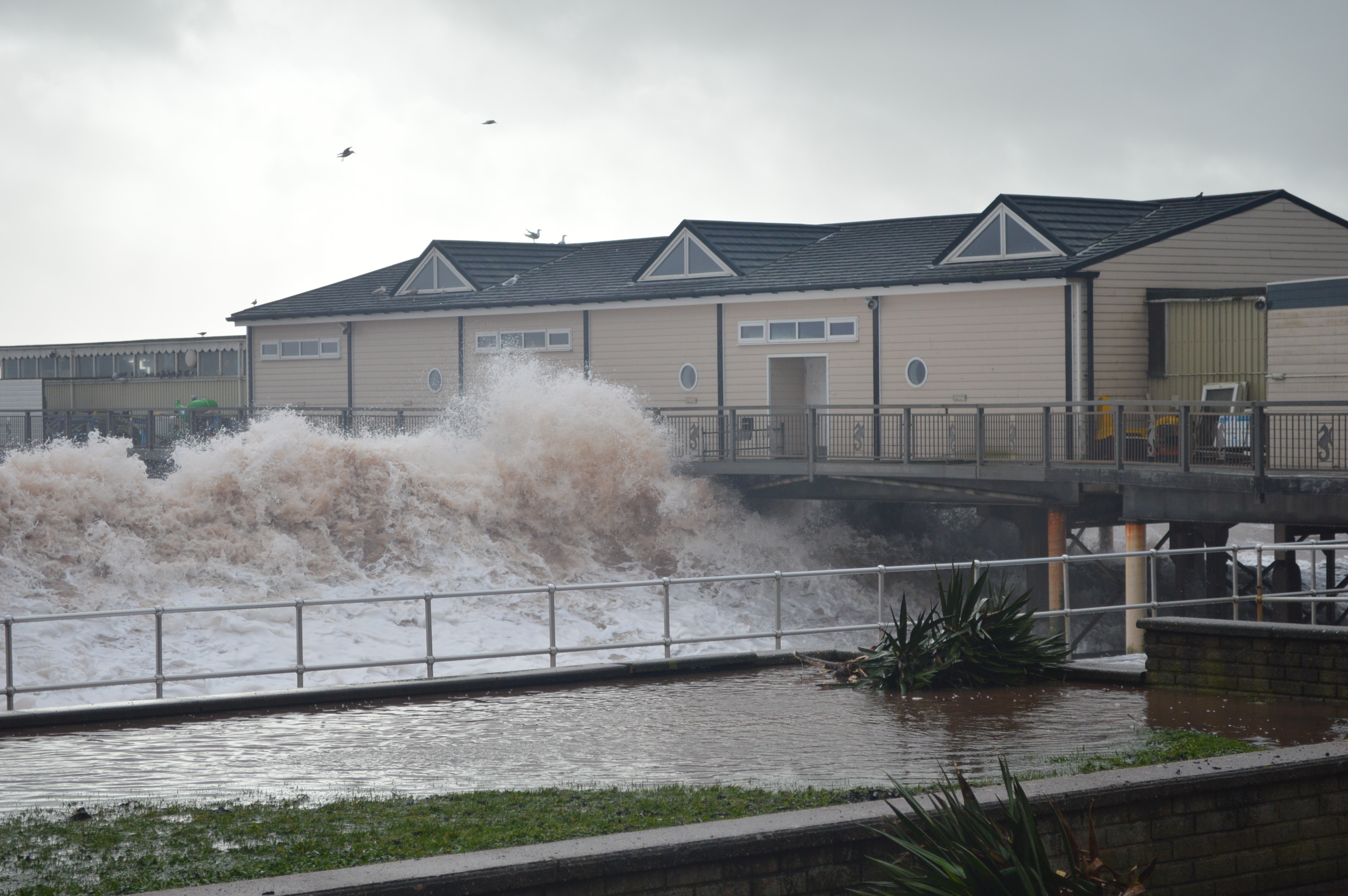
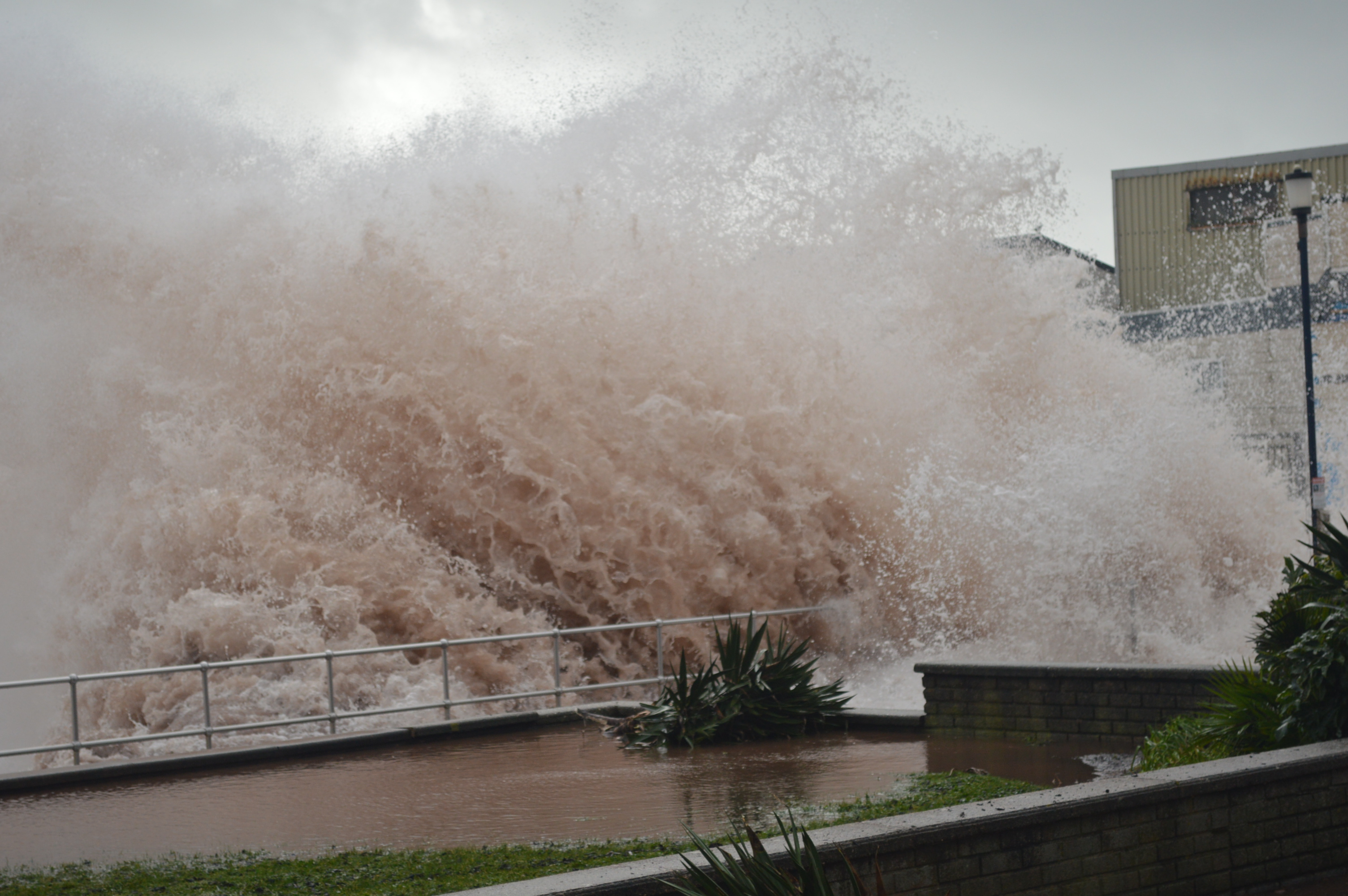
I took the following images in Teignmouth earlier this month during one of three exceptional storms to hit the UK.

DSC_0446

DSC_0467

DSC_0463

When the waves swamp the very ground that we love – ground that has seemingly been there for ever, ground we have always taken for granted, should we shrug our shoulders and walk away?

Or should we look at it afresh and see it for what it is, the erosion of a fragile and valuable asset that makes a harsher world bearable?

Should we keep repairing it or should we let it go?

The tide of languages is flowing and unstoppable. In many ways it is exciting. It is evolutionary. But it is eroding the core beneath it – the relationship-base that lies at the heart of humanity.

Should we keep repairing it or should we let it go?

Whatever language we speak, it’s our choice and we have to decide . . . now.

~~~

Although it can be read as a single post, the above is part of a series that illustrates one of the author’s current interests, taken from a locker full of interests, at a major waypoint in his life. The series sets out as a comment on retirement before focusing around language. He wonders whether he himself has the language to cope as he steps out into the wider world popularly known as ‘retirement’ – an irreversible step into a world that he has previously only glimpsed out of the corner of his eye, a world in which he thinks the word ‘retirement’ to be a misnomer. He has used the medium of the blog to paint the picture. The irony is that, whereas writing about it does allow him to reflect, sitting alone at a computer actually distances him from the face-to-face interaction he is describing.

12/14 A child learns

Waves 2

I first read Dorothy Nolte’s poem in the 1970s. I can’t say it better than this.

(For those who speak the language of gender, please note that she later changed the wording to make it gender neutral – ‘child’ to ‘children’. I have kept to the original because that’s how I first learnt it but I acknowledge the difference).

Children (male and female) Learn What They Live

If a child lives with criticism,

he learns to condemn.

If a child lives with hostility,

he learns to fight.

If a child lives with fear,

he learns to be apprehensive.

If a child lives with pity,

he learns to feel sorry for himself.

If a child lives with ridicule,

he learns to be shy.

If a child lives with shame,

he learns to feel guilty.

If a child lives with encouragement,

he learns to be confident.

If a child lives with tolerance,

he learns to be patient.

If a child lives with praise,

he learns to be appreciated.

If a child lives with acceptance,

he learns to love.

If a child lives with approval,

he learns to like himself.

If a child lives with recognition,

he learns that it is good to have a goal.

If a child lives with sharing,

he learns about generosity.

If a child lives with honesty and fairness,

he learns what truth and justice are.

If a child lives with security,

he learns that the world is a nice place in which to live.

If you live with serenity,

your child will live with peace of mind.

With what is your child living?

Dorothy Law Nolte

~~~

Do I have to spell it out?

If children live with suspicion, fear, grief, mean-spiritedness and vindictiveness, what are they learning?

If children live with understanding, respect and trust, what are they learning?

The world is full of the former. They get all the headlines.

The world is also full of the latter. But you have to work harder to see it.

~~~

Although it can be read as a single post, the above is part of a series that illustrates one of the author’s current interests, taken from a locker full of interests, at a major waypoint in his life. The series sets out as a comment on retirement before focusing around language. He wonders whether he himself has the language to cope as he steps out into the wider world popularly known as ‘retirement’ – an irreversible step into a world that he has previously only glimpsed out of the corner of his eye, a world in which he thinks the word ‘retirement’ to be a misnomer. He has used the medium of the blog to paint the picture. The irony is that, whereas writing about it does allow him to reflect, sitting alone at a computer actually distances him from the face-to-face interaction he is describing.

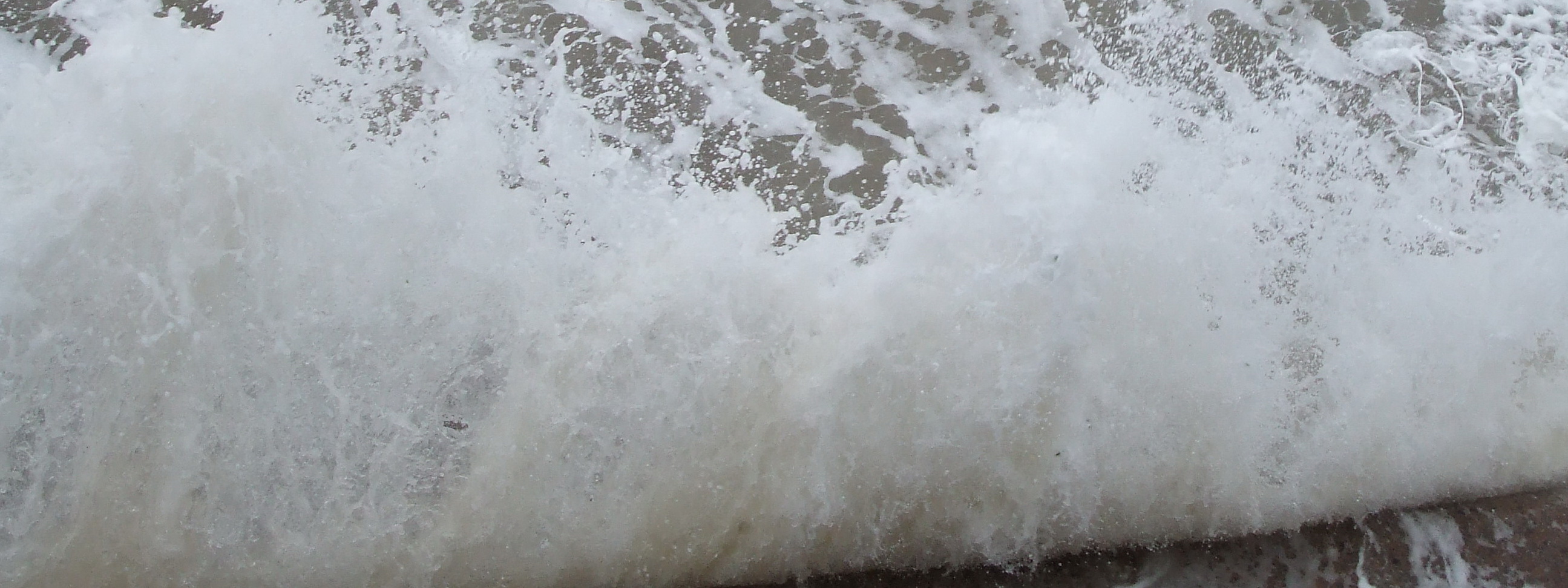
Wave on shore -Teignmouth 2006