No wind yesterday . . .

No wind yesterday but a fine day to run the engine.

I removed the sail cover and attached the halyard but left the lazy jacks in place as I didn’t expect to set the sail. As the Sound opened up it, it was almost empty – two vessels in sight, one trying to set a sail. A little later he had given up.

Image

It was also a perfect day to anchor and run out the rode. I dropped anchor around 1300 close to Jennycliff near the Withyhedge beacon.

Image

Then time for lunch, and, as I had bought the dinghy with me, time for some photography.

Image

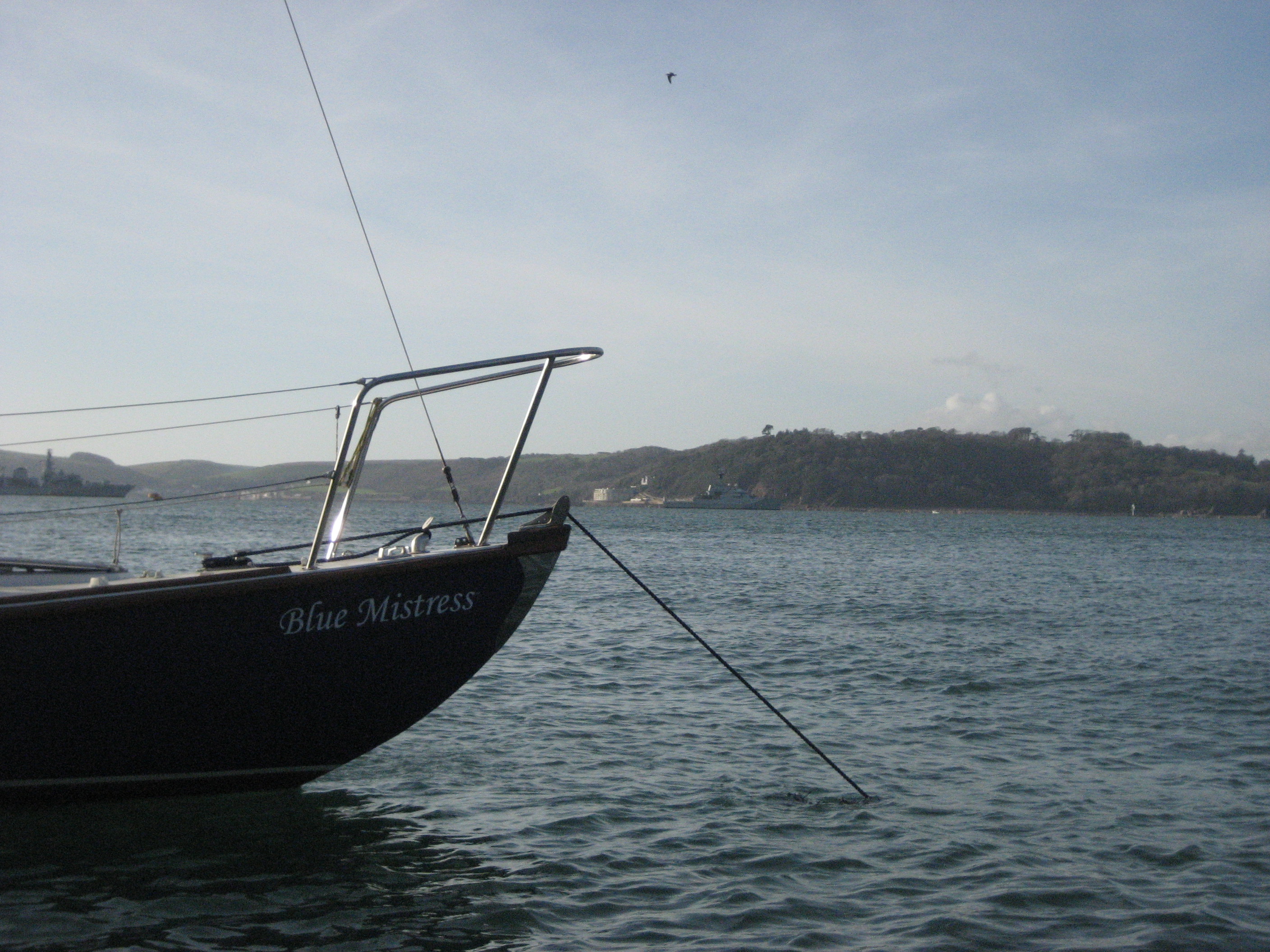
There were three naval vessels at anchor. The village of Cawsand can be seen in the sunshine on the far side of Plymouth Sound – (just aft of the pulpit).

Image

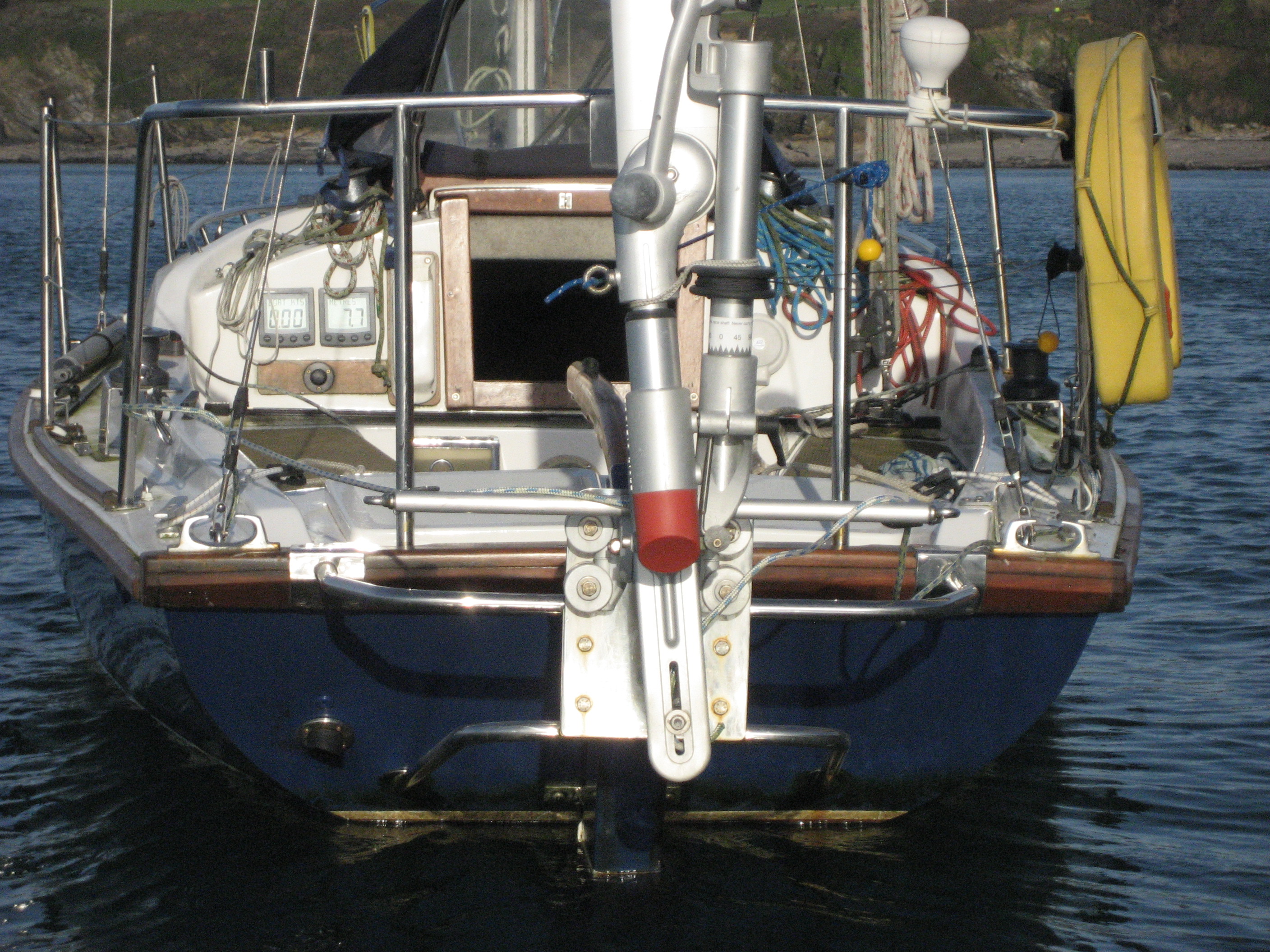
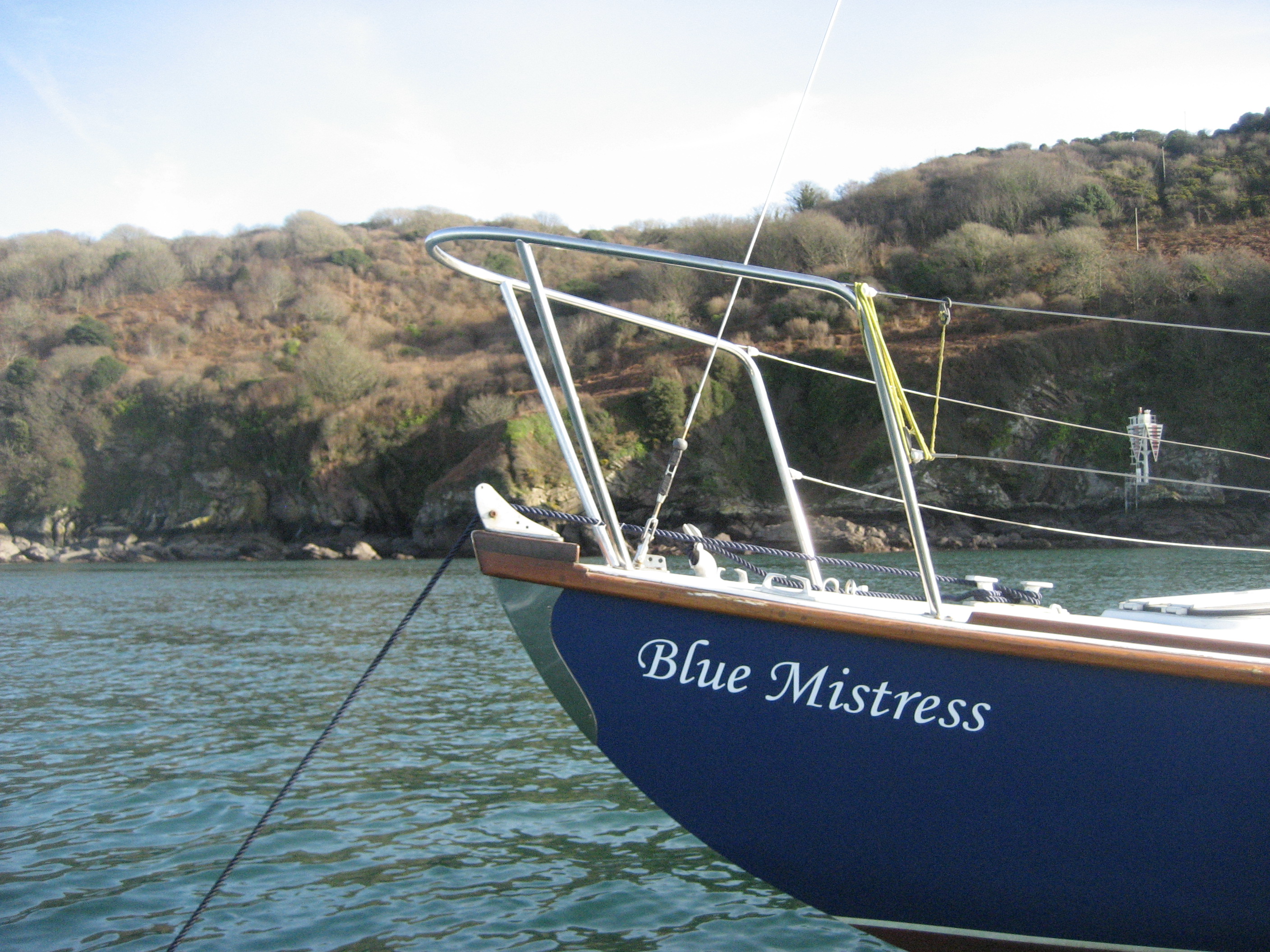
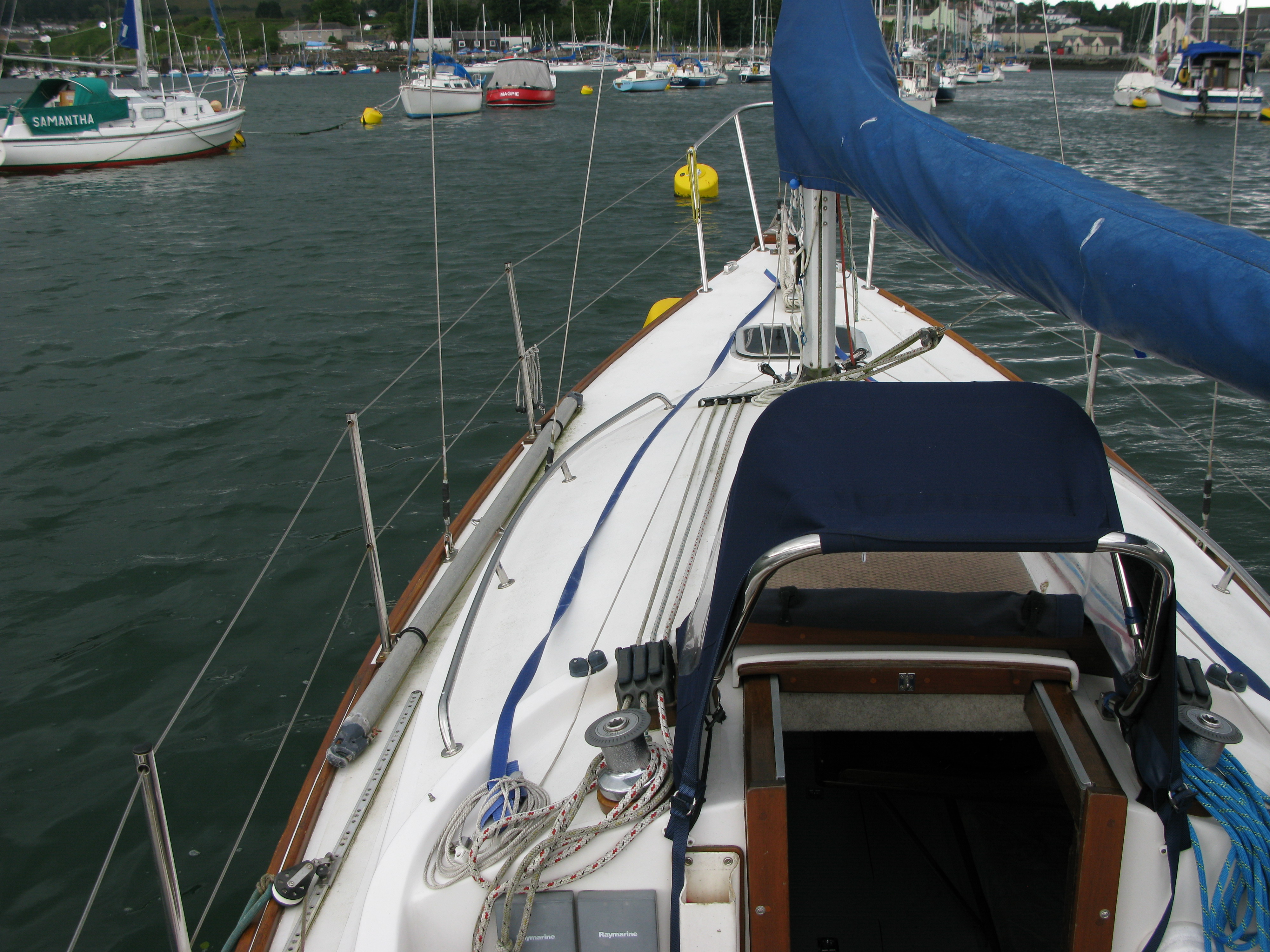
All the metal work makes Blue Mistress look positively industrial. The depth is 7.7 metres – it had dropped from 8.4 metres in the 3/4 hour I had been at anchor.

Image

The washed-out colours of January.

Image

This simple rig holds the course giving plenty of time to go fetch something from below. It works just as well under sail..

Image

The tide was low and the water slack as I passed the Cattewater Wharves.

Image

Flinterlinge, registered out of Groningen, was busy unloading.

Image

Dear George: lazy jacks 3

More on lazy jacks – here and here.

Dear George

I know you are looking forward to getting your new boat – and that amazing experience when you finally hoist the mainsail on your own boat. I had that moment on Blue Mistress in the summer of 2006

Full of excitement and anticipation, we left the mooring on the Tamar and motored a short way downstream to be free of the boats around us. We turned into the wind and I hauled on the halyard and up went the sail . . . and promptly jammed about half way up. Yes – you guessed it, lazy jacks again. The upper sail batten had caught beneath the upper block. So I let the sail down a little, and tried again. It got caught again. Tried again, this time more cunningly – watch . . . wait for the moment . . . up she goes!

What happened next? The engine was killed, the bow fell away, the sail caught the wind and we discovered that blissful, heart-lifting moment when wind and water and boat blend together. Did we think about lazy jacks then. Of course not. As a result, over the next few months, we went through the same circus every time we raised the mainsail – watch . . . wait for the moment . . . up she goes. Until I began to think about how unhandy it was, particularly if I was sailing solo.

When alone, I would release the halyard clutch, bring the boat into the wind, ease off the throttle, go to the fore end of the cockpit and hurriedly haul on the halyard to get the sail aloft before the bow fell away on the wind – inevitably the top batten got caught and, as the bow fell away, we would start to sail with the mainsail half set. Then it was back and forward, juggling between using the engine to bring the boat back into the wind and going forward to lower the sail, release the batten, and raise it before the batten danced yet again behind the lazy jack and we had to start the whole process all over again.

I thought of several possible ways round it:

  • A sail without battens would be fine – but that would mean altering the shape of the sail;
  • An autopilot to keep the boat motoring gently head to wind would work well – but that had to be rigged specially as I didn’t generally use it otherwise – a clunky solution;
  • On one occasion I loosened the lines to see whether the batten would shake itself free – no;
  • But loosening the lines did allow the sail to regain its shape when set;
  • The problem with this was that the lines were made fast to cleats either side of the mast, so, if I wanted to tighten them before lowering the sail, I had to spend time at the mast uncleating and recleating them;
  • So then I decided to lead them back to a pair of spare jamming cleats next to the halyard clutches;
  • Then I discovered that the thin line along the deck rolled under my feet – something that never happened with the thicker halyards. I learnt very quickly to avoid standing on it. It was another hazard, but worth it for the extra control from the cockpit, (see the previous post on lazy jacks);
  • I experimented with shortening the forward of the three lines on the boom. This pulled the cradle of lines downwards and forwards. It lessened (but not completely abolished) the snagging of the batten, but now the lower battens tended to spill out before the sail was down on the boom;

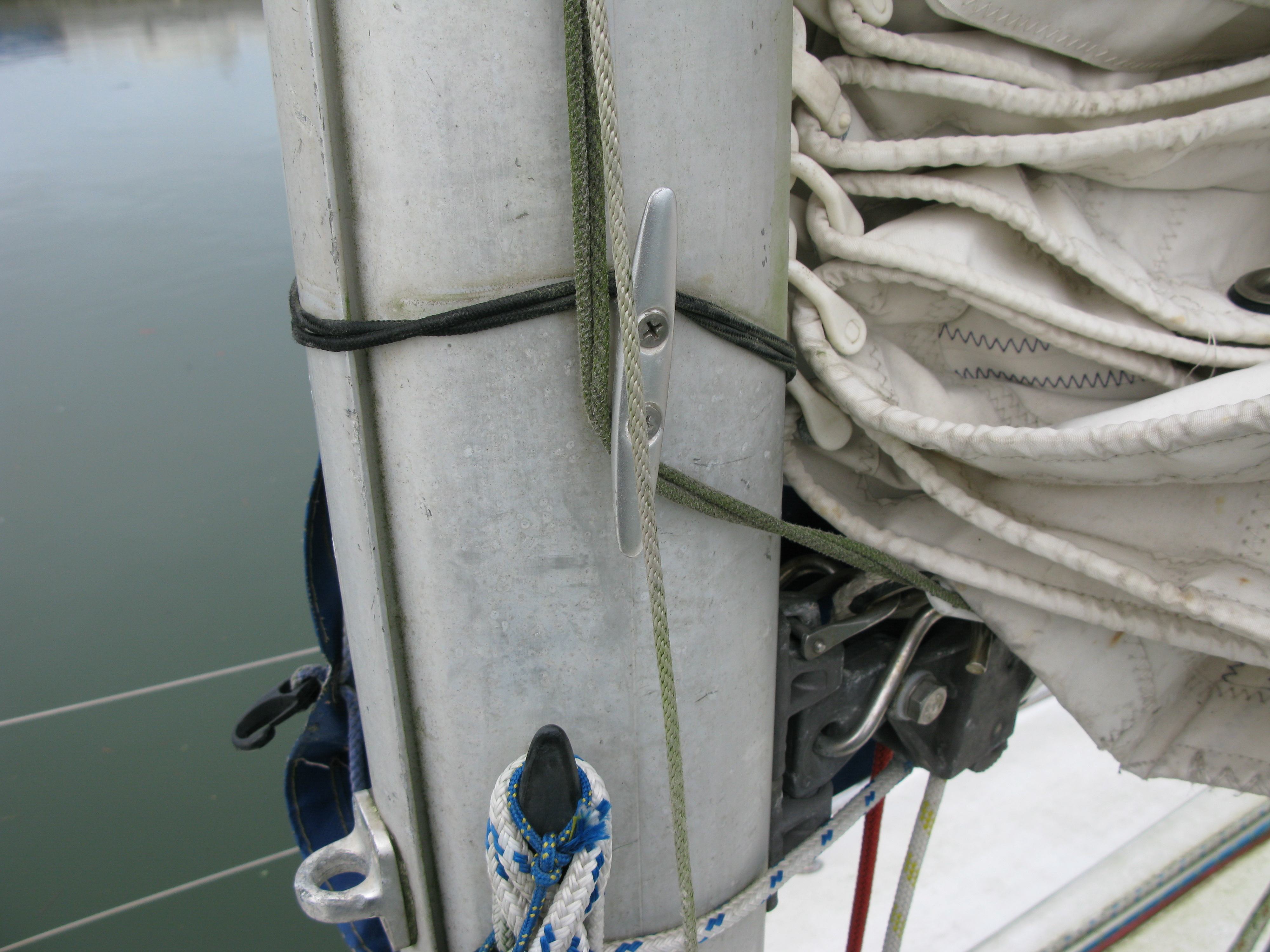
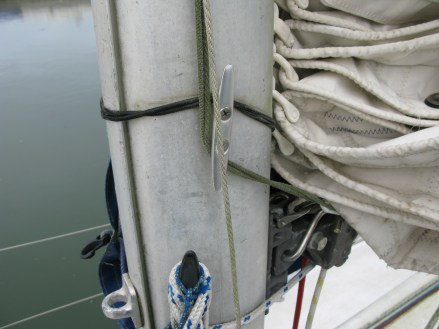
And then, no less than three years after I bought the boat, it suddenly occurred to me that all I had to do was to stow the lines against the mast when I removed the sail cover and I would never have to worry about raising the sail again, and that’s how it has remained – (and only the once did I forget to re-rig them before lowering the sail!)
Image

I have just read in the February 2012 issue of Sailing Today a letter from a reader, Tony Waldeck, advocating lazy jacks as a good way of containing the bunt of a reefed mainsail. Yes, that’s a good idea, although I have yet to use it. He states. “Lazy jacks are the answer – but not the off-the-shelf kits that incorporate blocks. All-string arrangements will not chafe the mainsail.” (An off-the-shelf kit is rigged on Blue Mistress. You can see the blocks on the sail below).

Image

There, George, you have it – almost everything I know about lazy jacks.

Judging by the amount of time and energy they have cost me, ‘lazy’ is a pretty poor description.

Good luck with your new boat.

Bill

~~~

p.s. This is where I look back and wonder why it took so long to reach such a simple solution. Maybe this is the most useful lesson.

The world’s full of experts and no doubt every one of them could have told me the answer. Solutions are simple, especially in the evening around the bar – it’s getting to them that’s the problem. It has to be the experience of solving problems that makes all solutions worth pursuing.

Over the years, I have read many, many ‘boat books’ and I use a lot of what I have found in them, but the most enjoyable aspects of sailing, and certainly the parts I’m best at, are those I have had to work out for myself.

The first sentence in A C Stock’s introduction to his book ‘Sailing Just For Fun’ reads: “This book is for the man who has read all the ‘How-to’ books and still finds that he cannot.” Well, the more I know, the more I find I cannot. I used to worry about this, but no longer – I’m having too good a time finding out.

. . . End

Dear George: lazy jacks 2

Dear George

Back to lazy jacks. You say you want lots of detail, so this is what I do on Blue Mistress to lower and stow the sails before returning to the mooring where I would restow everything that needed restowing.

On the radio the other day, I heard Colin Dexter, who wrote the Inspector Morse series for television, say that, when writing a book, he definitely knew the beginning and the end of the story but the middle was always a muddle. Manoeuvres on the boat are the same – they have a beginning, a muddle and an end. It’s your job to manage the muddle – and to do that, you need to think your moves through first:

    • Put on your life-jacket and/or tether if you aren’t wearing one or the other already. The rule is: if the situation is such that you are beginning to wonder whether you should wear them – put them on. Many people wear them all the time.
    • Make sure you are out of the main fairway, and any traffic. Avoid the racing fleets. They appear en masse from nowhere. You need enough sea-room to drift downwind. It takes longer by yourself – (not always true, ed.). Keep an eye out for where the boat is and other boats are nearby.
    • Set the self-steering – by the time we get to downing sails, the self-steering gear on Blue Mistress has been stowed. I have a short line with heavy bungee loops at either end. The loops slip easily over the quarter cleats and and three or four coils of the line on the tiller will hold her on course for as long as it takes to go forward and return to the cockpit. The long keel helps.
    • Check that the way forward is clear – particularly the step onto the coach roof. One of the reasons for the upright ‘come-in’ on Blue Mistress rather than a wider sprayhood is that it makes it easy to step from the cockpit to the coachroof. Being older and less athletic, I need all the help I can get.
    • Image
    • If the lazy jacks have been stowed against the mast as in the image below, you will have to free them from around the mast cleat and reset them. So, first, you have to free the lazy jack lines from the jamming cleat next to the cockpit clutches.
    • Now let go the fore-sheet and free the foresail halyard.
    • Attach the tether to the jack-line (if appropriate), and go forward to catch the foresail, securing it against the safety lines. You will already have three lengths of shot-chord attached to the safety line. It takes a moment to secure the sail. (I use the port safety lines – perhaps because I am left-handed). By the way, if I’d known I was going to use this image for a demo, I’d have secured the genoa neatly. Here we have just left the mooring and the lazy jacks are stowed against the mast (see part three)
    • Image
    • Back to the cockpit. As you do so, check the lazy jacks are not caught up on the sail or boom.
    • Tighten the port fore-sheet to secure the clew of the foresail.
    • Then tighten the topping lift, lifting the boom so that it will clear the sprayhood. This may mean releasing the vang and the mainsheet if close-hauled.
    • Tighten the lazy jack lines as far as they will go, slipping them into the appropriate jamming cleats. The lines on the lee side of the sail will tend to flatten it. You may not be able to tighten these perfectly – meaning they will be loose when you drop the sail. This shouldn’t be a problem. They will hold the sail anyway.
    • Image
    • Collect the sail ties from the locker and disentangle them. If you stuff them in your pocket, pulling one out is likely to pull the whole lot out leading to a mad scrabble on the deck to stop them going over the side. And threading them through your belt can result in two or three coming out at once. Work out how you’re going to use them.
    • To drop the mainsail on Blue Mistress, the boat has to be headed into the wind. At anything over five degrees or so off the wind the sail slides will jam against the mast and the sail will be caught partly down. As the bow falls further off the wind, so the sail will start to drive the boat forward, jamming the slides even more. There is no choice but to return to the helm to bring it back into the wind.
    • At this stage, I let the traveller out as far as it will go. This allows more space on the coachroof to furl the sail. (I hadn’t thought about until now, but I tend to come up into the wind on a port tack, which leaves the boom out to starboard. I find it easier to stow the sail from this side of the boom – perhaps because I’m left-handed. I don’t know what other people do.)
    • When the boat has been turned into the wind, leave the helm and tighten the mainsheet to prevent the boom swinging uncontrollably while on the coach-roof. The boat will come up into the wind and the sail will start to flap. (If you assume that you will be on the windward side of the boom and that it will not try to sweep you overboard, then eight times out of ten you will be right . . .)
    • Move to the forward end of the cockpit, release the clutch holding the main halyard and let the sail start to drop.
    • Attach the tether to the jack line, step onto the coach roof and go forward to the mast. This reduces the chance of the boom knocking you over but also, as mentioned above, the sail needs to be pulled down the mast in a hurry before the slides jam. You will feel the bow begin to fall away as the boat slows to a stop and the wind catches it. The trick is to get the sail down and under control before the bow starts to fall away.
    • The lazy jacks are there to hold the bulk of the sail close to the boom. Without them the folds of sail will tend to blow over the side and, in a blow, it can be difficult for one person to bring it back under control. It’s not impossible, it’s just easier and safer with the lazy jacks when single-handed. (By the way, the sail battens will not necessarily fall evenly and they will need to be aligned with the boom fairly swiftly).

At this stage, the boat should be lying quietly and the sail can be carefully furled. Make sure the sail folds of the sail formed by the slides are all on the same side, then, working from the mast along the length of the boom, take a two foot wide section of the foot of the sail – (hammock-like), and fold it over the bulk of the sail, aligning the battens and tucking the reefing lines into the folds as you go. The sail ties are turned round the bundle with the loose-end tucked under the turn so that they can be easily released if the engine fails and you need to sail again before you get to the mooring. It also leaves them ready for the next time you sail.

And all the above assumes that you know the engine is going to start so that you can motor back to the mooring. The one time I didn’t check before stowing the sails, the engine refused to start . . . that’s another story.

That’s all there is to it, George. If your eyes have glazed over, I’m sorry, but you did ask for detail. Have I got images of each stage? You’ve got to be joking!

I’ll tell you the few problems I have had next time.

To be continued . . .

After the race

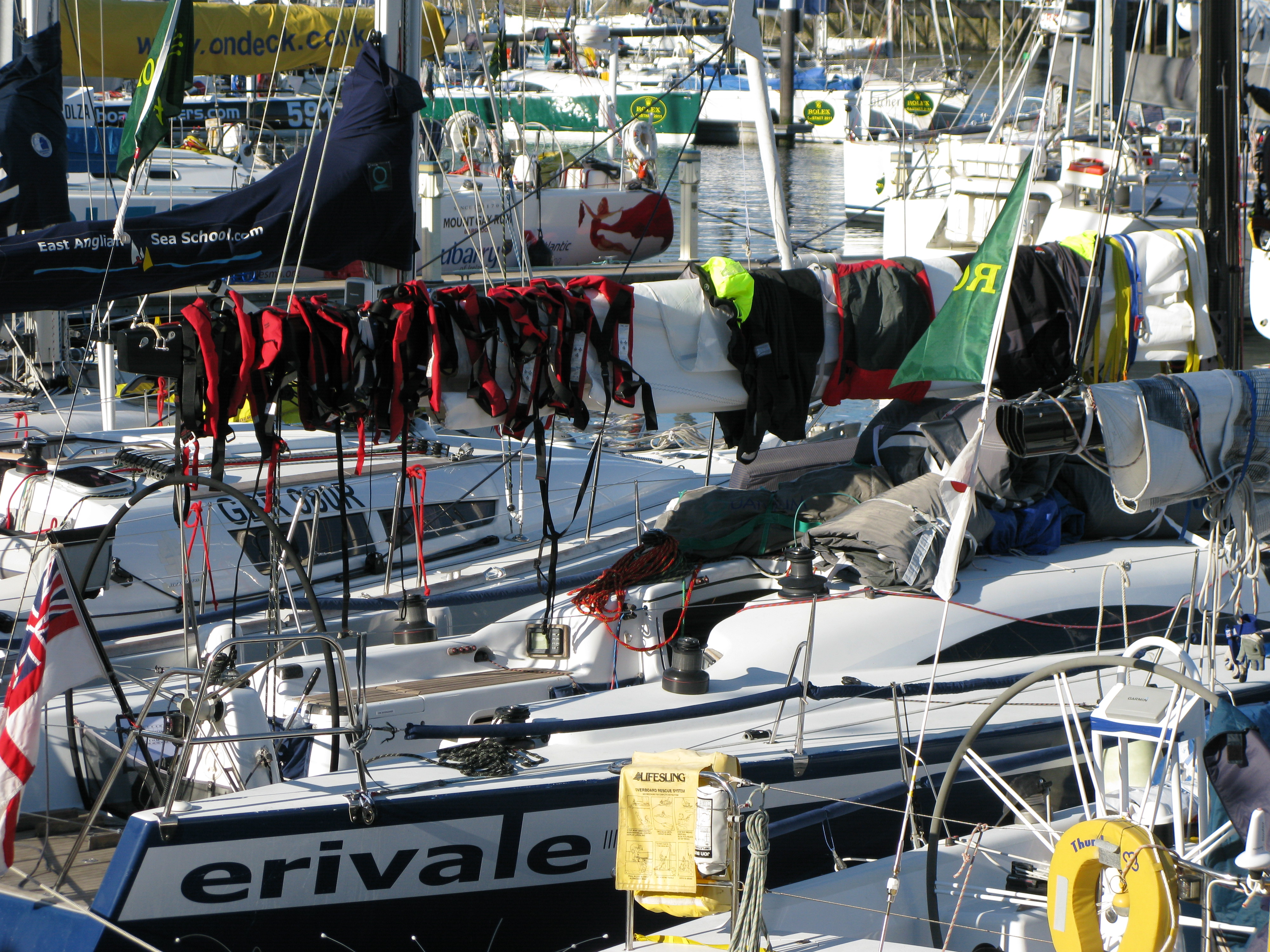
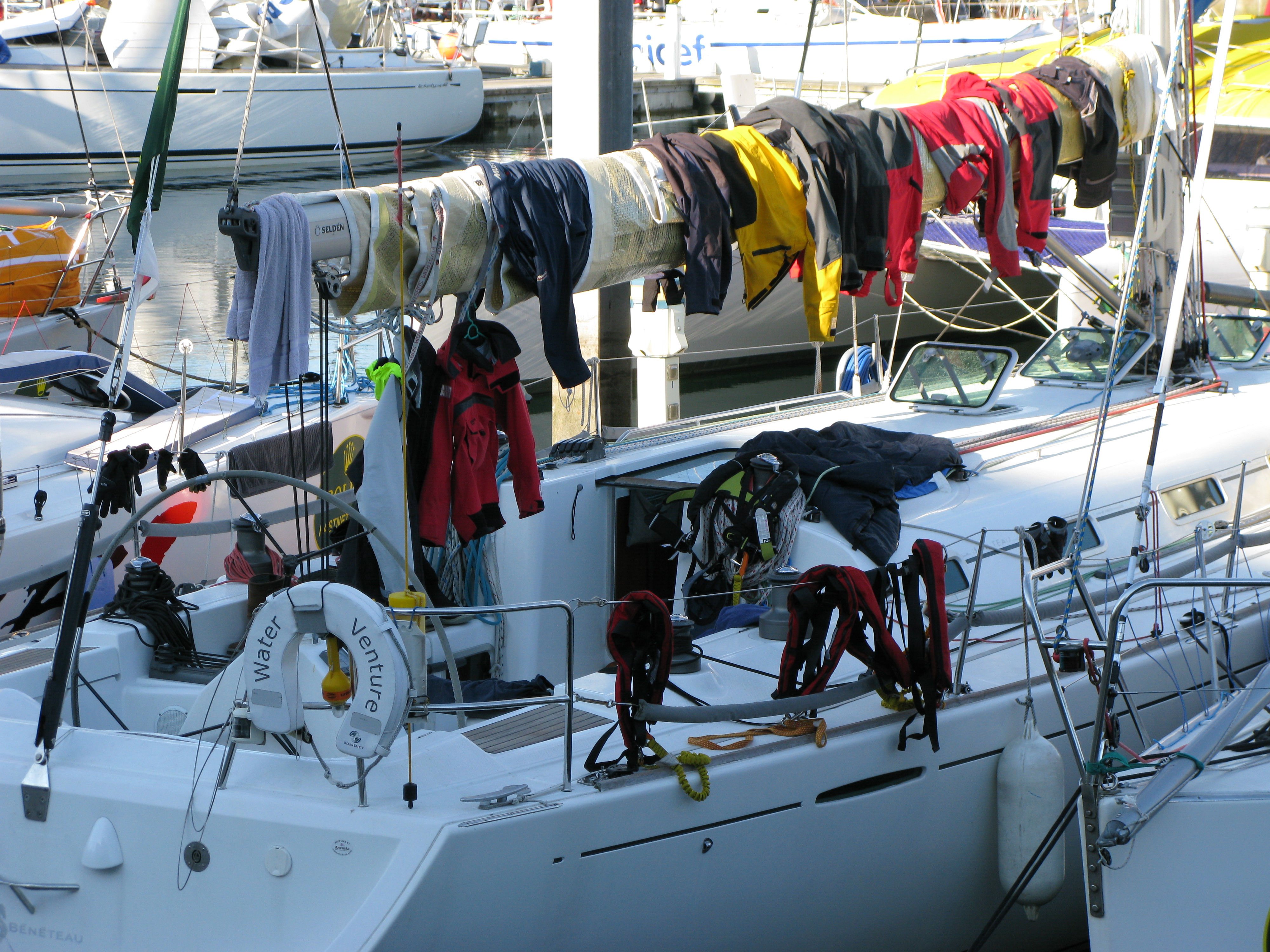
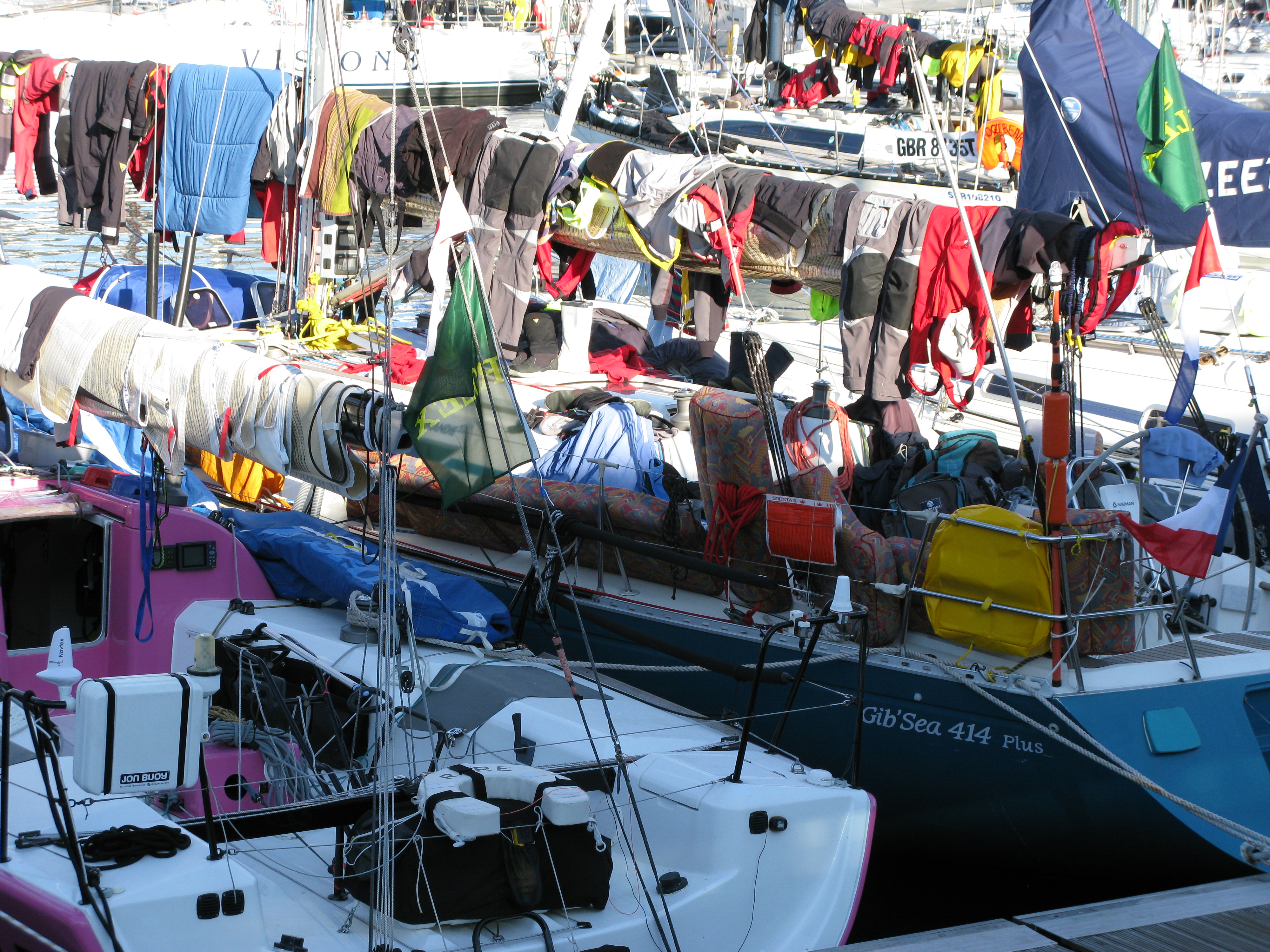
I used this first picture on a ‘Dear George’ post the other day. I had forgotten the series I took of the Fastnet boats after they finished in Plymouth back in August.

Image

Image

Image

Image

Image

I like the images. They say something about this race – the yachts involved, the numbers of crew,  the conditions.

Dear George: lazy Jacks 1

Dear George

Now you’re asking about lazy jacks and wanting detail, detail, detail. OK, you asked for it.

As you know, lazy jacks stretch from two or three anchor points along either side of the boom up to a high point on the sides of the mast to form a cradle for the mainsail when it is dropped. They keep the lowered sail from flapping in the wind and spilling over the side.

Image

They have their good points and their bad.

When I first saw Blue Mistress, I was pleased they were fitted because I too wanted to sail single-handed and this was among the gear I thought I would need. (Like everyone else who has never owned a boat before, I dreamt of all sorts of gear I would need and all sorts of ways I would sail in her. Some happened – most didn’t).

Firstly, in a boat this size (or bigger boats like the one below), lazy jacks are unnecessary if you have a crew aboard. With someone on the tiller to bring the boat into the wind, control the boom and let the halyard go, a crew of one or two can easily drop the sail, control it and furl it – and you can all be ashore in time for tea.

Image

But single-handing is different. That period between your boat gracefully sailing with sails neatly trimmed and everything under control, and your boat peacefully lying-to with sails neatly furled and everything under control needs some thought. There are a series of moves that need to be made in the right order, or, and I speak from experience, a series of foul-ups, each foul-up leading to a bigger foul-up and so on. It helps to see the whole process before you start – that way you know where you are and where you’re going.

So, ‘single-handed’ means forethought. There will always be moments of chaos – pitching boat, flapping sails, swinging boom. Better that it’s organised chaos. The well-crewed boat manages all this with ease, the rest of us have to work at it.

As I say, lazy jacks have their good and their bad points. The good points are when they are being used for what they were designed for – a manoeuvre that lasts just a few minutes. The bad points are their potential for getting in the way the rest of the time.

I’ll tell you about their usefulness and how they work on Blue Mistress next time. After that, we’ll have a look at their nuisance-value.

To be continued . . .

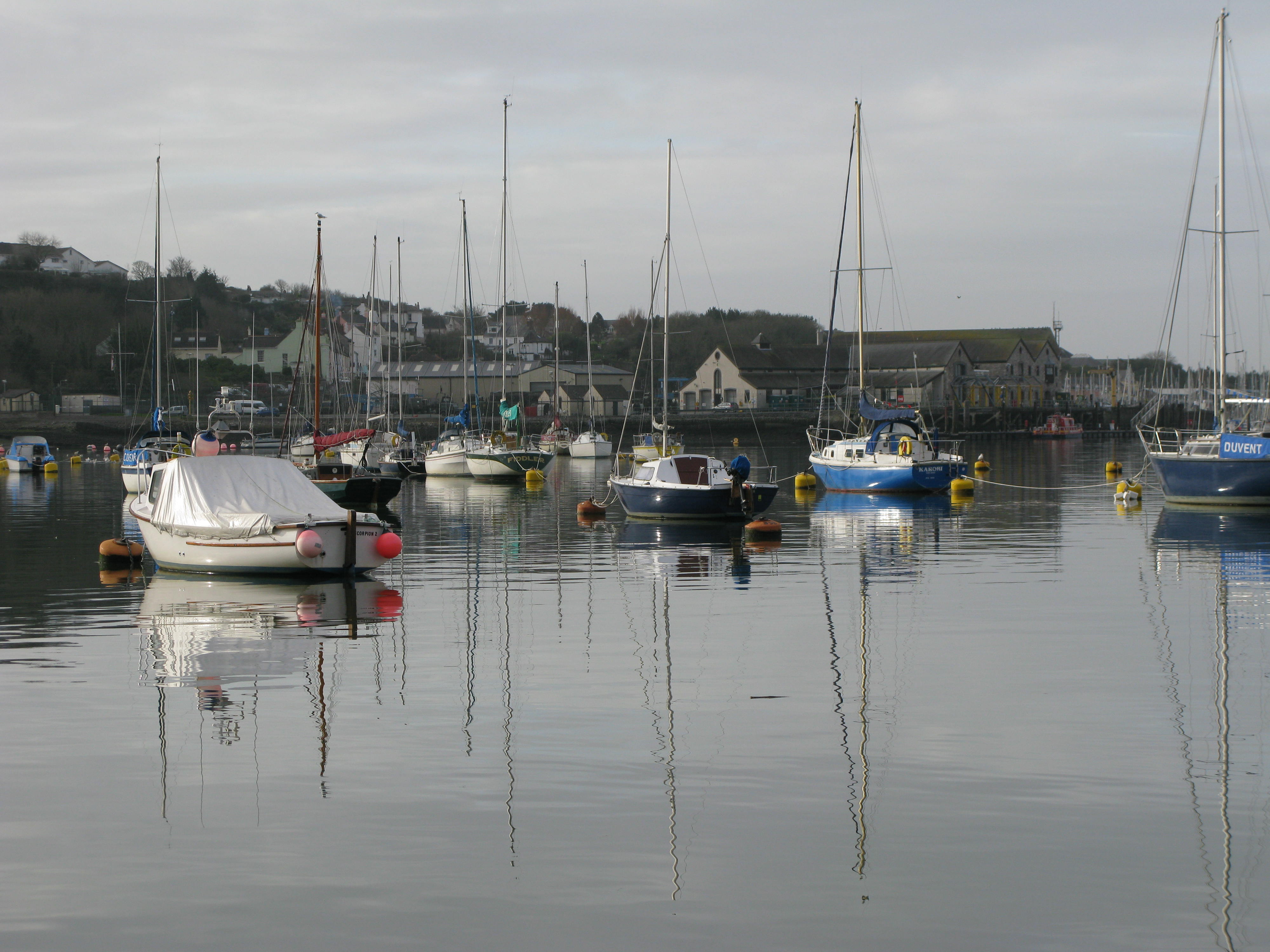
Calm morning

This is the first time I’ve been able to get to the boat since Christmas. There have been at least three ferocious storms and I was anxious to see how Blue Mistress had fared – particularly the port stern line which chafed badly against the Windpilot during the Autumn.

Image

Strong winds are forecast again, but this morning all was calm.

Image

Blue Mistress is just over the stern of the red-sailed Cornish Shrimper.

Image

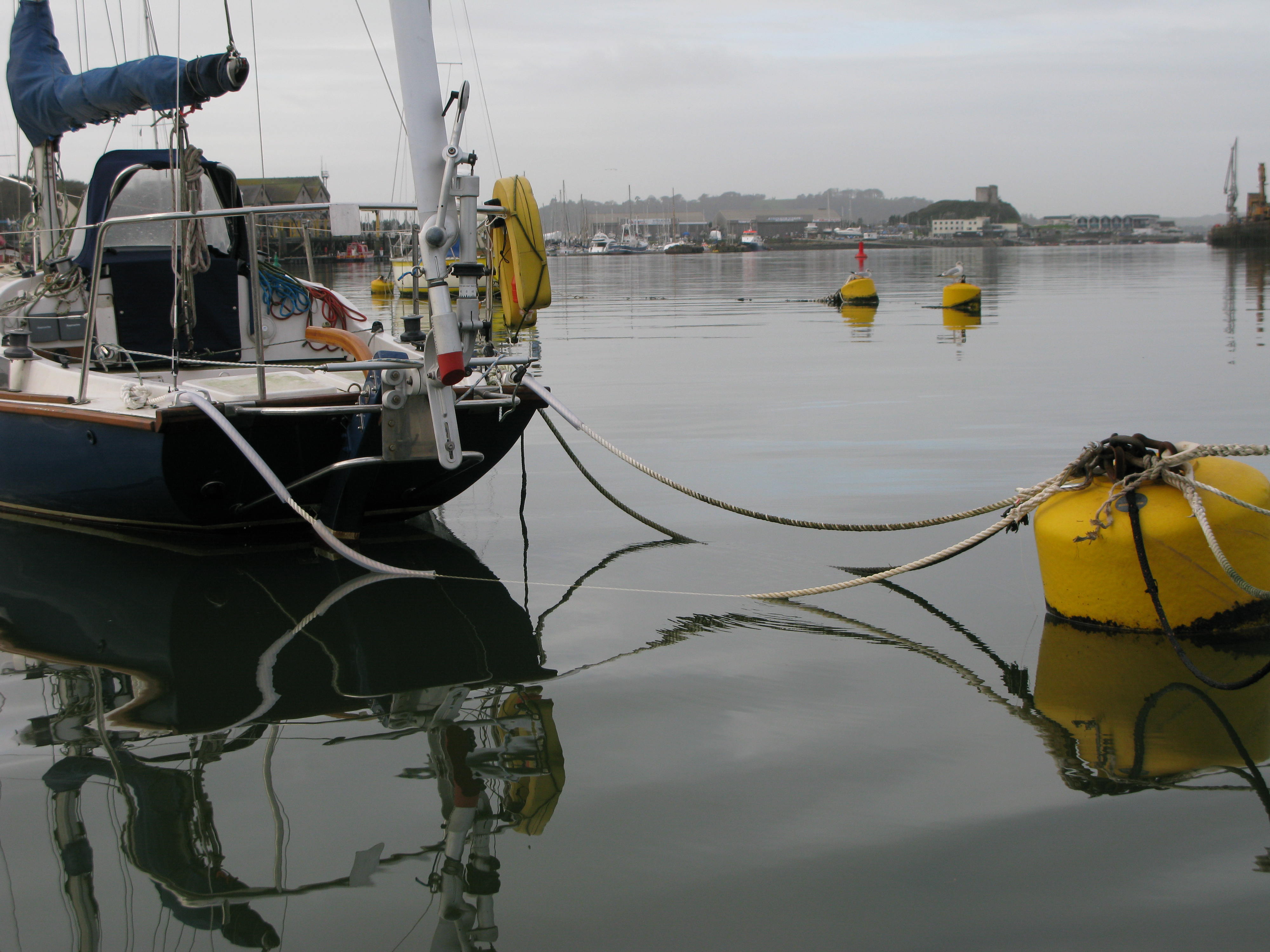
The extra tubing on the stern line worked. All is slack on the incoming neap tide.

Image

The boat cleans up well. The hand pump sucked dry – great. The no.2 battery was almost flat – not so great. But the engine started on the no 1 battery and I ran it for over an hour. We shall see how far it runs down next time.

Dear George: singlehanded

Dear George

I am sorry it has taken so long to reply to your letter. As I mentioned the other day, the day job is proving a handful. You work hard throughout a long career and, at the very end, with the next step beckoning, you find yourself jumping through endless regulatory hoops that appear to have been created by someone in a hurry to finish a school project. One day I’ll tell you about it – ‘nuff said for now.

– – –

You say you want to sail and you are thinking of buying a boat of your own. You have sent me a lot of questions. Of course, I am flattered to be asked, but it would take a master mariner and his mate – the gnarled old yachtsman, a year to answer these – and still give them an excuse for another beer. So, before I wade in . . .

  • I am neither a master mariner – nor an old yachtsman (let alone gnarled);
  • What you get is not an expert’s guidance, more a fellow crew’s comments;
  • All my answers will come from my own experience such that it is – and if I quote someone else I will tell you (whether I can remember who it is or not);
  • You have to decide whether it is useful or not – and if you want to come back at me, that’s OK. We’ll both learn something.

– – –

You bring up the single-handed question.

Here’s my answer: “If you have to ask whether or not you should sail single-handed, the answer is no, don’t – go to sea with a crew and enjoy the company.”

The whole point of being single-handed is to be able to make those decisions for yourself. You do the preparation beforehand, you work out the potential problems, you solve the extra challenges as they come along. You run the boat – every aspect of it. You can seek answers from as many people as you like, but ultimately the responsibility is yours and yours alone.

Among many other things, (and we can talk about these later), you have to enjoy your own company. You have to live with your own mistakes, and your own triumphs. There will be no applause.

I agree with Anne Morrow Lindbergh’s comment, “ The loneliness you get by the sea is personal and alive. It doesn’t subdue you and make you abject. It’s a stimulating loneliness.” I might even substitute the word ‘aloneness’ for ‘loneliness’.

A crew is a different matter.

Here is a question for you. Family aside, if you had a choice, who would you have aboard? Someone who can stay focussd, someone who knows one end of a rope from another, someone who can work close to other people without getting their ego in the way – (that’s a misquote from a sixties film by the way).

Do you want a crew that is excitable and can’t sit still? Someone who is always on the move? You might if you are in a twenty-minute America’s Cup race, but perhaps not if you are on a gentle cruise down the coast to Falmouth. It depends how long you intend to stay together, doesn’t it.

Of course, you don’t always get the choice. On s boat, you have to learn to live close with all sorts of people. Now there’s a topic . . .

I hope this is the sort of reply you are after.

I will sleep on your other questions and get back to you later.

Bill

On being left-handed

On being left-handed

Have you ever been shown how to tie a knot by a right-handed person? “The end goes round this, over that, round again and under the other.OK? . . . Now you do it.”  Good teaching, useful learning – if you’re right-handed.

But it can be a real trial if you’re left-handed. A left-hander will pick up the rope and find that what s/he sees in front of him/her is different from the demonstration. It’s not necessarily the fault of the teacher, from the start it just doesn’t “look right”. S/he has to think it through again. Sometimes this takes time and the student appears slow, sometimes not.

I have spent most of my life bemused by the gap between how I am told I should be doing this or that task and how I end up doing it. I have driven several severely right-handed teachers wild with frustration. Older now and hopefully a little wiser, I am still left-handed and that gap between theory and action has not diminished.

In fact, I have come to enjoy it. Within what I always think of as a deceptively slow approach, life neither follows a straight line nor flashes by in black and white. There is an opportunity to stand back and observe. And there is an opportunity to be creative.

On the boat, it is not the left or right hand that is so important, it is the wish to observe, and, from that, the desire to create.

Image

Image

The Eye of the Beholder

Thank you, Max, for your comment. I have taken it on board. This is for you.

I stopped writing the blog for a while because the rest of life took over. Now I’m looking back again and wondering where the cumulative experience lies – what am I learning? Hence the following:

Image

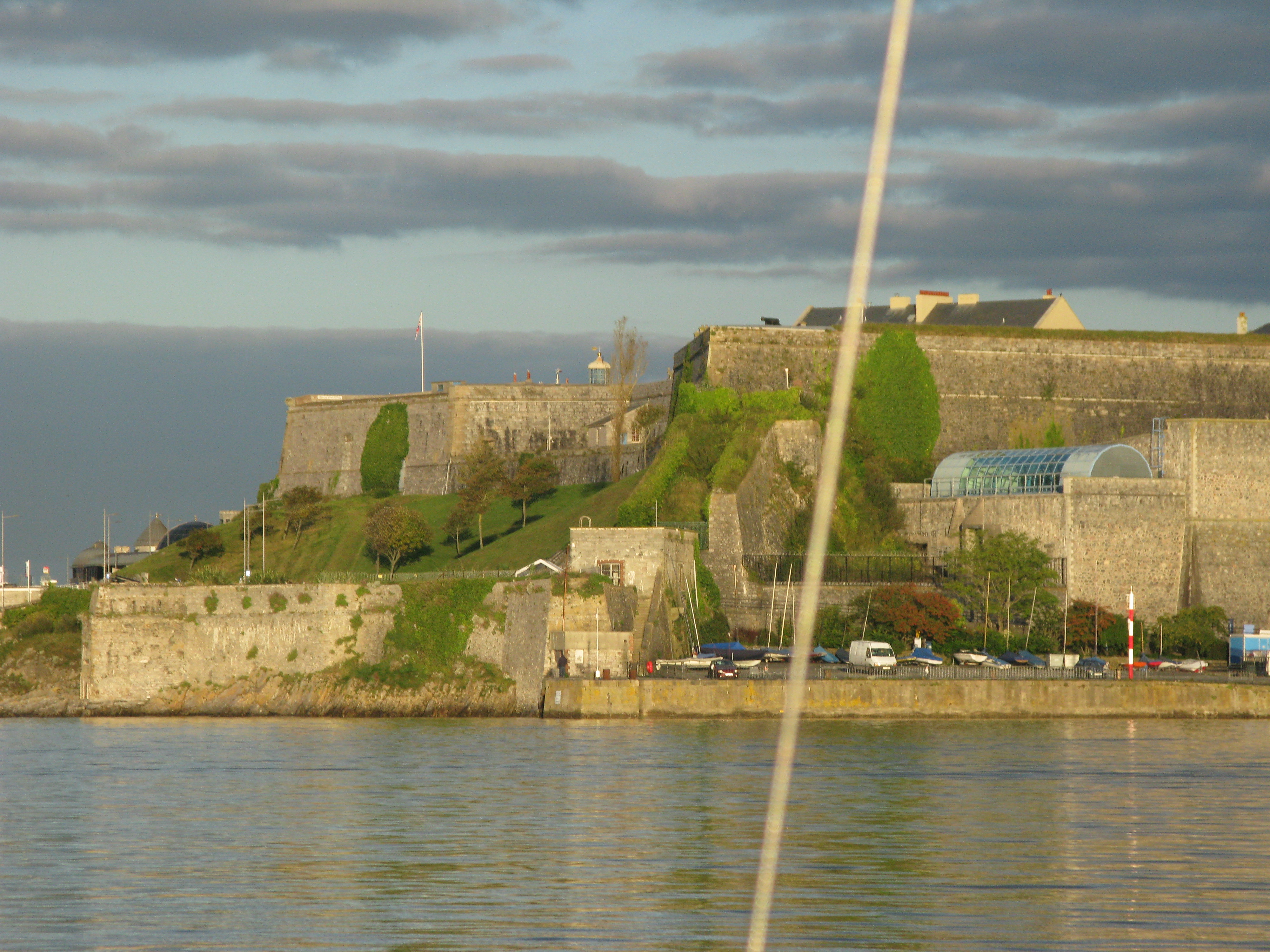
I slipped the mooring and motored the mile down to the Citadel. There was no wind, and very few boats out this early. I had Plymouth Sound more or less to myself.

With sails set – mainsail and genoa, we barely made headway, the tide doing most of the work. I poured a coffee from the flask and found a biscuit. Time to enjoy the moment. Time to reflect.

Two or three fishing boats emerged from Sutton Harbour, hustling their separate ways past me and out to the open sea.

This one caught my eye.

Image

They say beauty is in the eye of the beholder. Well, there is beauty here but not necessarily the beauty of lines and colour, not in the magazine-image sense anyway. The beauty here comes from all that has gone before and all that is to come from this boat. It’s not so very different from the Ceres that I have posted on a number of times. We do like her lines but, in reality, she was a Westcountry trading ketch – it was the work she did that made her. (Tugster will understand this).

Passing in front of me now was someone’s livelihood – with all the political, economic, environmental, maritime safety, health and safety, technology and science issues that surround it. Those same issues that are increasingly pressing on you and me.

But, even in the face of all that, there were still elegant lines. For this one moment, for me only, this slightly ungainly metal workshop had created an almost perfect wave in an otherwise table-flat sea. And it was beautiful.

It’s those moments that I go to sea for – not to forget all the other stuff, (how can we?), but to add to the total experience of life.

Single-handed

I want to write about sailing single-handed. But now I wonder how self-indulgent that might be.

By definition, if I sail single-handed, it’s just me. All other sailing is team-work – (or crew-work).

So who on earth but me would be interested in my version of single-handed? Surely, it’s irrelevant to everyone else.

Writing about it is me imposing my version on the reader. Plenty of other people sail single-handed and enjoy it in their own way. When you enjoy something so personal, to be faced with another person’s assertions invites a defensive stance:

“Thanks very much, but I am confident in my own competence, I don’t need you to tell me this or that is a better way of doing it. Yes, of course, I am always interested, but I want to find out in my own way, in my own time. So write it down if you want, but don’t expect me to want to read it – and certainly don’t expect me to agree with you.”

OK, so be it.