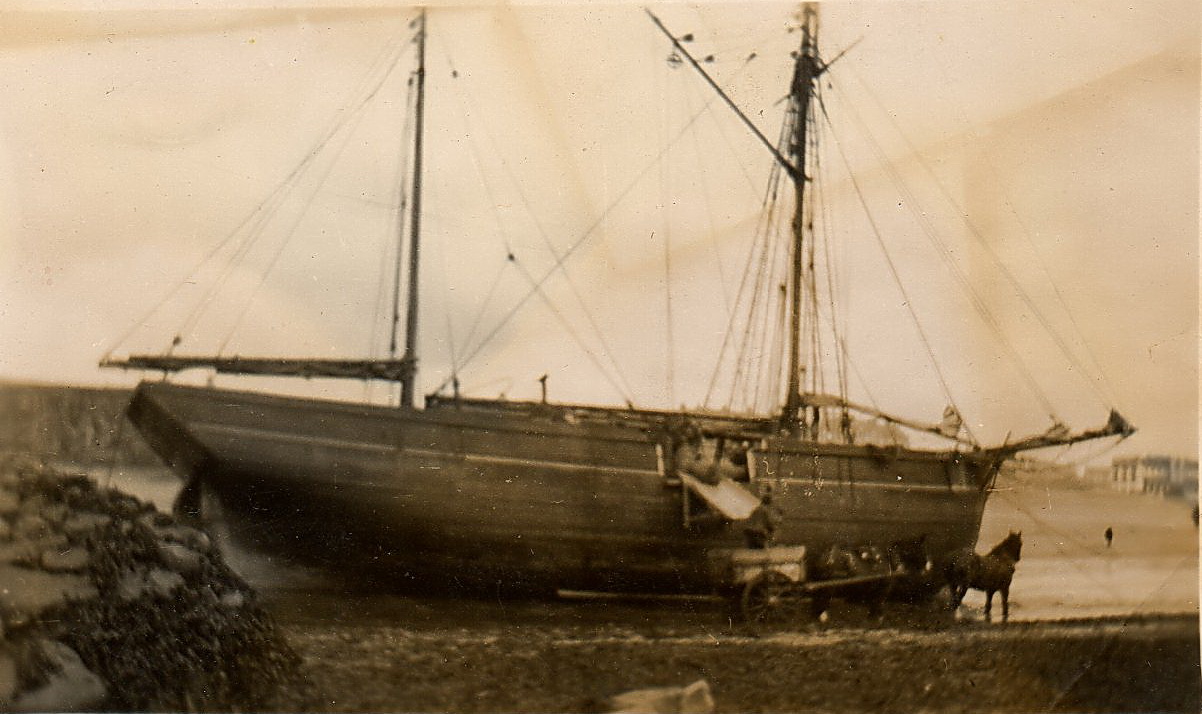
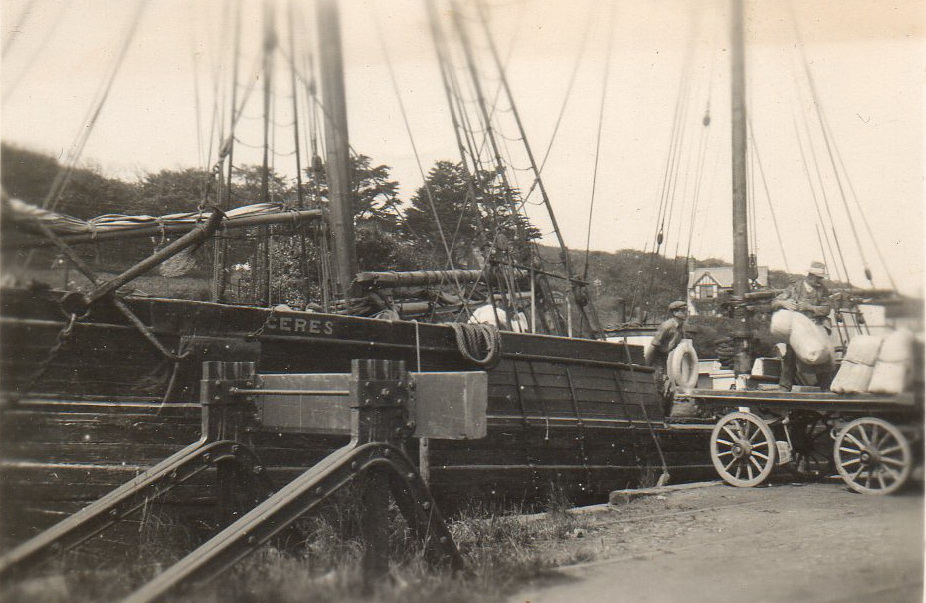
Ceres offloading

The turn-around had to be quick and slick between tides . . .

. . . with an eye on the weather

~~~

Horses worked better then vehicles on the beach, but . . .

~~~

. . . here, on the lower wharf in Bude Canal Basin, the trains are preparing to take over.

~~~

From a series of recently rediscovered photographs that had lain pressed in a book for the past ten years.

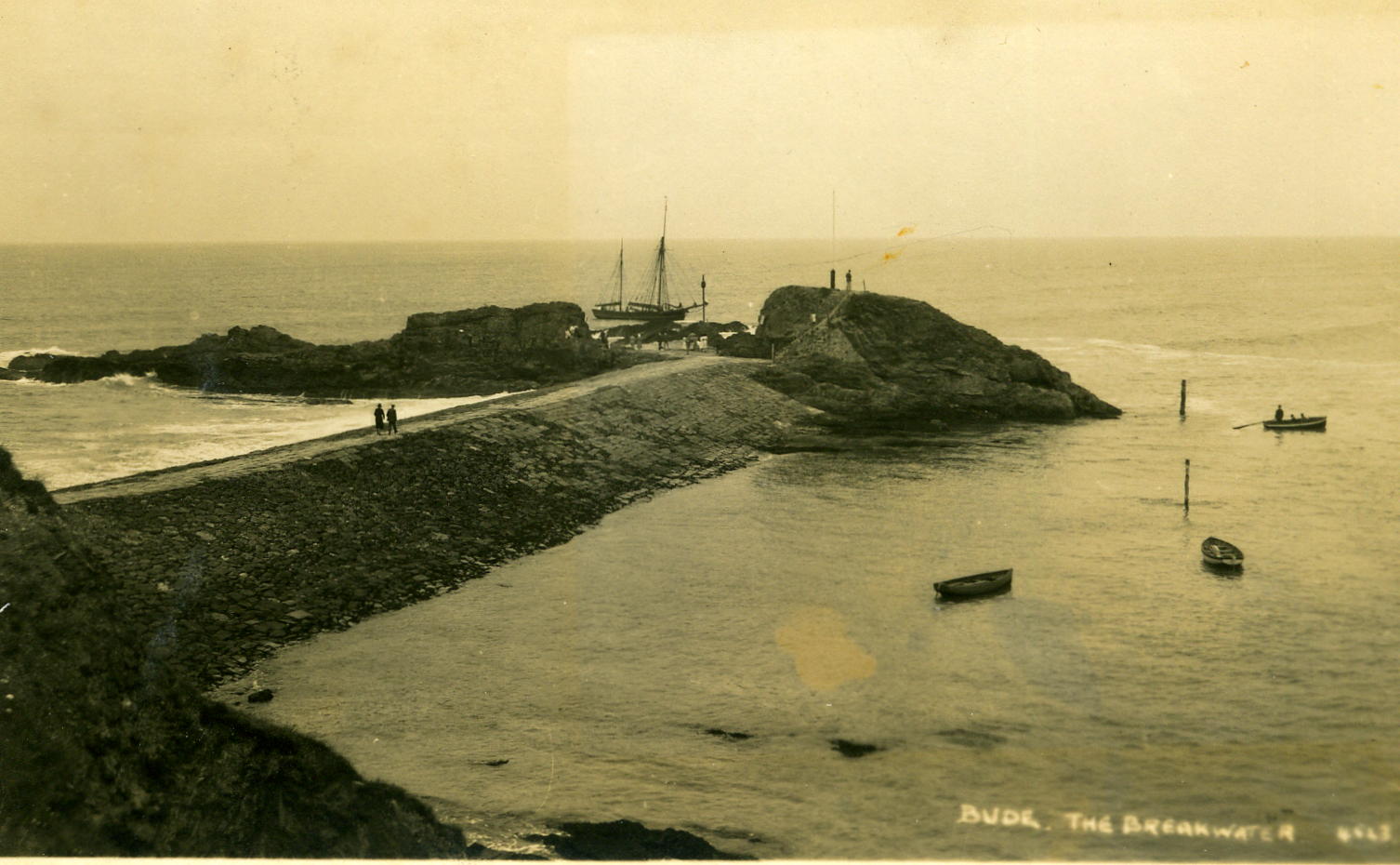
For the previous set here and here, for an overview of the harbour at Bude here

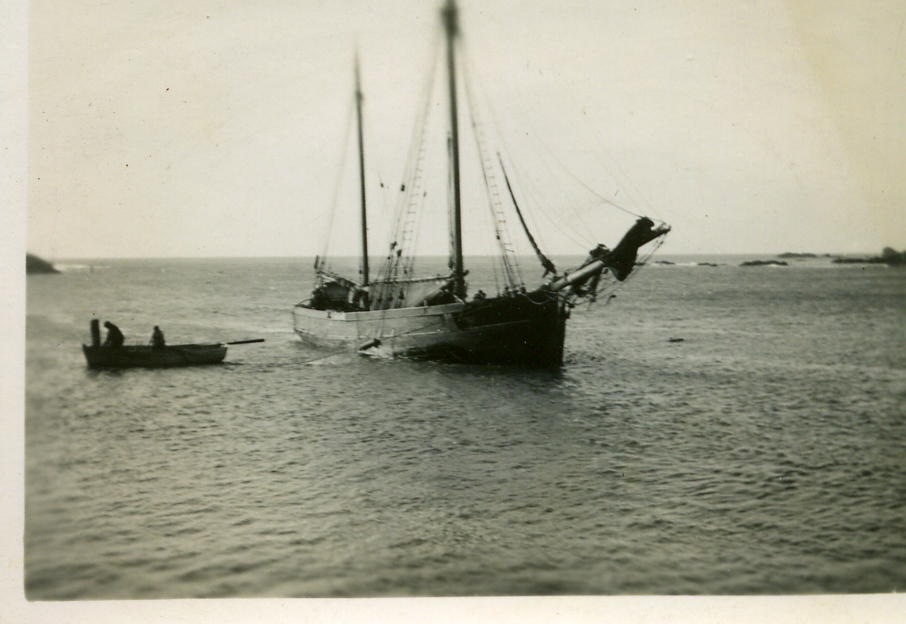
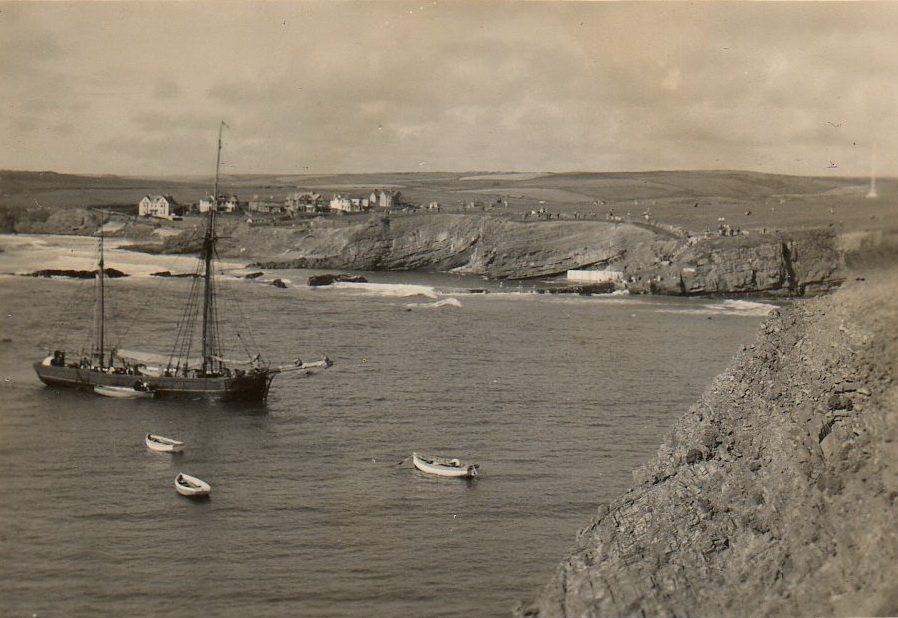
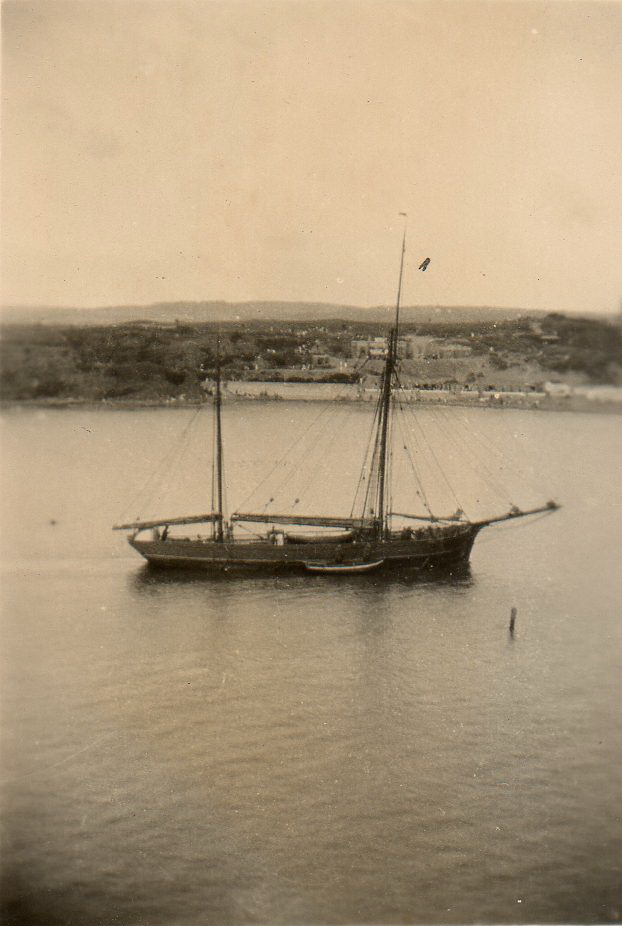
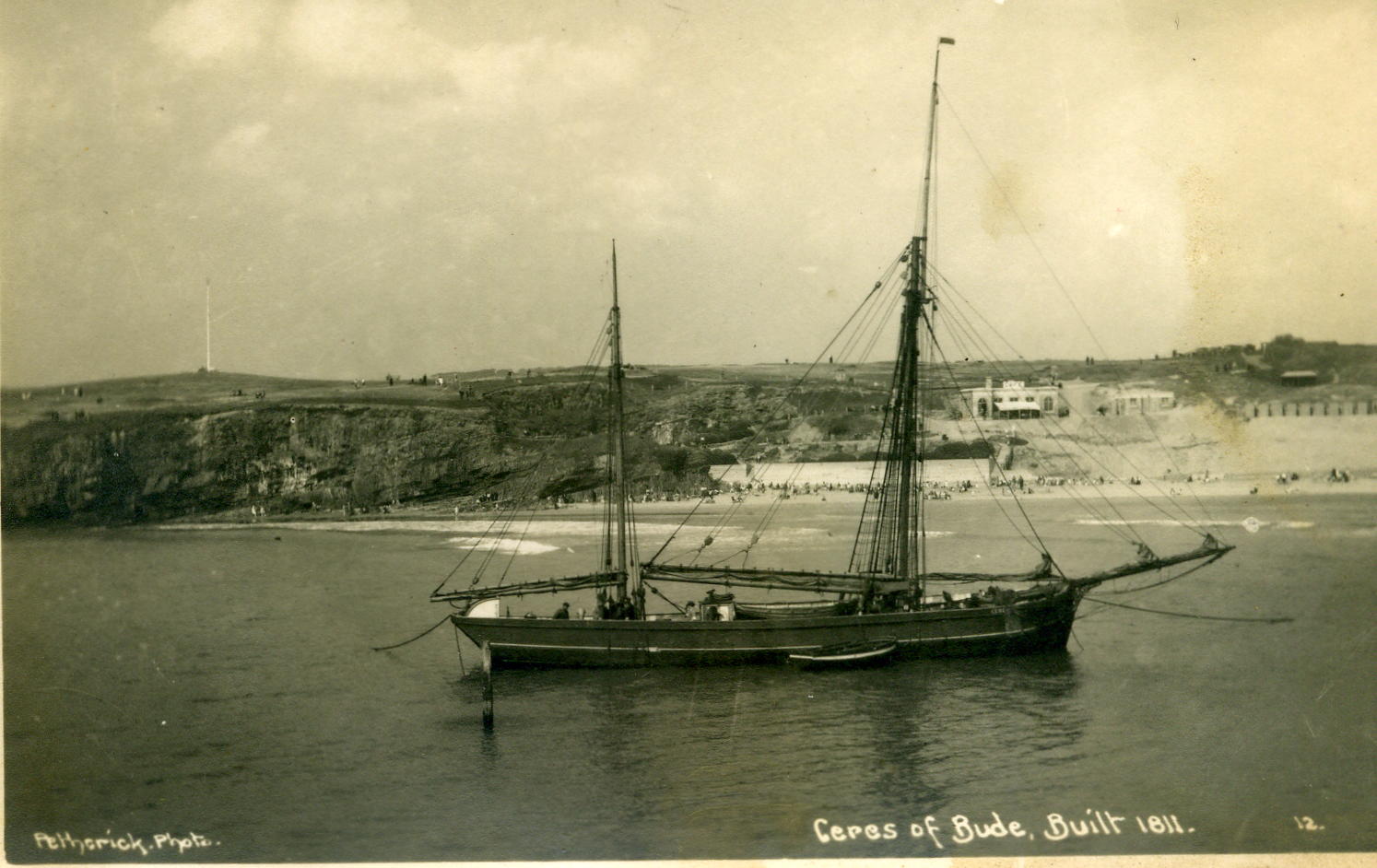
    Ceres at anchor

    These photographs were taken at full tide.

    A few hours later, she would be high and dry on the sand.

    The hobble boat taking a line to the mooring post

    ~~~

    ~~~

    ~~~

    ~~~

    From a series of recently rediscovered photographs that had lain pressed in a book for the past ten years.

    For the previous set here, for an overview of the harbour at Bude here

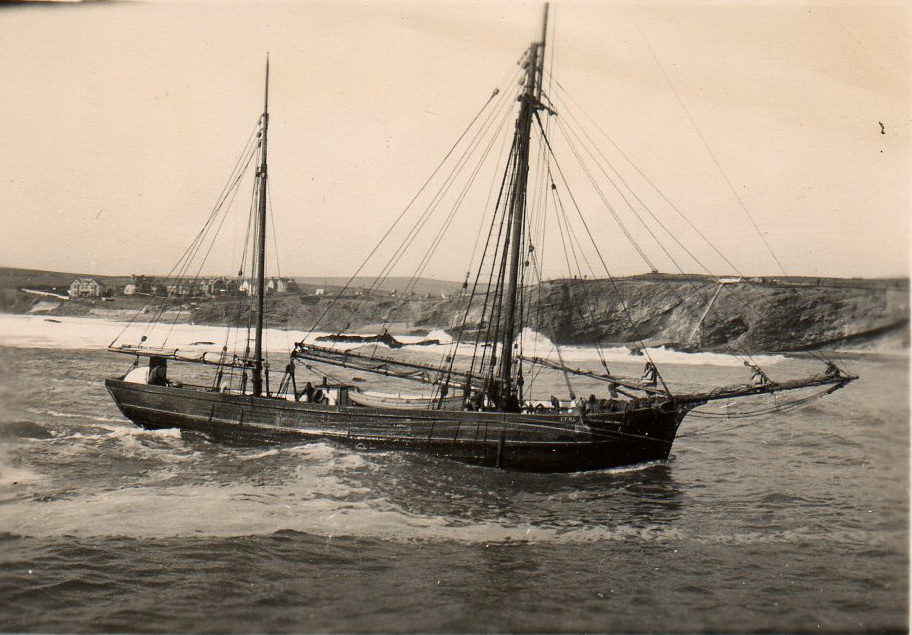
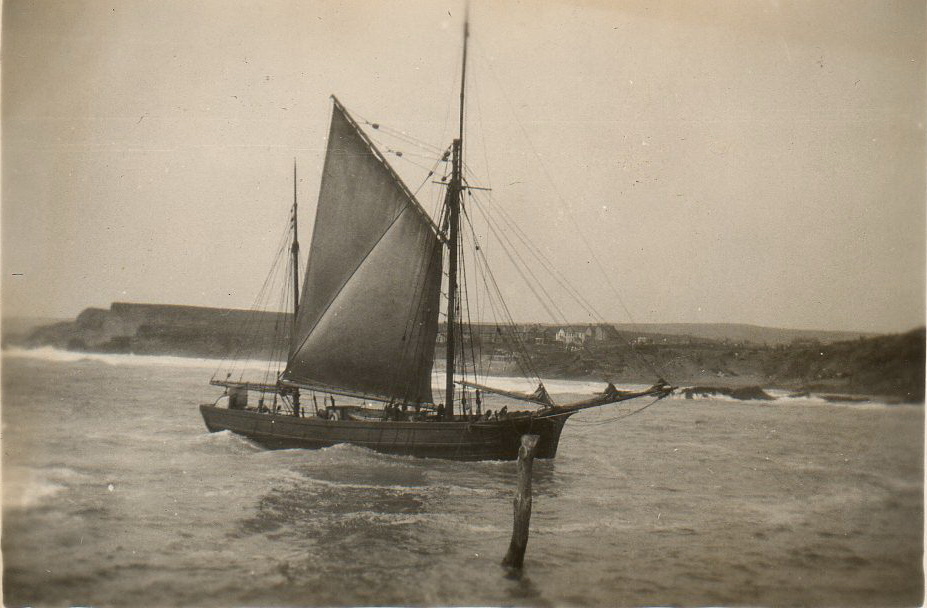
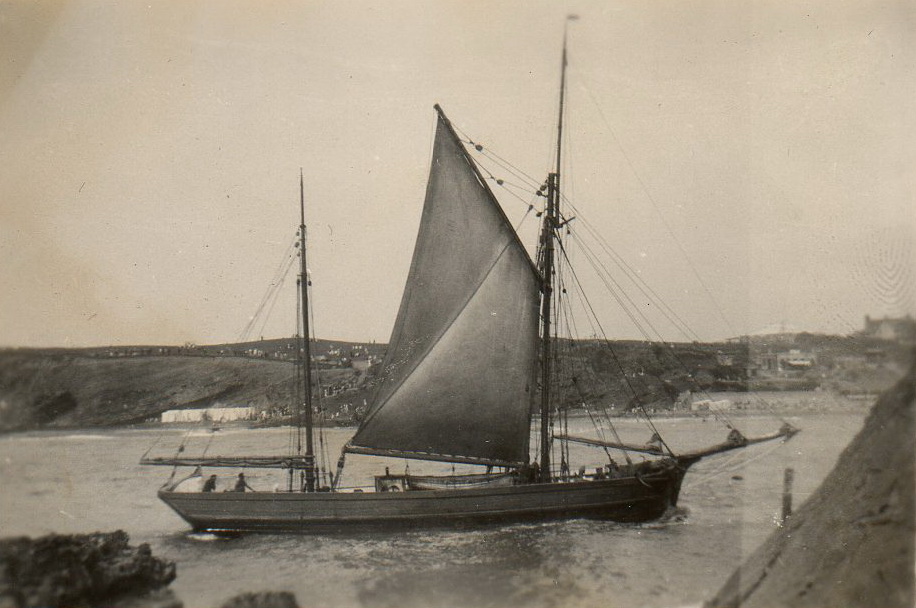
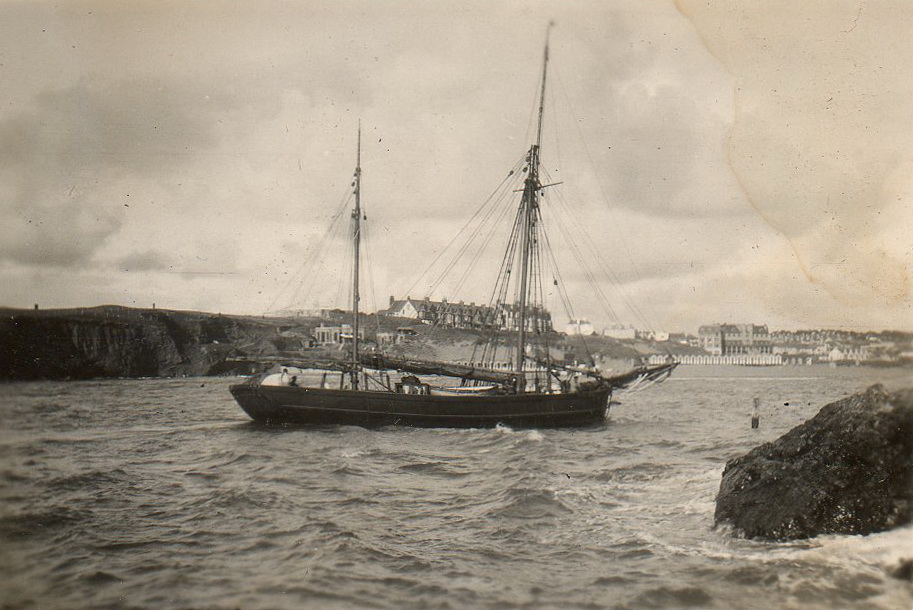
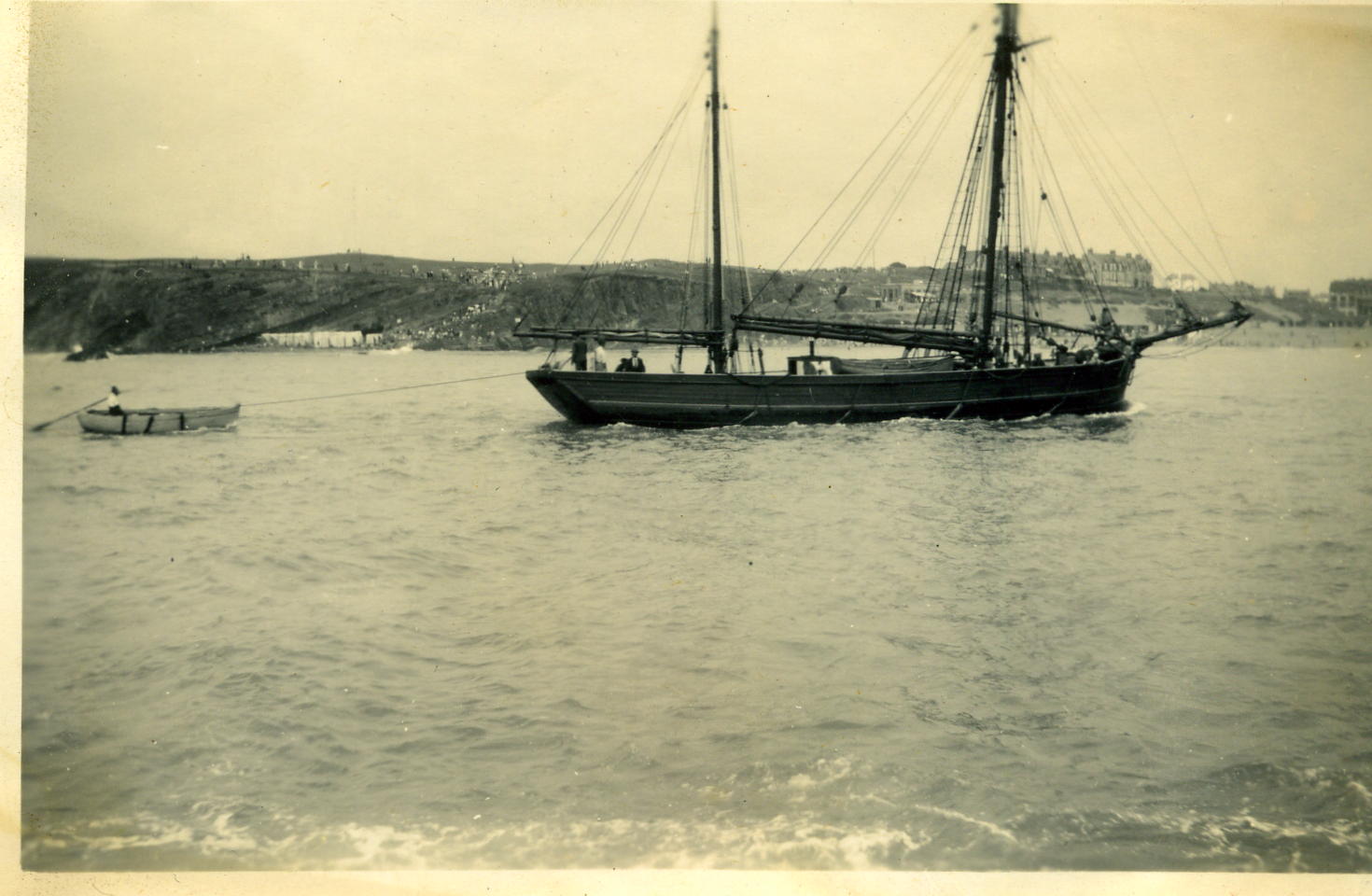
    The ketch ‘Ceres’ entering Bude


    Six pictures of Ceres found recently – pressed between the pages of an old volume.

    Several years ago years, a sudden flood swamped the old leather suitcase they’d been lying in. They were all damaged – water-marked and curled. The flattening-them-out-in-an-old-book trick seems to have worked.

    ~~~

    Here she is rounding Barrel Rock. A hobble boat is waiting just inside Chapel Rock

    The crew are working hard, preparing mooring lines; the helmsman barely visible in the stern.

    On another occasion, she enters Bude with her mainsail set.

    Bude seawater swimming pool is to the right of the picture

    By the size of the bow wave, the main seems to be helping the engine, perhaps on a falling tide.

    With hobble boat in tow

    ~~~

    There were several more old photos of Ceres in those pages.

    I will group together and post them as a series.

    On sailing a Folksong – Self-steering gear

    Earlier in the year, Seb (Mischief) asked about self-steering gear on a Folksong. He was interested in a bracket to carry it.

    I know he has now fitted a Hasler gear and has since sailed from the Tamar to Portsmouth with it, so I hope to hear how he got on.

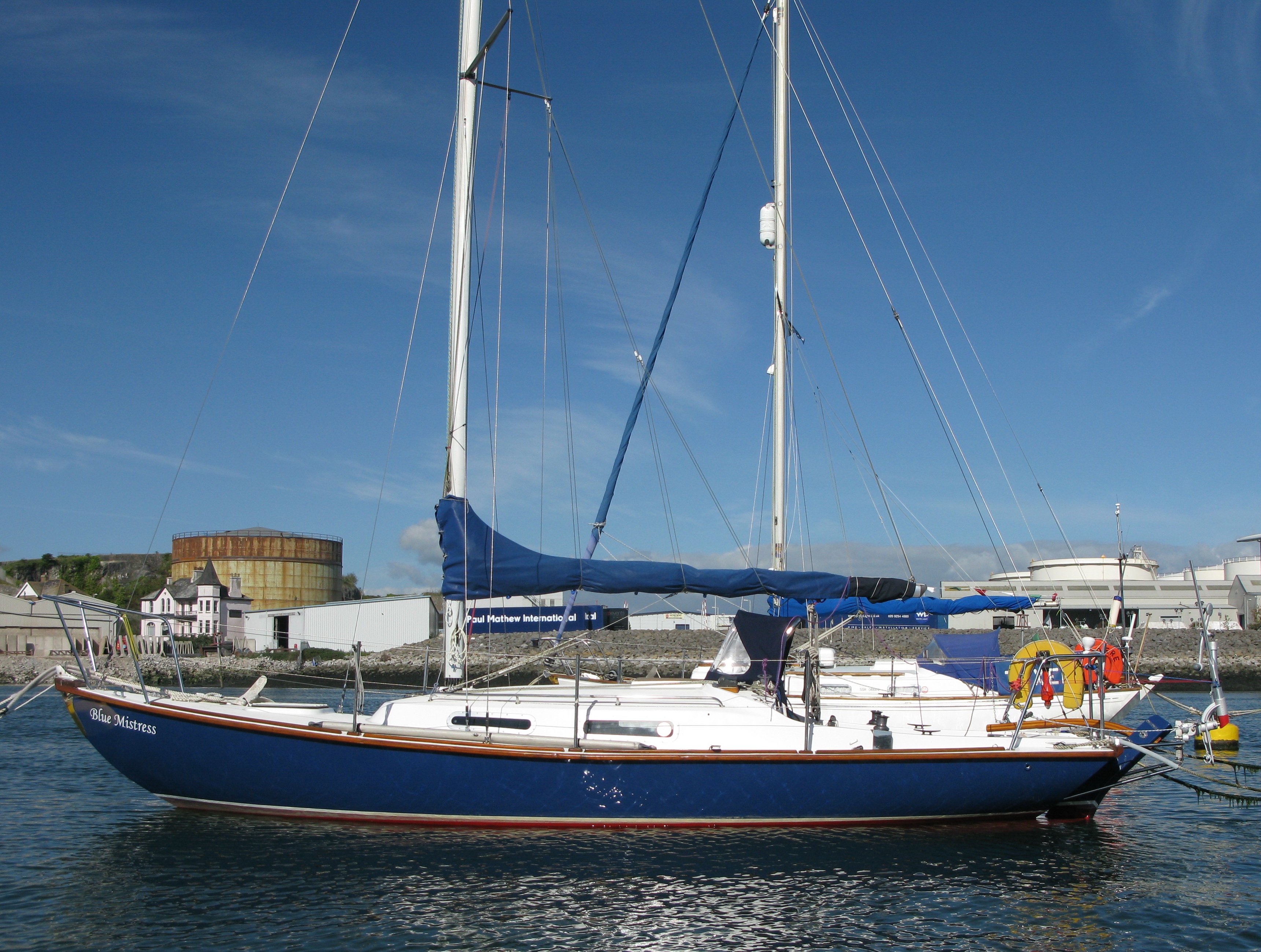
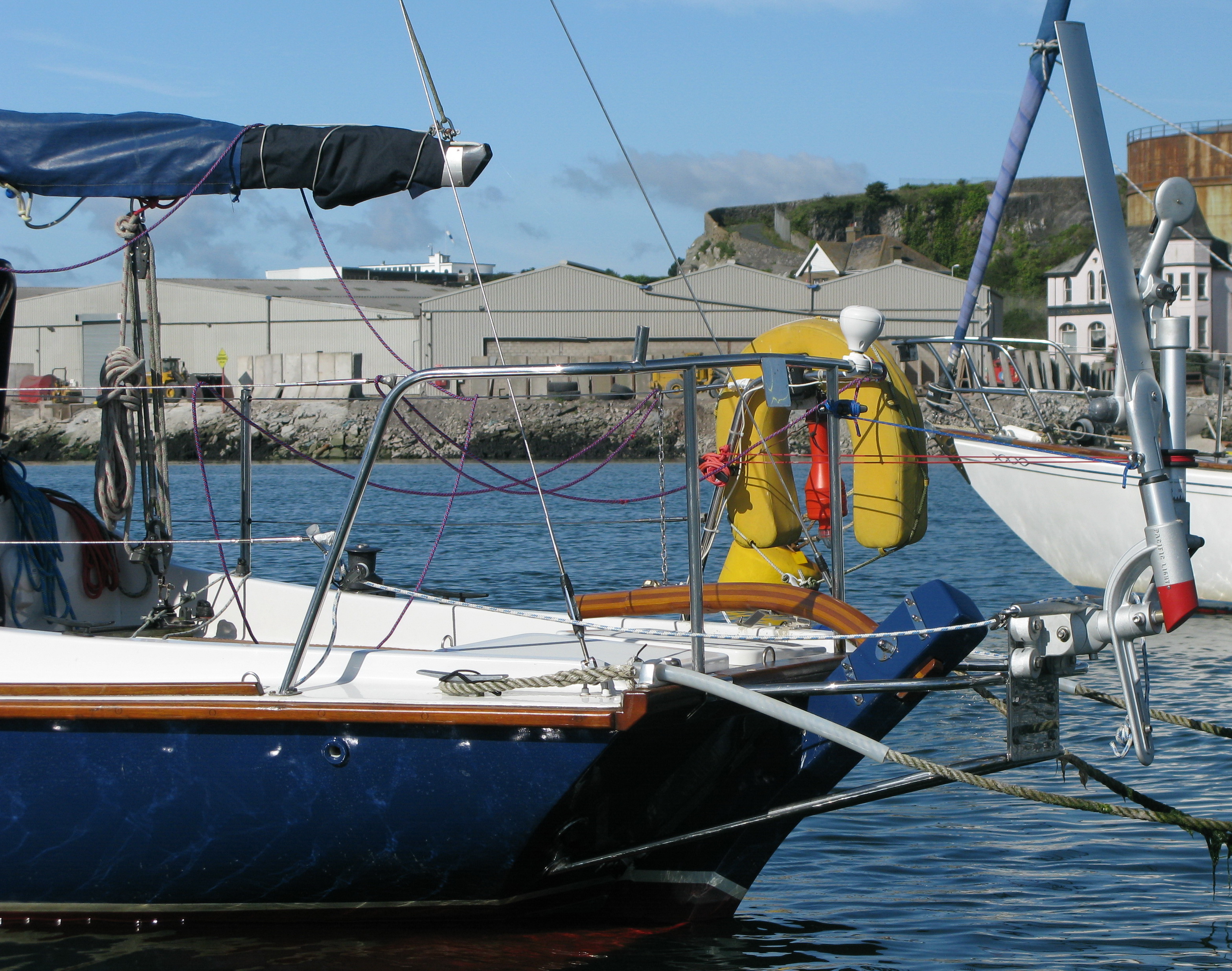
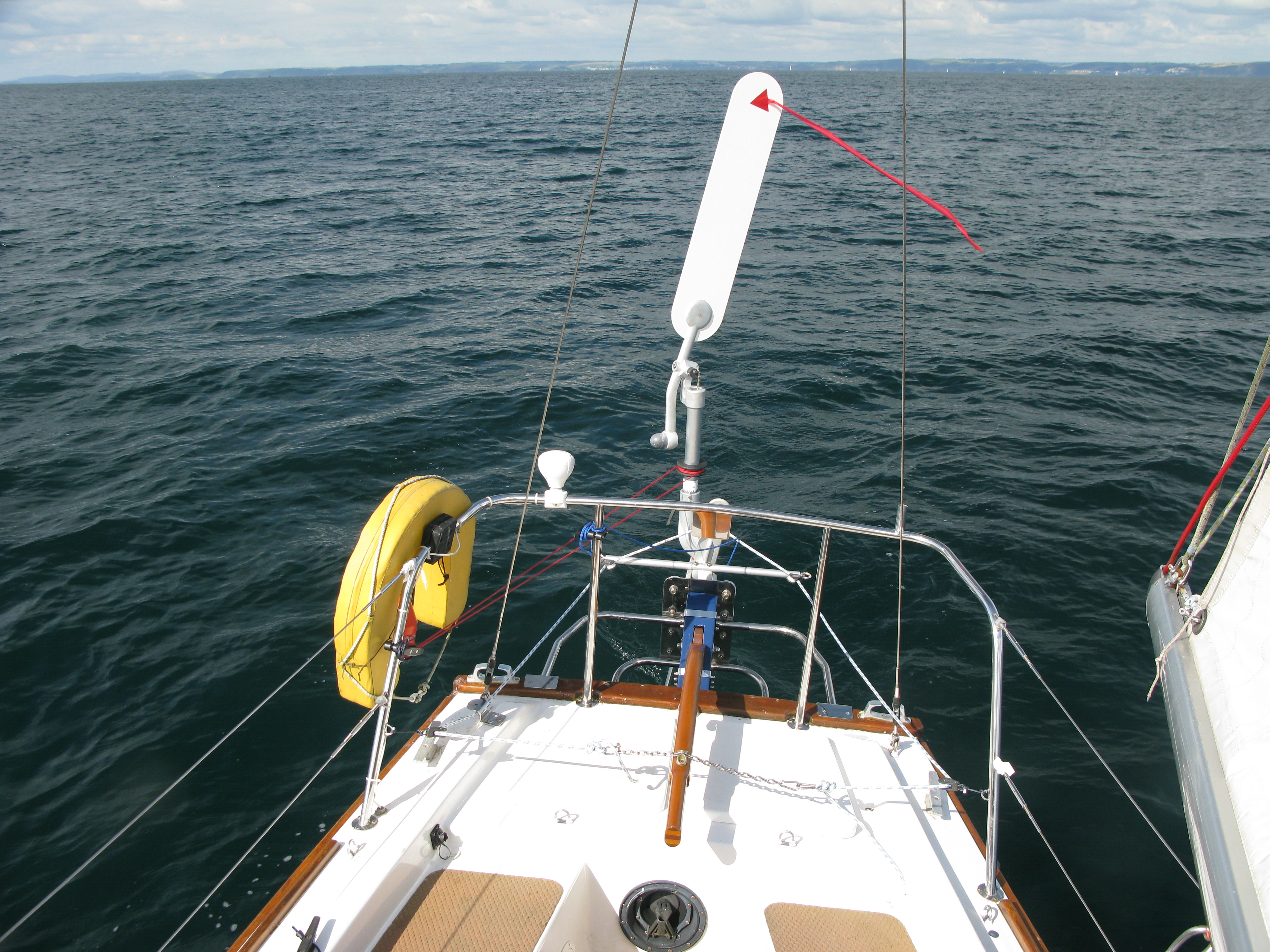
    In the meantime, this is the gear I picked for Blue Mistress – the Windpilot Pacific Light.

    One of the reasons I like the Folksong is that there are no predetermined class rules. You have to make up your own mind. So, having  decided which self-steering would suit me, then comes the problem of how to mount it on the stern with a rudder post that stretches as far aft of the transom as that on the Folksong?

    This is what we eventually decided:

    The Pacific Light is relatively simple to fit on most boats and Peter Foerthman of Windpilot is immensely helpful. However, there are always problems to overcome in any project like this. If anyone with a Folksong would like more detail, let me know.

    There is a learning curve. I have already discovered a great deal about sail balance using the gear . . . but there is a long way to go, and, as only way to learn  is to get out there and do it, I am going to keep Blue Mistress in the water through the winter and stick at it.

    On sailing a Folksong – Ossian

    Ossian

    Ossian

    Eddie writes:

    “Only had the boat 7 months, previous owner had her based at Loch Melford near Oban, spent the first three months of the year traveling backwards and forwards every weekend getting her ready for the water.

    Once launched we sailed around to the Loch Crinan then through the canal to Ardnishaig  then 54 NM dash down the Clyde to our home port of Irvine.”

    As you know, I’m biased – but what a good-looking boat.

    I’m particularly interested in the furling headsail – difficult to get my head round the ease of use against having a choice of sails.

    As I get older, the prospect of the plunge forward becomes less appealing – on the other hand . . .

    On sailing a Folksong – A ‘come-in’ for Blue Mistress

    I have had a small ‘come-in’ fitted on Blue Mistress.

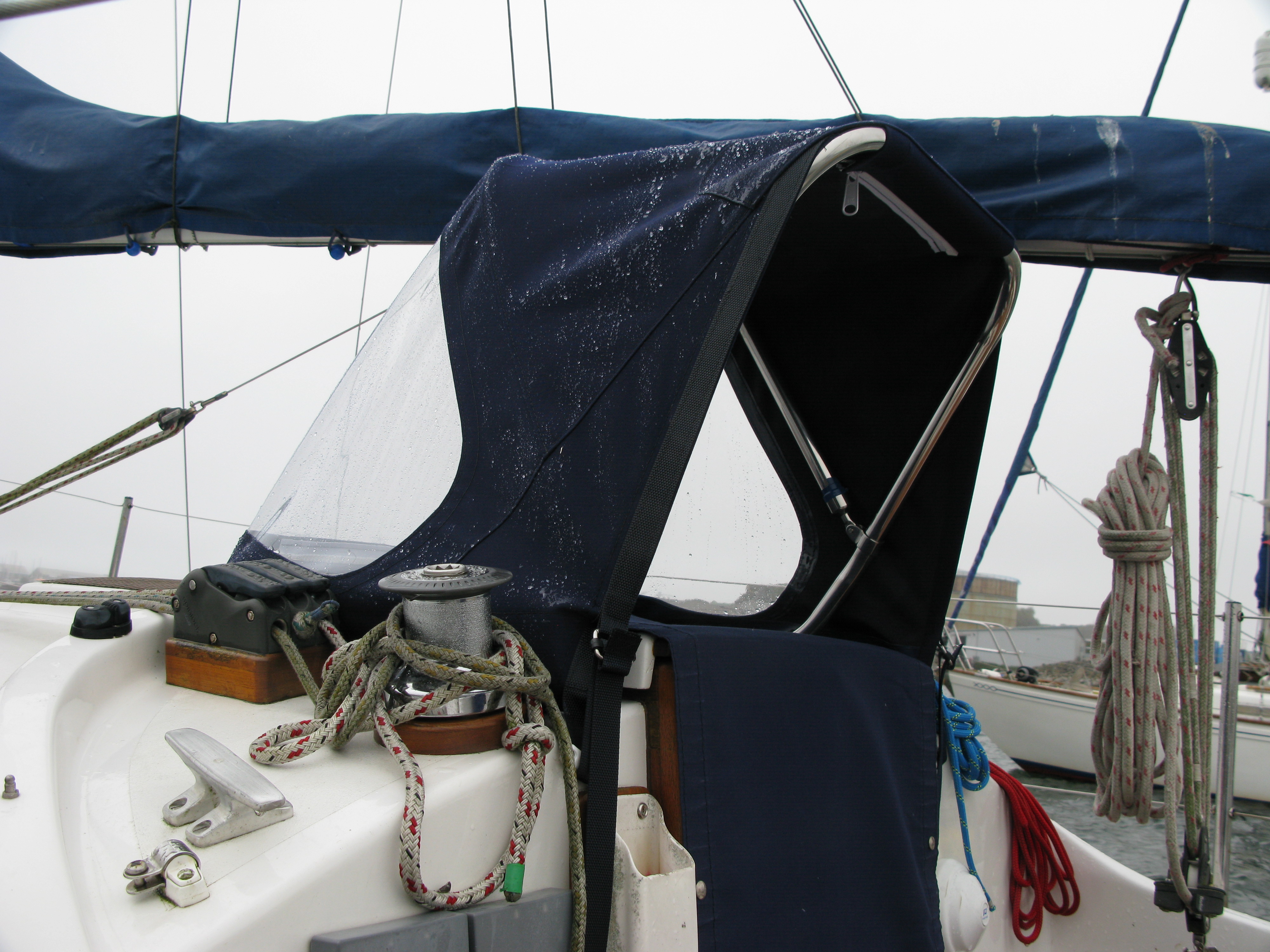
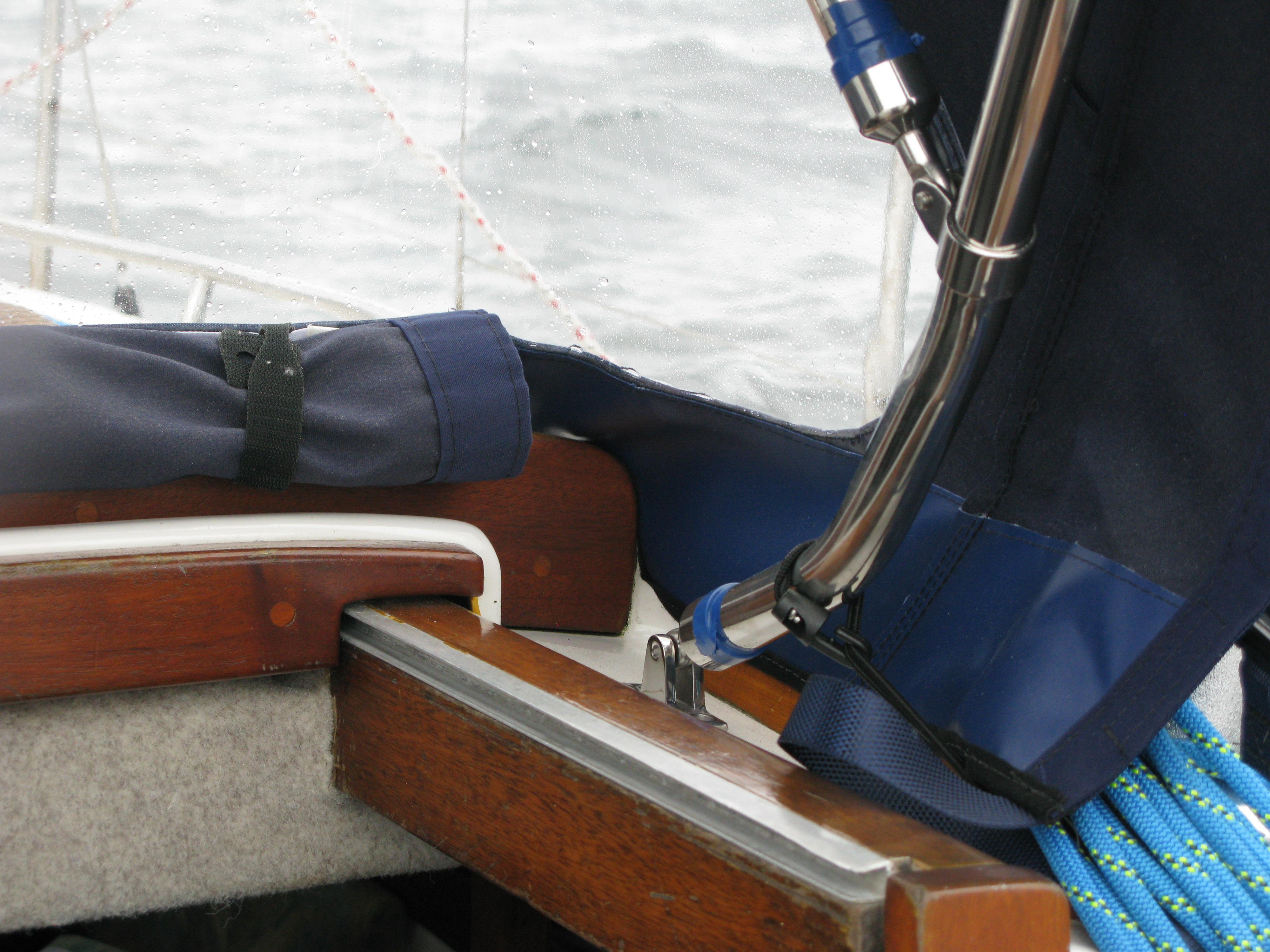
    This is not the large, curved, ‘extra-room’ spray-hood seen on most modern cruising yachts but a small, upright pram hood over the companionway. I believe this design is called a racing spray-hood, but I prefer ‘come-in’ – (a description I came across in a book written in the 1950’s),  for the comfort of the name.

    I can now sit in my favourite spot out of the weather – on the companion way sill with my feet on the engine housing and a good view forward.

    The frame is well-constructed and robust (Dicky B Marine). It is designed to fold flat onto the deck with an angle to clear the wooden bar at the front end of the hatch. In the upright position, it is secured firmly onto the bulkhead either side of the companionway with straps.

    The canvas zips onto the frame and is attached to the aforementioned bar with studs – it can be shipped in a trice. The original design had the attachment further forward to give it an elegant slope and also create some room to stow a camera etc. This would have involved fitting a new batten across the hatch housing. However, bolts through the deck here would have stopped the hatch sliding forward. In the event,  it has been kept as small as possible.

    The opening is just too small for me to enter and leave without having to push the trailing edge forward about six inches. Initially that meant lowering it completely every time I went below. The problem has been solved with two short lengths of shock cord stretched from the angle at the bottom of the frame to the point where the retaining straps are fastened. These straps are very secure but it is fiddly to keep releasing and tightening them. The shock cord does the job perfectly.

    I particularly like this design because it leaves the winches and lines clear. I can go forward easily without tripping over it.

    Also, the window is big enough not to block the view forward from the tiller.

    . . . I’ve yet to trial it in a gale

    . . . and get used to the interruption to the lines of the boat!

    From Steeple Point – coincidence

    This afternoon I finished reading John Howlett’s book – ‘ Mostly About Boats’.

    In the last chapter, acknowledging the experience at his disposal – (a lifetime sailing and having designed a number of his own boats), he describes the boat that he would now build for himself. One that he could sail single-handed if need be.

    Remember, he was writing in 1956, when he was in his sixties.

    He gives a sail plan:

    I looked at the plan and thought, *Surely, I’ve seen a boat with a sail plan like that recently. . .”

    From Steeple Point – character and individuality

    I found John Howlett’s book in my favourite second-hand bookshop – Books by the Sea in Bude.

    ‘Mostly About Boats’ could have been the title of this blog.

    Three pages in: “We are so controlled and directed and generally bedevilled from the cradle to the grave, that any activity engendering personal initiative and self-reliance – qualities in serious danger of extinction, is surely laudable in itself . . .”

    I’m beginning to like this man.

    Talking of a trip to Flushing and the Scheldt, “. . . we were so fortunate as to see a Schevingen Bom. Nearly as broad as she was long and completely rectangular, save that the angles were rounded off, she was immensely strong, and was built to run in anywhere on the sands, where she was loaded or unloaded from carts at low water. Like so many things of character and individuality, they are now extinct.

    . . . and about cruising: “Escapism? Well, that is an easy taunt to throw at those who ignore the values of the herd; but if we seek contentment and, perhaps, some enlightenment on those same values, here is a road for those who will take it.”

    . . . and then a sentence that resonates: “The flood of man’s ingenuity has overwhelmed his power to create beauty.”

    I looked at the short biography of the author on the cover – Mr Howlett, the Editor of the Cruising Association Bulletin, who calls his book a “hydrobiograpy” . . .

    The date of publication? – 1956.

    He must have been more or less the same age as I am now.

    What would he think of 2010?