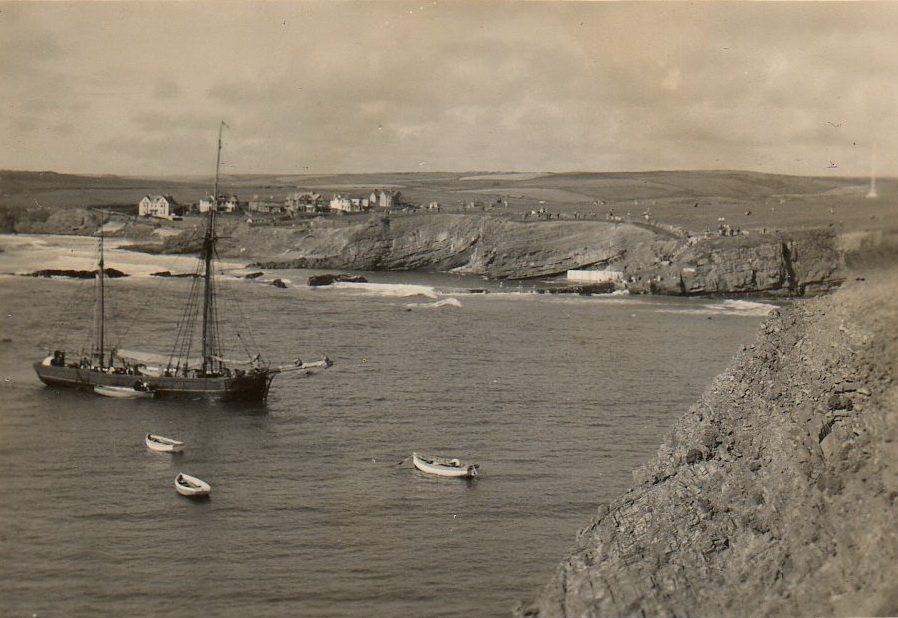
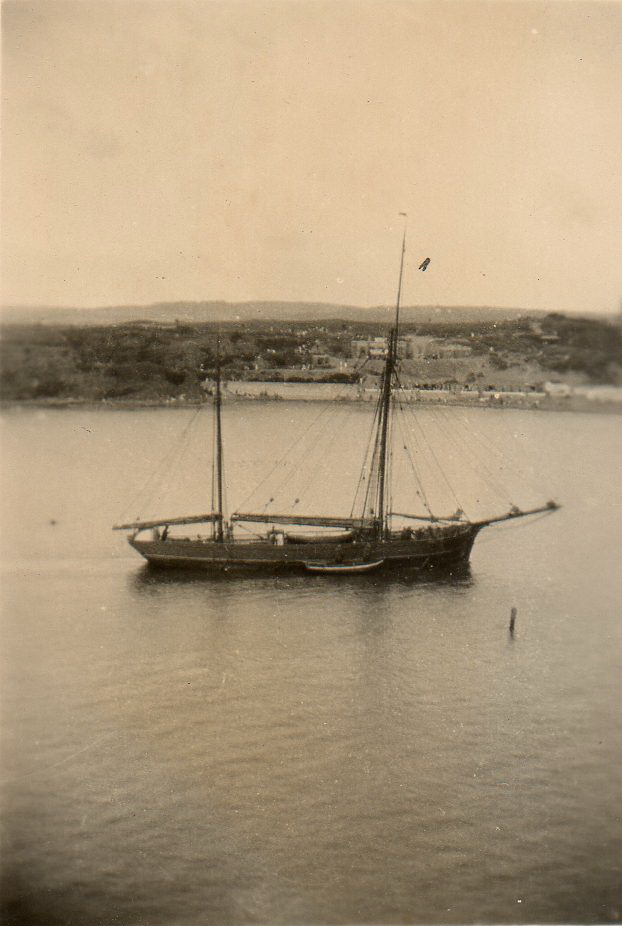
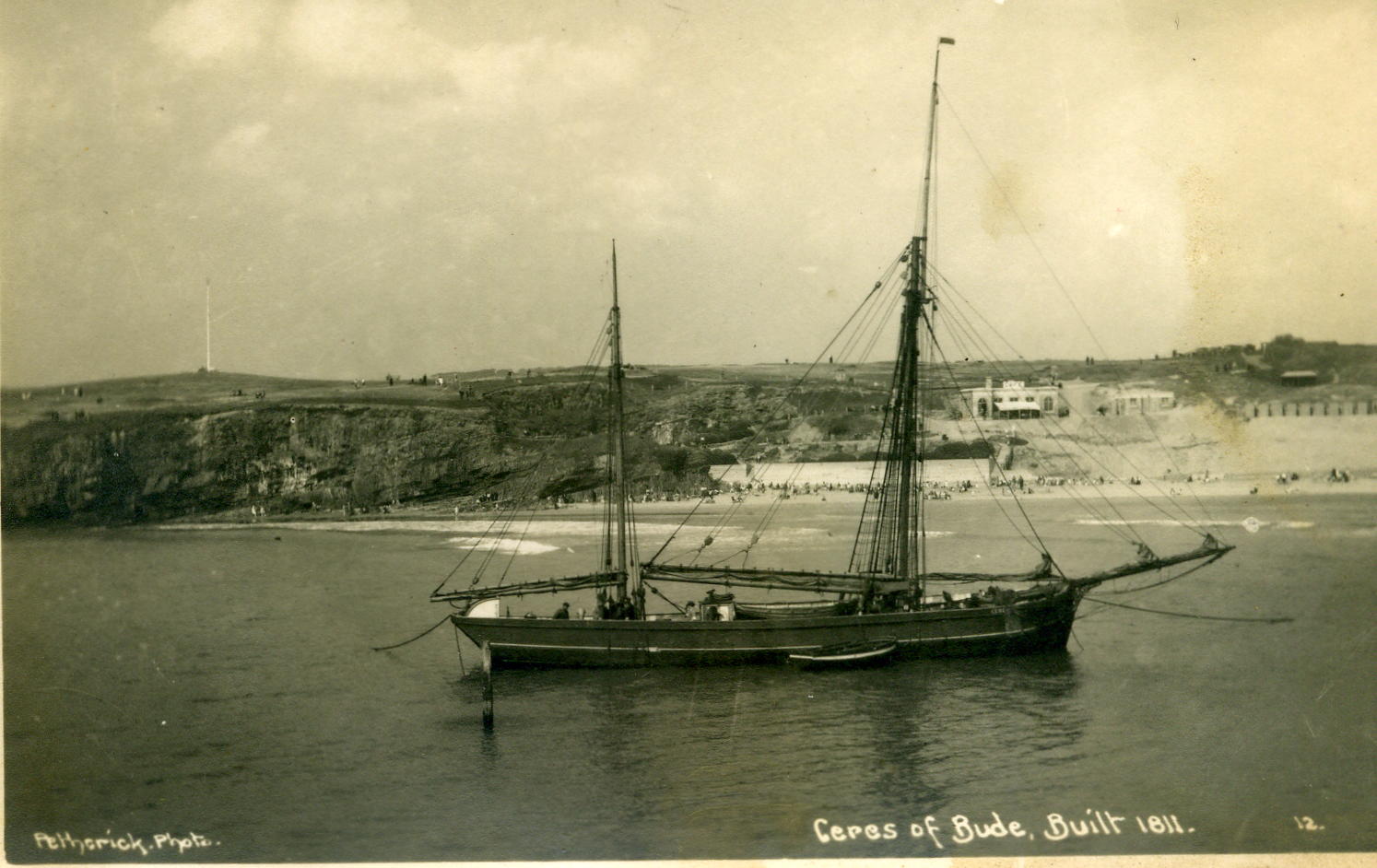
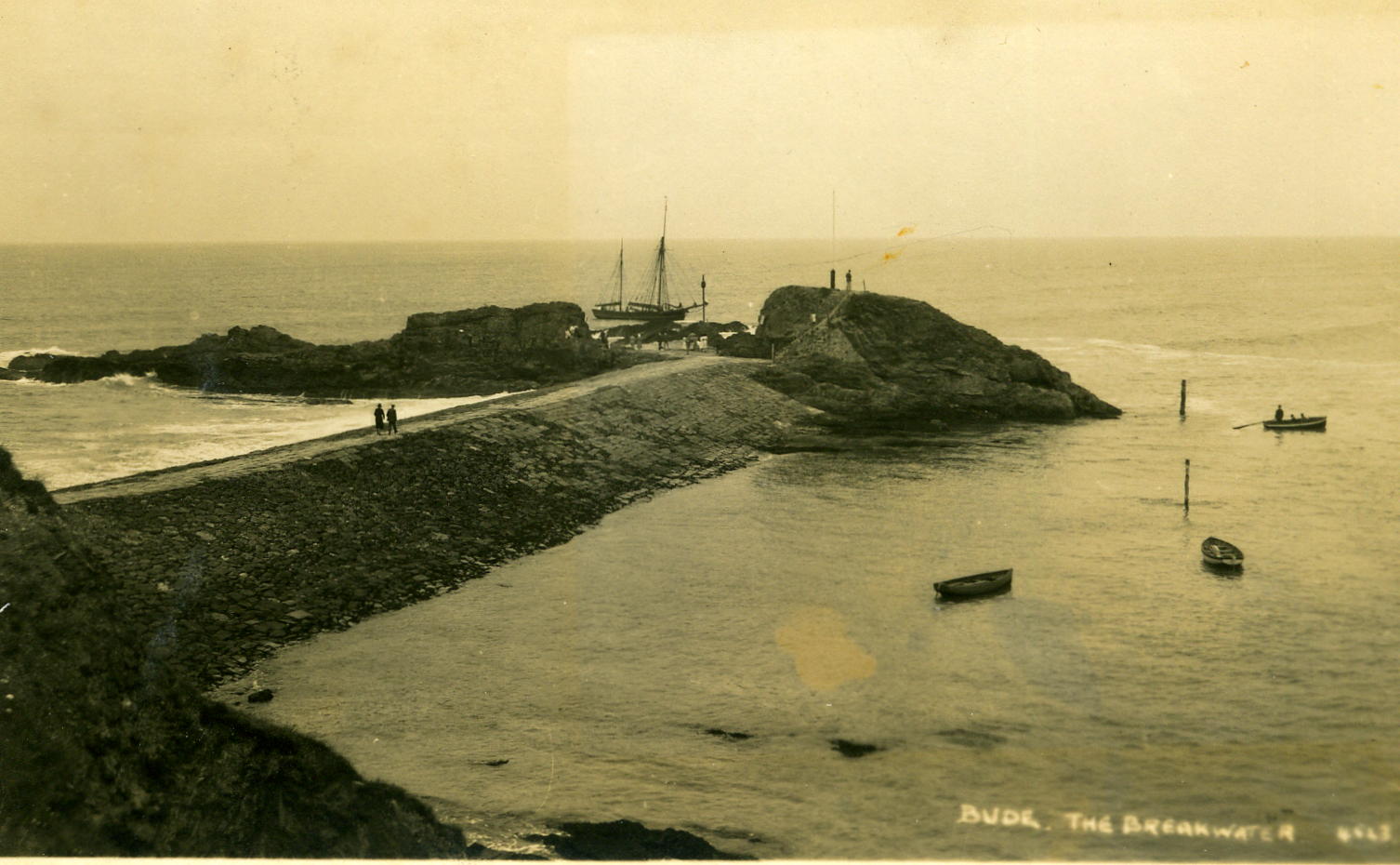
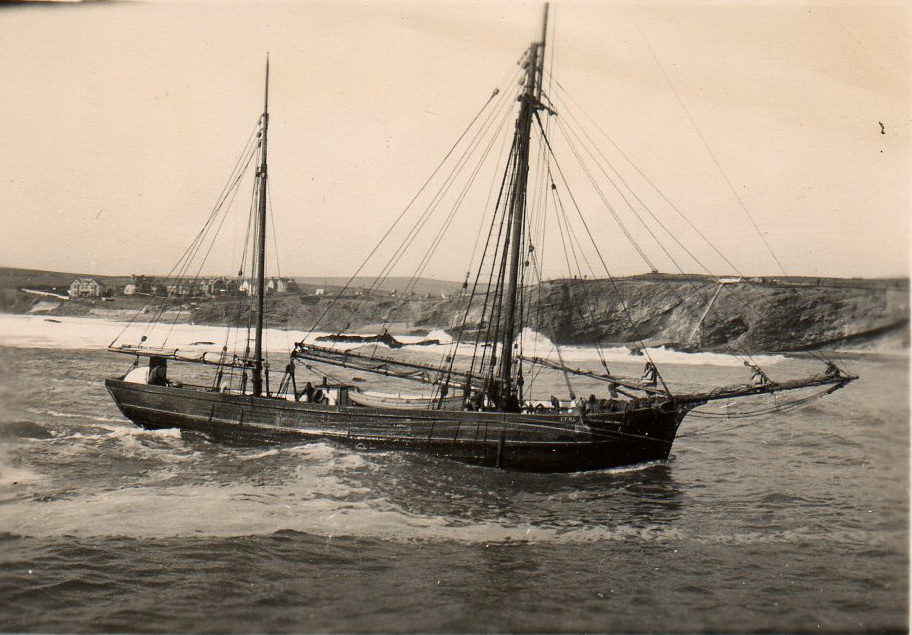
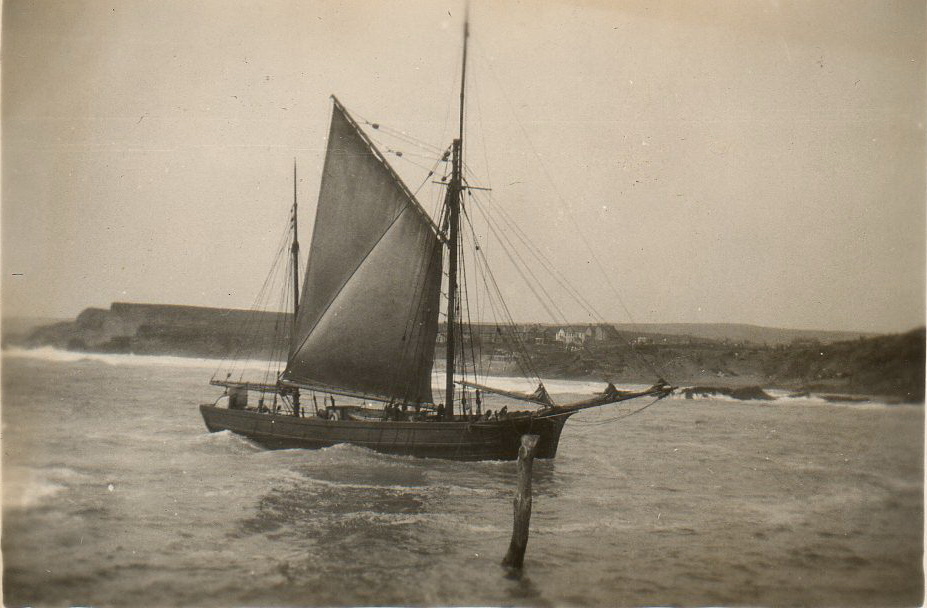
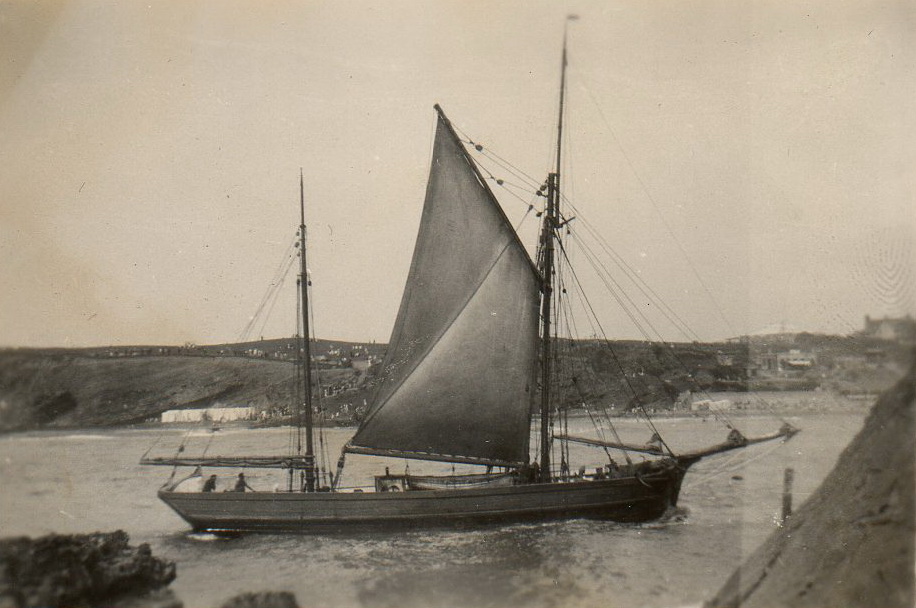
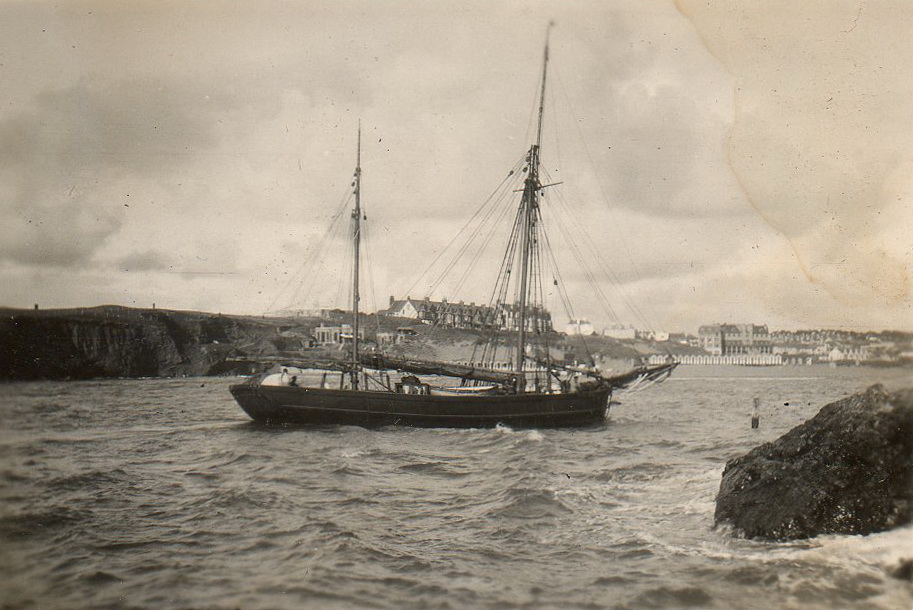
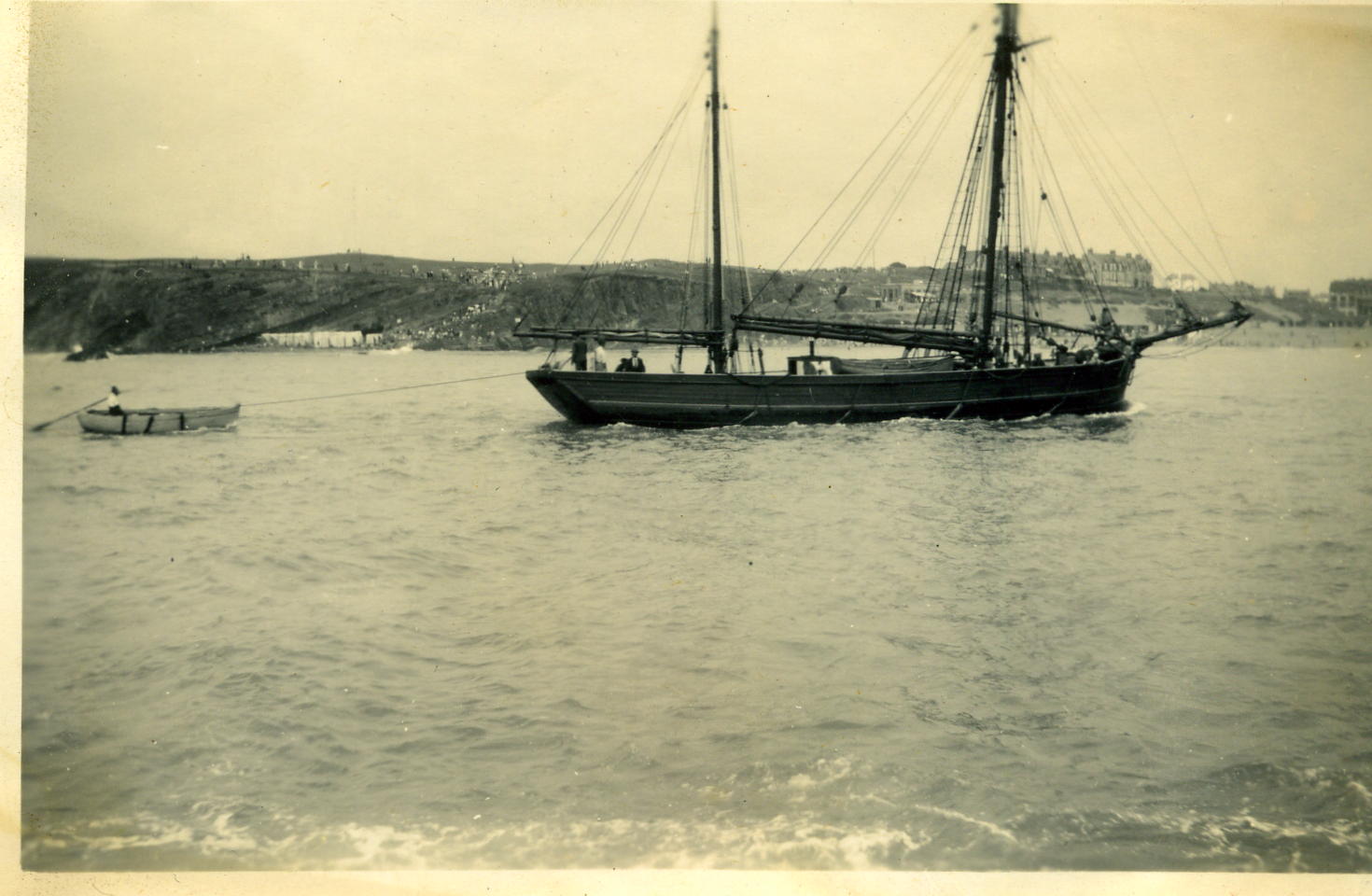
Ceres – a suitable resting place

On 24th November 1936, Ceres went down in Bideford Bay.

“The 125 years old “Ceres”, veteran of the merchant service, her course now run, lies at the bottom of Bideford Bay, somewhere off Baggy Point.

The “Ceres” sprang a leak on Tuesday night while on a voyage from South Wales to Bude, and foundered after her crew had put off in her boat and had been picked up by the Appledore lifeboat. The Captain is Mr Oswald Jeffery, a married man, whose home is in Richmond Road, Appledore, and the mate Mr Walter Ford, a married man of Irsha Street,  Appledore. They reached Appledore in the lifeboat at about 11 o’clock, and on arrival the Rev Muller offered a short prayer of thanksgiving for their safety.

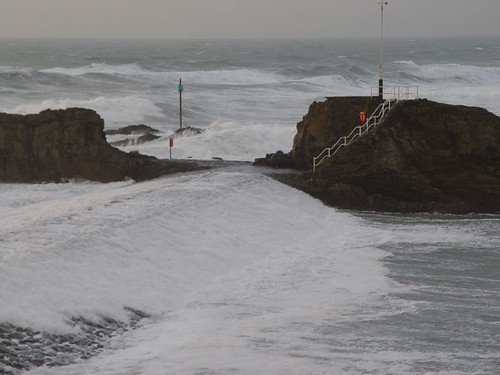
Captain Jeffery said,” We left Swansea on Tuesday bound for Bude with a cargo of slag.  Because of the weather we intended to go in over the Bar for the night as it was too rough to venture on to Bude.  At 8 o’clock I went below to rest for an hour, leaving the mate in charge.  An hour later he told me there was water in the engine room. We manned the pumps. We tried to get the ship over the Bar, but the water made her roll badly, and I gave the order for the ship’s rowing boat to be launched. I fired two rockets, and we abandoned the vessel. We lay in the shelter of the “Ceres” which was sinking, and were taken onboard the lifeboat.”

Dr. Valentine stood by in case medical assistance was needed, but although wet through, neither the captain nor his mate appeared any the worse for this ordeal.

The “Ceres” was owed by a Bude firm of coal merchants, and was built in Salcombe.

~~~

“. . . lies at the bottom of Bideford Bay, somewhere off Baggy Point.”

On 12th March 2011, 74 years and 108 days after she went down, we took a walk on Baggy Point.

The day was hazy with rain forecast for the afternoon.  The air was warm for March – the sea calm, Lundy Island almost lost in the haze.

There is a green navigation buoy off the Point, guiding ships away from the rocks that mark this coast.
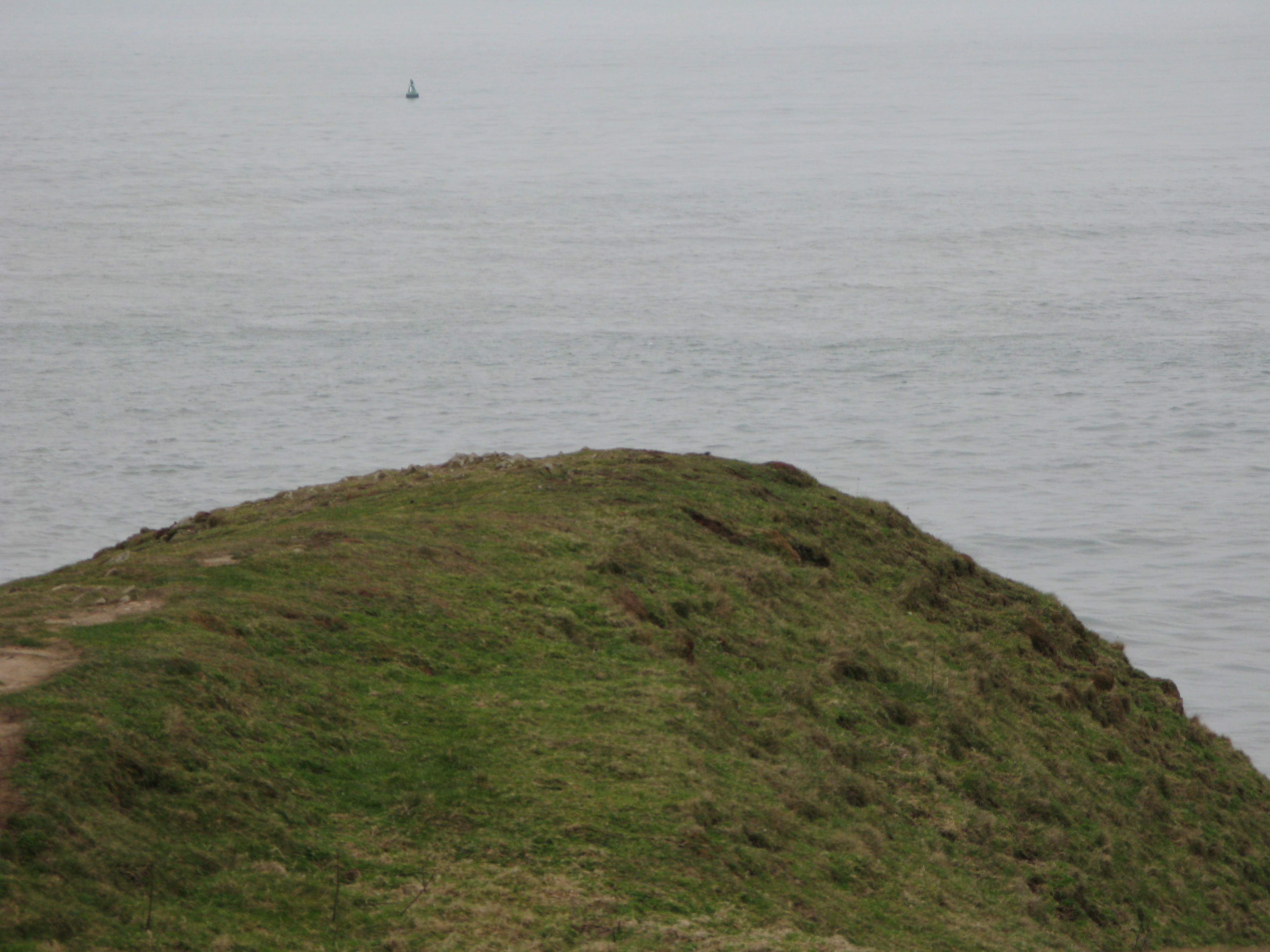
I wondered if it was there the day Ceres went down.

(Which reminds me, the original charts still exist. I will check and let you know.)

You have to get close to the Point and then start to climb down before you discover just how spectacular it is.
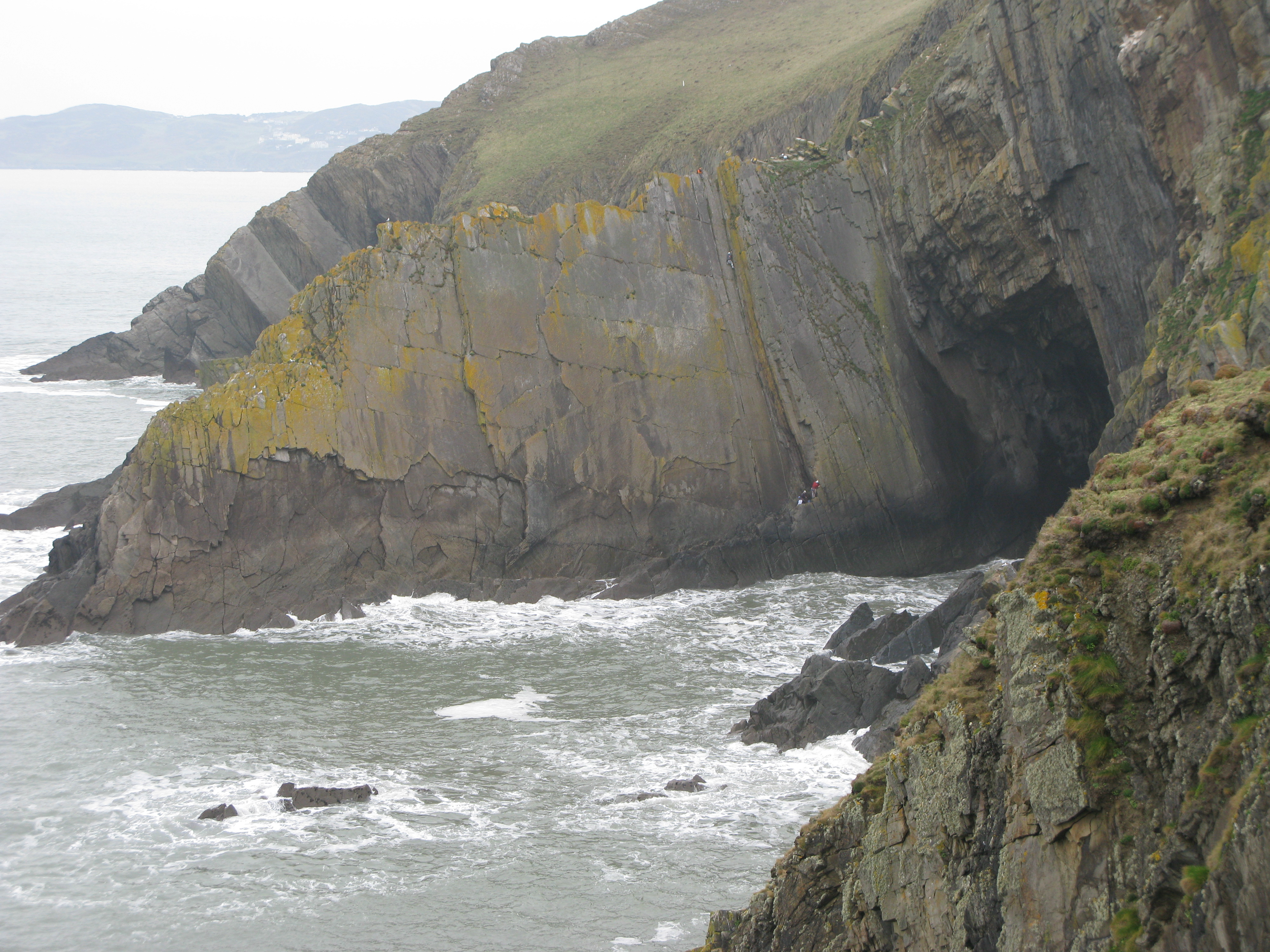
The sea and the weather whittle away at this coast hour on hour, day on day, year on year, century on century.

The climbers on the rock face are lost in the sculpture.

~~~

This is no place to be late at night in a westerly gale.

“. . . Because of the weather we intended to go in over the Bar for the night as it was too rough to venture on to Bude.”

It is approximately 12 nautical miles across Bideford Bay from Baggy Point to Hartland Point and another 12 nautical miles or so down an inhospitable, west-facing coast to the difficult entrance to Bude Haven.
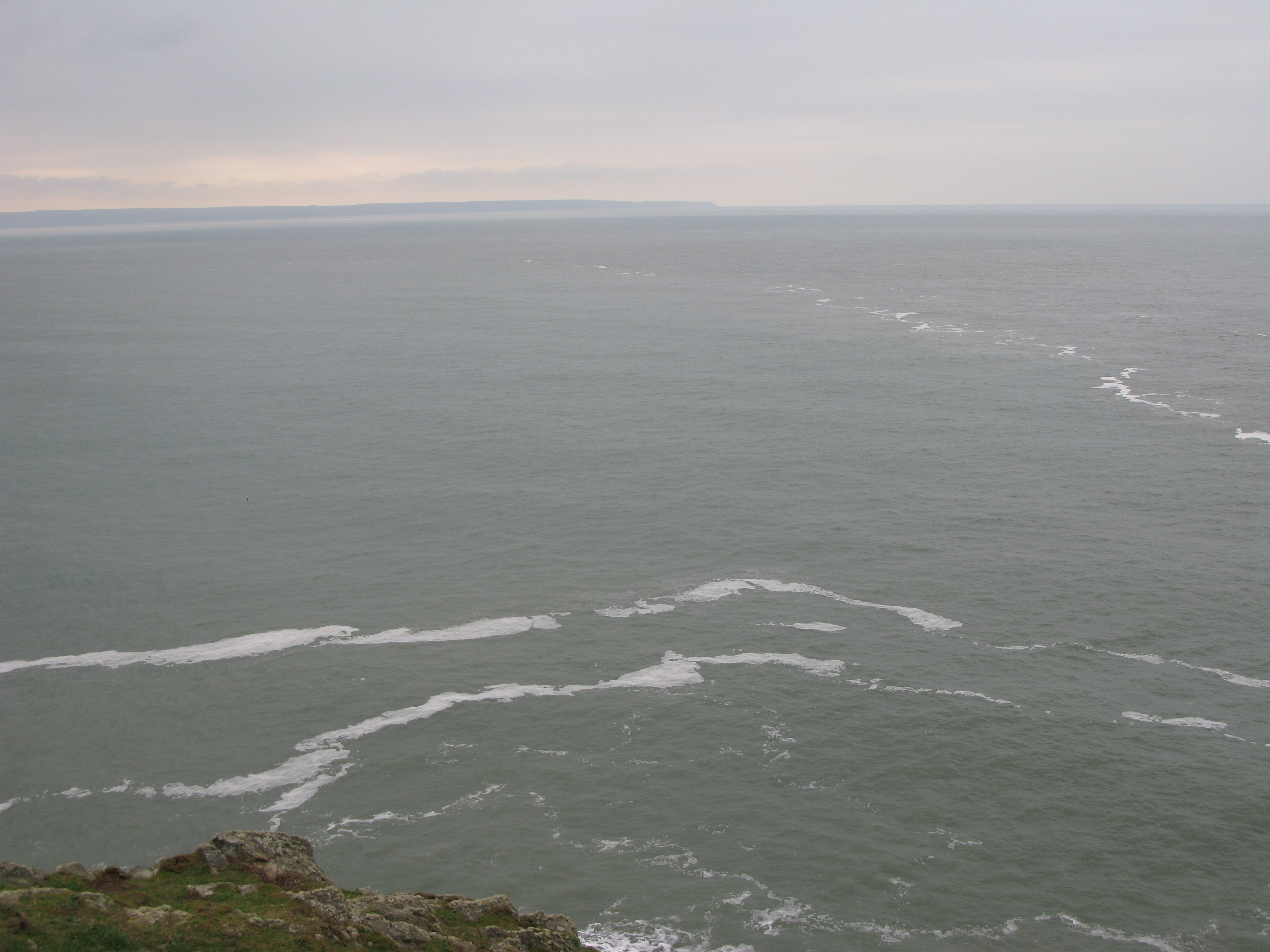
Better to make for shelter inside Bideford Bar and accept the twelve nautical miles from there back to Hartland Point as a cost worth bearing.

In noting the features of navigating the Bristol Channel  the Cruising Almanac states:

“There are races off many headlands in particular Hartland Point and Bull Point on the S side and St Gowans Head, Oxwich Point and Mumbles Head on the N, together with dangerous races, the Hen and Chickens and White Horses off the NW and NE of Lundy and also S of Lundy. Overfalls are widespread, sometimes in mid-channel and a short, steep sea sets up quickly with wind against tide . . .”

~~~

There are two footpaths from Baggy Point to Croyde.

The lower one gives a perfect view of the Bay across to Bideford Bar.

The Cruising Almanac again: ” Bideford Bar has about 1m (at LAT – the lowest depth at the lowest of low spring tides). Bar and sands are continuously shifting and buoys may be moved to allow for this. It is dangerous if a heavy ground swell is running. Oc Ldg Lts are moved to suit the fairway. If a sea is running on the bar a good rise of tide should be waited. Under bad conditions the entrance may be difficult and dangerous . . . The tide may be awaited in Clovelly Bay with winds S of W. . . 

“Approach: In thick weather make Downend or Westward Ho! and thence shape a course for Bideford Fairway RWVS with sph topmark Fl.10s NNW of Rock Nose, Westward Ho! . . .”

So there it is: in the middle of the thin line of sunlit water across the Bay, the Bideford Fairway buoy can be faintly seen . . .

. . . and somewhere beneath this Bay lies Ceres.

~~~

The others walk on and I sit for a while . . .

forget the photographs, forget the newspaper cuttings, forget the family stories, this is here and now.

She’s been down there for nearly 75 years . . .

. . . . and I am left wondering how the loss of a sailing vessel so long ago can be so deeply moving to someone who wasn’t even born then.

What was it about those ships?

~~~

But time it comes to ships and men when sailing days are past,

Even such as hail from Devon where they mostly build to last,

And her seams began to open and the Severn tide came through

And the water kept on gaining spite of all that they could do.

They did their best to beach her but they couldn’t do no more

And she foundered at the finish there in sight of Appledore.

And her bones’ll never flicker blue on any ‘longshore fire,

For she’ll lie there and she’ll moulder as an old ship might desire

And hear the vessels passing by, and dream about the past,

And the great old times in Devon where they built her once to last.
from The Ketch “Ceres” 1811 – 1936 by C.Fox Smith

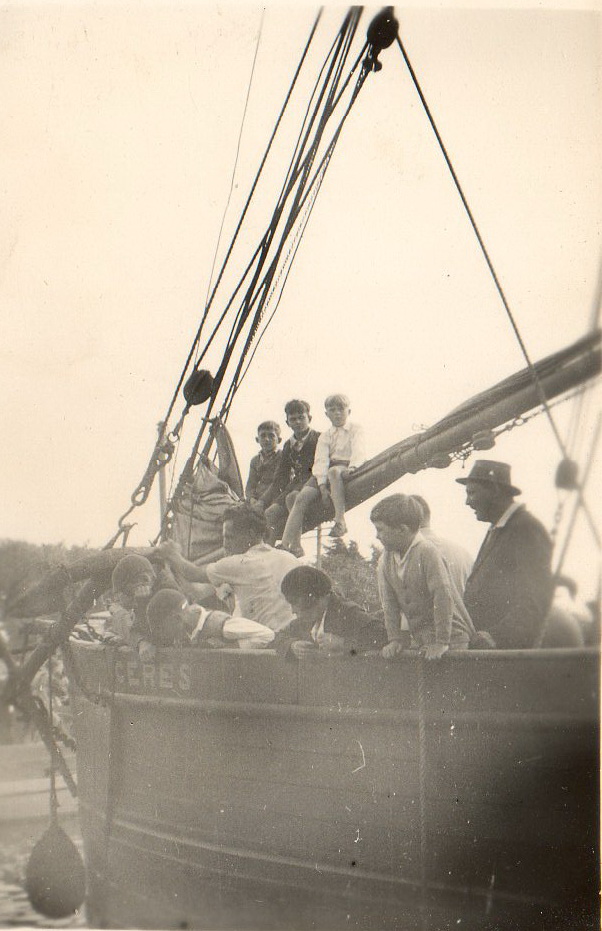
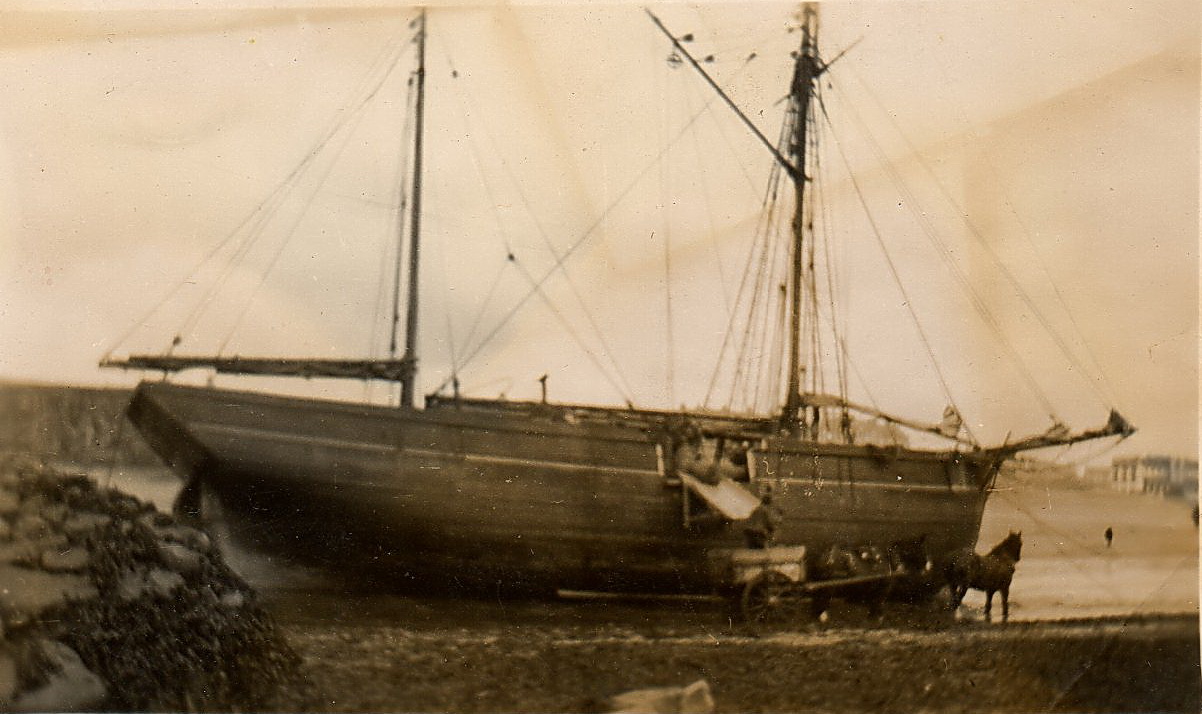
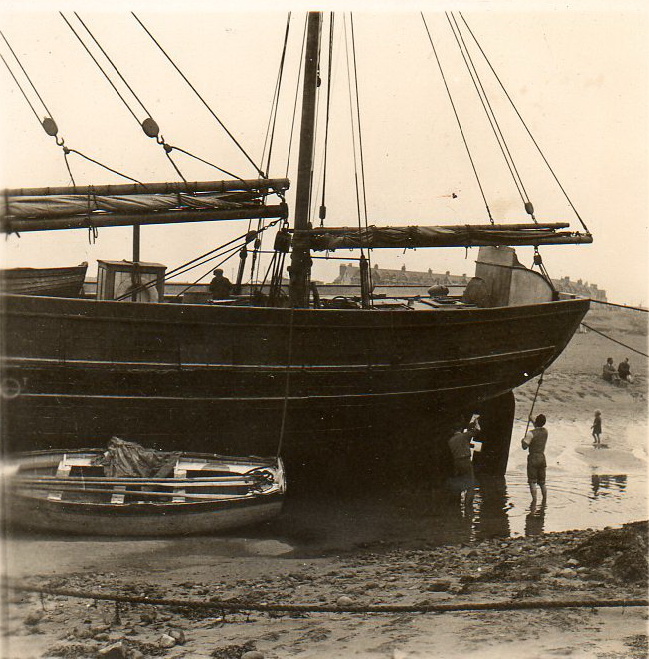
Ceres – between trips

Taking advantage of low tide.

Enjoy the detail in this photograph – rudder, blocks, hobble boat, people on beach, men working.

“Mr Health and Mr Safety, all of these children gained from the experience.”

The definition is not so good in the photo, but the sentiment is.

~~~

From a series of recently rediscovered photographs that had lain pressed in a book for the past ten years.

For the previous set herehere and here, for an overview of the harbour at Bude here

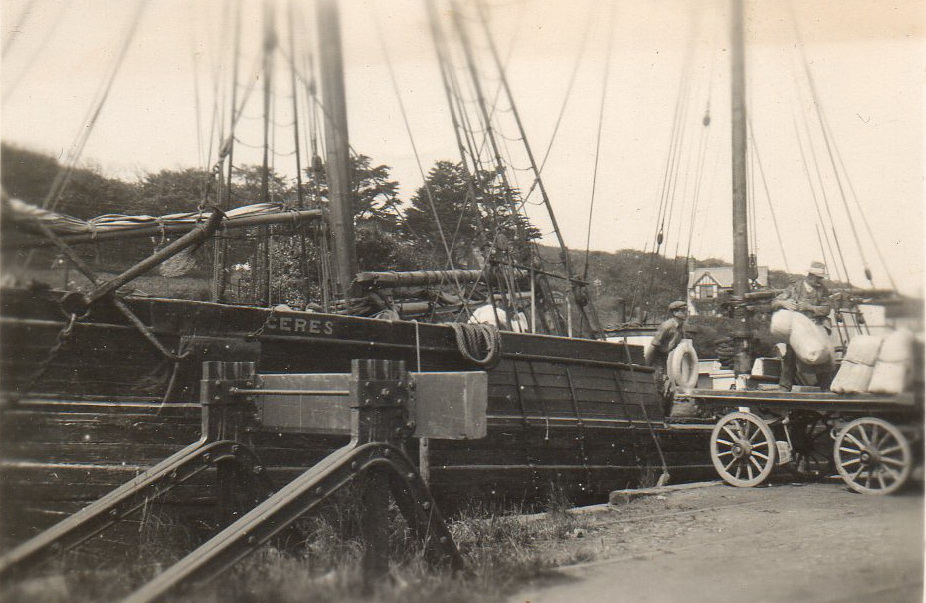
Ceres offloading

The turn-around had to be quick and slick between tides . . .

. . . with an eye on the weather

~~~

Horses worked better then vehicles on the beach, but . . .

~~~

. . . here, on the lower wharf in Bude Canal Basin, the trains are preparing to take over.

~~~

From a series of recently rediscovered photographs that had lain pressed in a book for the past ten years.

For the previous set here and here, for an overview of the harbour at Bude here

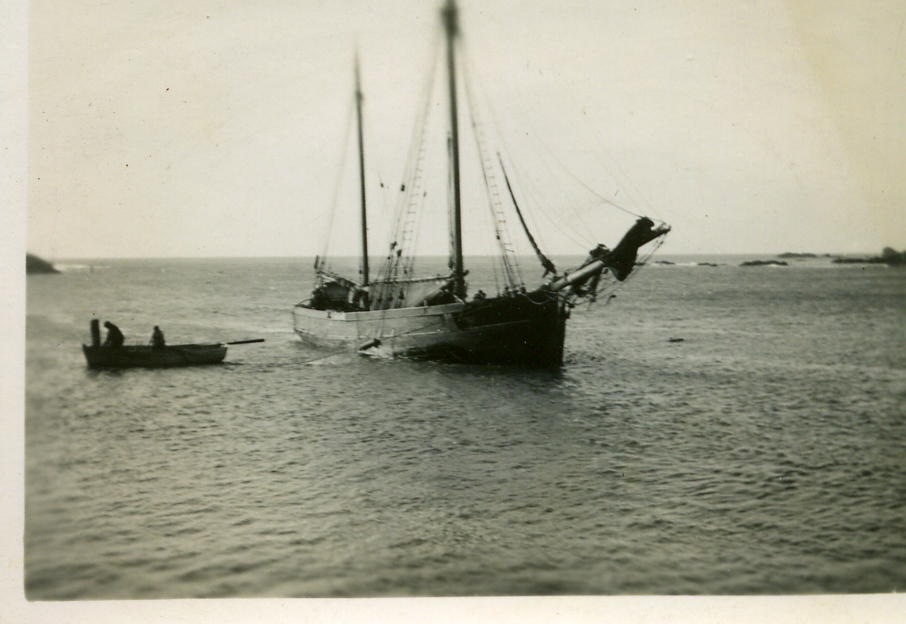
    Ceres at anchor

    These photographs were taken at full tide.

    A few hours later, she would be high and dry on the sand.

    The hobble boat taking a line to the mooring post

    ~~~

    ~~~

    ~~~

    ~~~

    From a series of recently rediscovered photographs that had lain pressed in a book for the past ten years.

    For the previous set here, for an overview of the harbour at Bude here

    The ketch ‘Ceres’ entering Bude


    Six pictures of Ceres found recently – pressed between the pages of an old volume.

    Several years ago years, a sudden flood swamped the old leather suitcase they’d been lying in. They were all damaged – water-marked and curled. The flattening-them-out-in-an-old-book trick seems to have worked.

    ~~~

    Here she is rounding Barrel Rock. A hobble boat is waiting just inside Chapel Rock

    The crew are working hard, preparing mooring lines; the helmsman barely visible in the stern.

    On another occasion, she enters Bude with her mainsail set.

    Bude seawater swimming pool is to the right of the picture

    By the size of the bow wave, the main seems to be helping the engine, perhaps on a falling tide.

    With hobble boat in tow

    ~~~

    There were several more old photos of Ceres in those pages.

    I will group together and post them as a series.

    From Steeple Point – character and individuality

    I found John Howlett’s book in my favourite second-hand bookshop – Books by the Sea in Bude.

    ‘Mostly About Boats’ could have been the title of this blog.

    Three pages in: “We are so controlled and directed and generally bedevilled from the cradle to the grave, that any activity engendering personal initiative and self-reliance – qualities in serious danger of extinction, is surely laudable in itself . . .”

    I’m beginning to like this man.

    Talking of a trip to Flushing and the Scheldt, “. . . we were so fortunate as to see a Schevingen Bom. Nearly as broad as she was long and completely rectangular, save that the angles were rounded off, she was immensely strong, and was built to run in anywhere on the sands, where she was loaded or unloaded from carts at low water. Like so many things of character and individuality, they are now extinct.

    . . . and about cruising: “Escapism? Well, that is an easy taunt to throw at those who ignore the values of the herd; but if we seek contentment and, perhaps, some enlightenment on those same values, here is a road for those who will take it.”

    . . . and then a sentence that resonates: “The flood of man’s ingenuity has overwhelmed his power to create beauty.”

    I looked at the short biography of the author on the cover – Mr Howlett, the Editor of the Cruising Association Bulletin, who calls his book a “hydrobiograpy” . . .

    The date of publication? – 1956.

    He must have been more or less the same age as I am now.

    What would he think of 2010?

    On sailing a Folksong – The timing could have been better

    The day job is demanding at the moment – and the holiday was abroad, therefore I have not spent enough time on the boat.

    So, I thought, why not lift her now that most boats are back in the water and get a couple of jobs done.

    This includes removing layers of anti-fouling that weren’t removed properly in her early years. There are patches where it flakes off easily under a hose.

    And there are a couple of innovations on Blue Mistress (more on these later) that have been in the pipeline for some time.

    She was last lifted was eighteen months ago. There was limited but great sailing during the winter, but it has taken its toll on her hull.

    So we lifted her . . .

    – and guess what. We have now had a prolonged stretch of beautiful weather – the best for a long while.

    My hands are itching to feel the tiller, the pull on a sheet, the rise of the bow on a swell.

    I stood in the cockpit yesterday, my feet seeking the vitality of a boat on the water and, you know what?, she felt solid and lifeless.

    However elegant, a boat out of water is little better than a glorified shed.

    From Steeple Point – the music of a gale

    Following my last post,  let’s up the tempo and orchestrate a gale:

    First, change the season to winter;

    Then darken the light with heavy cloud;

    Now add two, perhaps three major storms over the Atlantic, each in a different area, each several days previously;

    Let’s have an onshore gale blowing – (the cameraman can barely stand upright);

    And the first ebb of a high spring tide, the full flood just beginning to flow out of the river;

    Add backwash to develop an undertow – the water has to go somewhere once it reaches the beach;

    With cross-currents from a tide now heading down the coast;

    And sound – the wind hammering in ears, the sea thundering and crashing, the snatched cry of seagulls.

    Now we have music – a climactic moment in a symphony without a beginning or an end, composed by Nature and performed by The Elements.

    .

    But how to describe it for those who sail in small boats.

    There is probably a scientific explanation, with each molecule of water predicted to a particular position with regard to every other molecule and the surrounding conditions.

    Perhaps there is, but it is far too confusing, too complex for we mere mortals, so we rely on words.

    And finding words is an art.

    These days, we might try “Awesome“, but it is short-hand and doesn’t really express a storm  properly.

    Some have described storms with first-hand reportage . . .

    “The Spray neared Cap Pillar rapidly and, nothing loath, plunged into the Pacific Ocean at once, taking her first bath of it in the gathering storm. There was no turning back even had I wished to do so. for the land was now shut out by the darkness of light. The wind freshened and I took in a third reef. The sea was confused and treacherous. In such a time as this the old fisherman prayed, “Remember, Lord, my ship is small and thy sea is so wide.”  Joshua Slocum

    Some with extreme drama . . .

    “Poor naked wretches, where so’er are you / That hide the pelting of this pitiless storm.” William Shakespeare (King Lear).

    Some with more rhythm . . .

    “And large blue seas each other chased, / Cascading over down the waist.  / At every pitch he held his breath; / As if he saw the face of death. / “She’s pitched away a topmast, smash!” / All hands to clear away the wreck, / Were in an instant turned on deck; / From hammock starting out alert, / Up flew each seaman in his shirt! / And up the straining shrouds they swarm, / Growling and swearing at the storm.  / The wreck secured or cut away, / She snug beneath a trysail lay.” Capt J. Mitford RN, from Adventures of Johnny Newsome.

    Of course, there are always those who see it in an entirely different way . . .

    “At night came on a hurricane, the sea was mountains rolling / As Barney Buntline chewed his quid and spake to Billy Bowline: / “A strong nor’wester’s blowing, Bill, can’t ye hear it roar now? / Lor’ love me how I pities them unhappy folks ashore now. / As comfortably you and I upon the deck are lying, / Lord knows what tiles and chimney pots about their ears are flying.” Dibdin

    ~~~

    And if poetry doesn’t work for you, then Adlard Coles’  “Heavy Weather Sailing” , now in its 30th edition, is the definitive work.

    With acknowledgement to John Irving for the poetry, quoted by him in a Yachtsman’s Week-end Book, 1938.

    From Steeple Point – a hatful of wind

    The wind increases, the foam begins to streak, the Atlantic swell presses home.

    Force 7: “In which a well-conditioned man-o’-war could just carry topsails, jib, etc in chase. And smacks remain in harbour, or, if at sea, lie to. And ashore, whole trees are in motion.” (Beaufort)

    The North Cornwall coast, from Millook Haven

    The images were taken in March and it’s not the “snowing gale” mentioned below but a fresh south easterly, blowing off this west-facing shore, the southern edge of a high pressure area, a low somewhere to the south, the wind funnelling between the two.

    ~~~

    But how to describe weather?

    Beaufort’s original description of Force 7 is one way – (and the accepted one when first introduced – and now modified), but the poets can be  more vivid.

    For example, Stevenson’s few words on a gale bring life to the scene. I particularly like the “flash of sun” and “the passion of the gale”.

    It blows a snowing gale in the winter of the year;

    The boats are on the sea and the crews are on the pier.

    The needle of the vane, it is veering to and fro,

    A flash of sun is on the veering of the vane.

    Autumn leaves and rain,

    The passion of the gale.”

    It Blows A Snowing Gale, by Robert Louis Stevenson

    ~~~

    Previous posts on this – waves, waves (cont), a question of scale.