Stillness in the dark

(Continued . . .)

This series of posts has covered a short voyage. My original intention was to outline – (mostly in images), a trip I made up the rivers Tamar and Lynher in August and maybe make a few comments about waypoints. Experiencing the advantages and disadvantages of waypoints was the exercise I set myself for the trip. On the way, I learnt much more than expected. All voyages involve a personal journey of one sort or another, but, looking back at this one, there were so many things I hadn’t seen or done before. Like many  people who finish their day job, I ask myself, “What on earth have I been doing all my life?”

~~~

I go on deck around 0500 to check the rode. I shortened it last evening to keep Blue Mistress out of the shallows as the tide fell.

It is dark. I have rigged an anchor light aft rather than on the normal fore-stay because it throws a useful light over the cockpit. The boat is only 25 foot long so the difference is unlikely to affect any passing boat. Of the two other anchor lights I can see, one is rigged the same way.

Continue reading

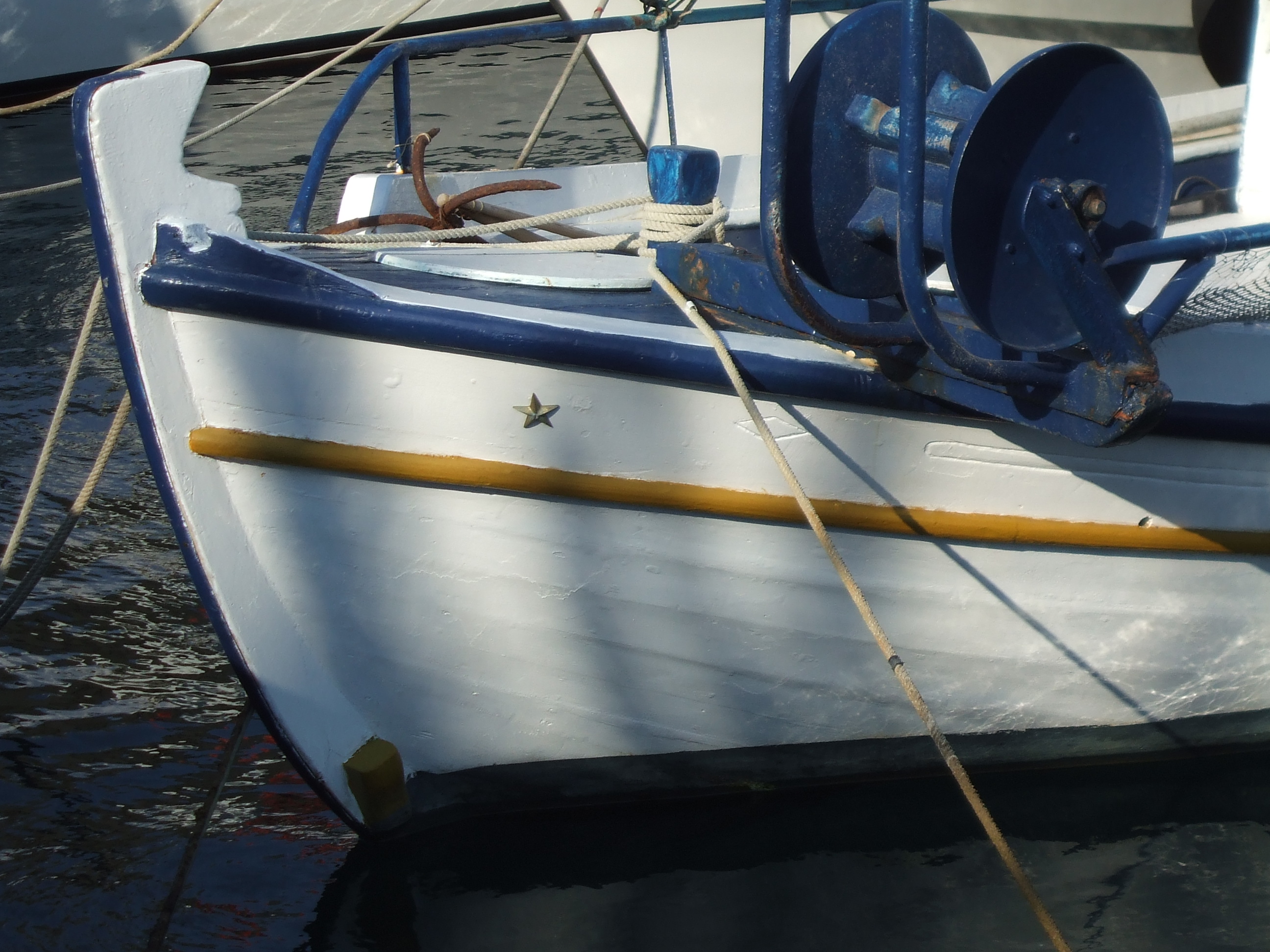
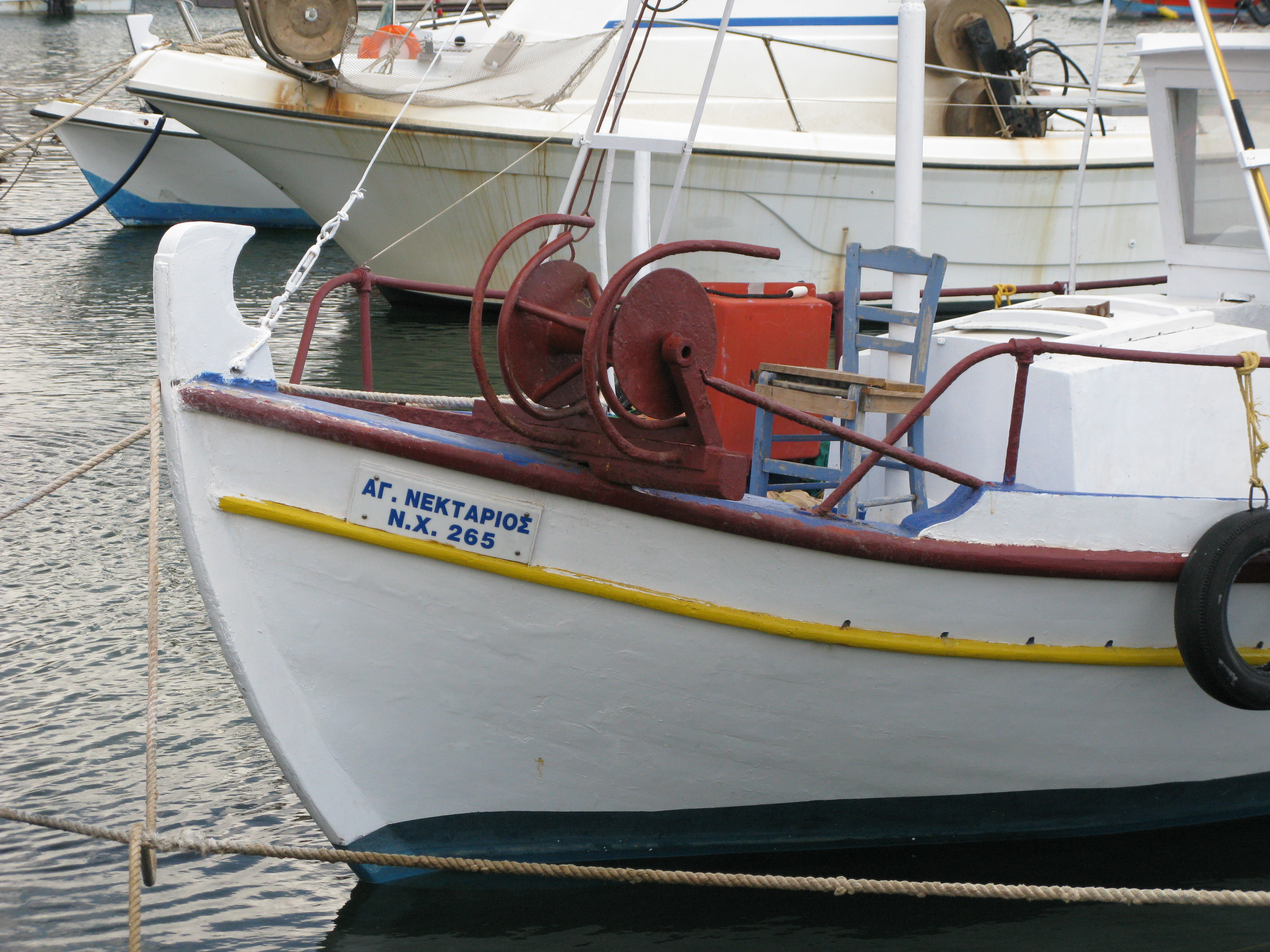
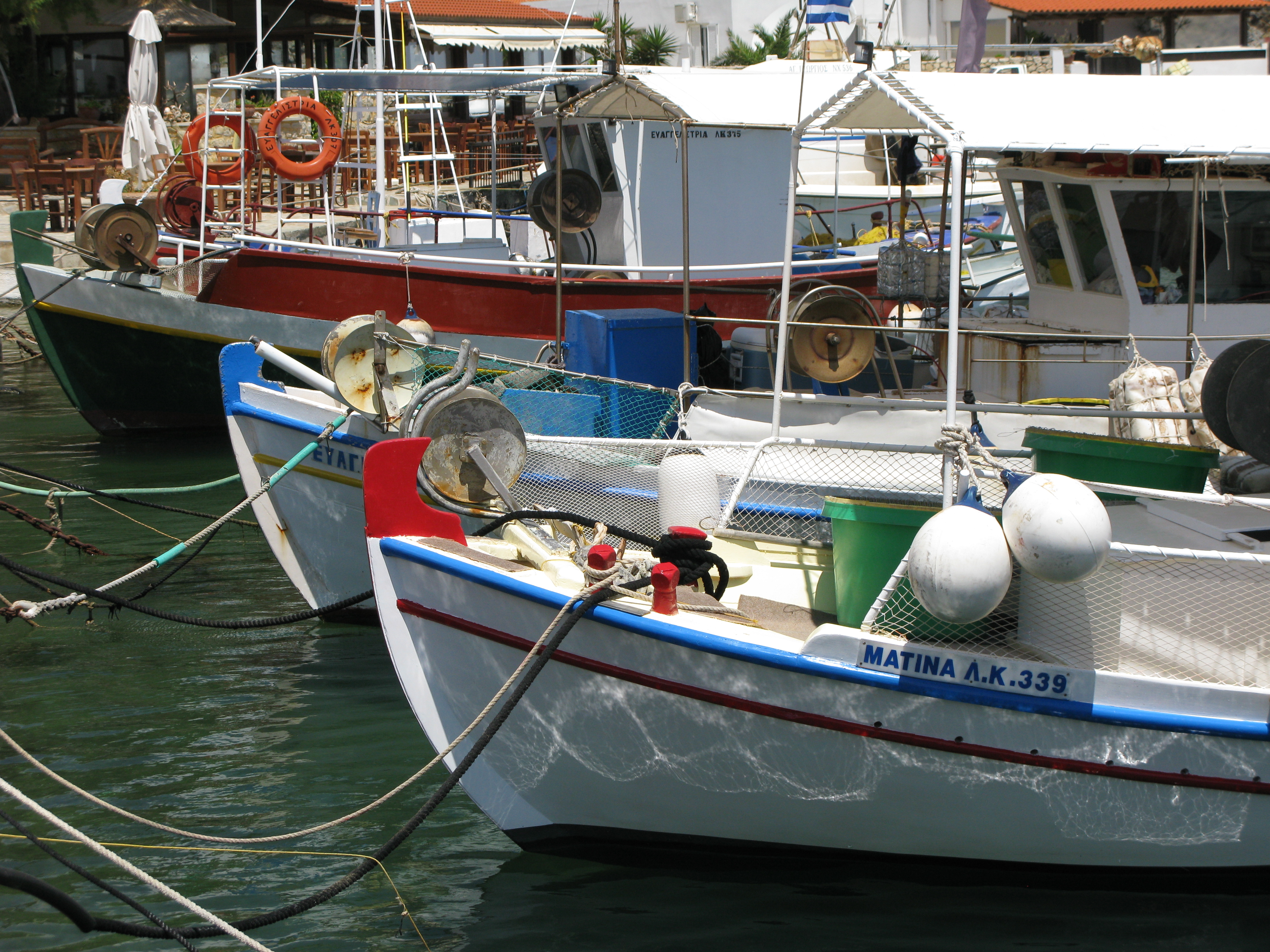
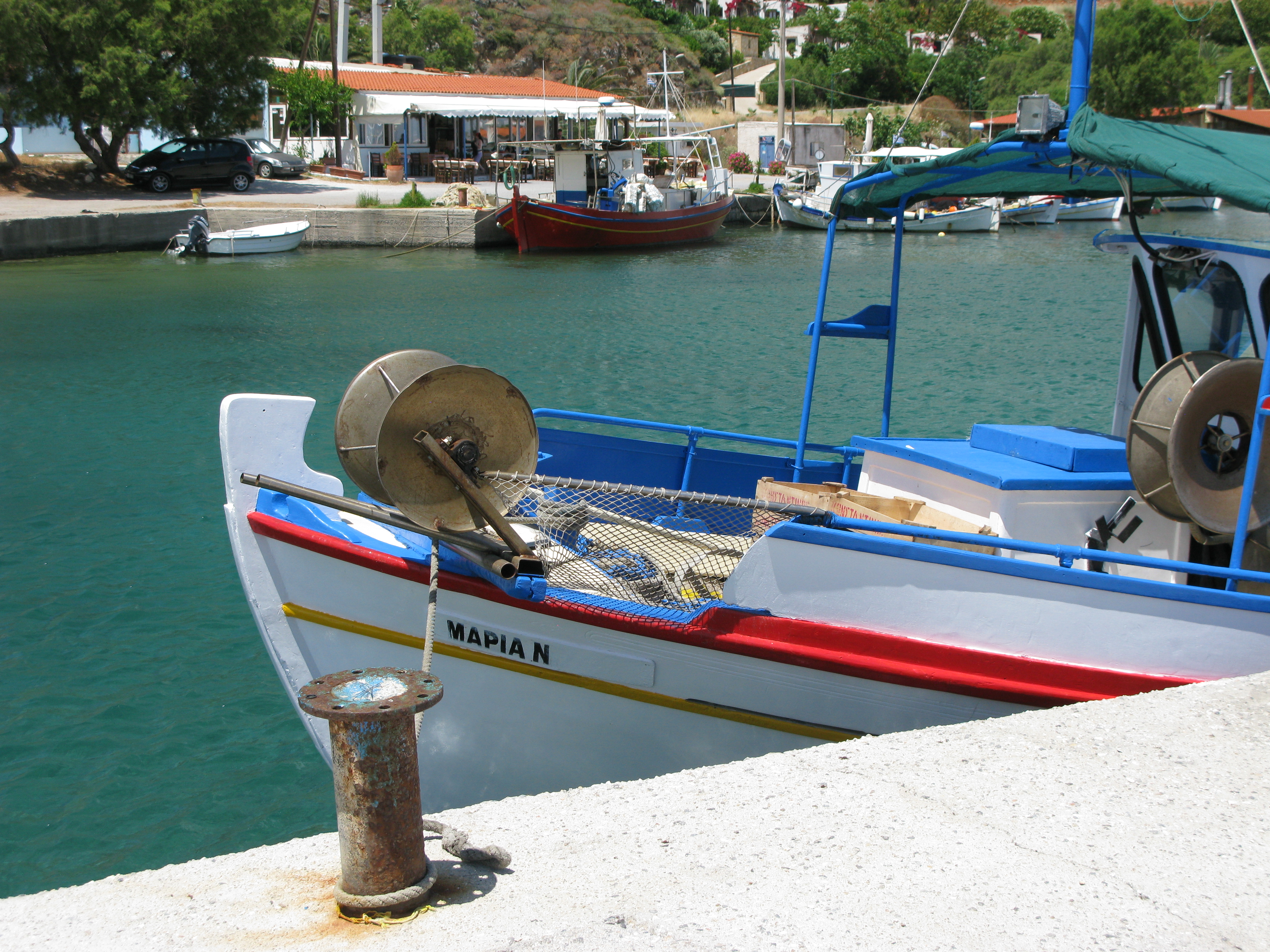
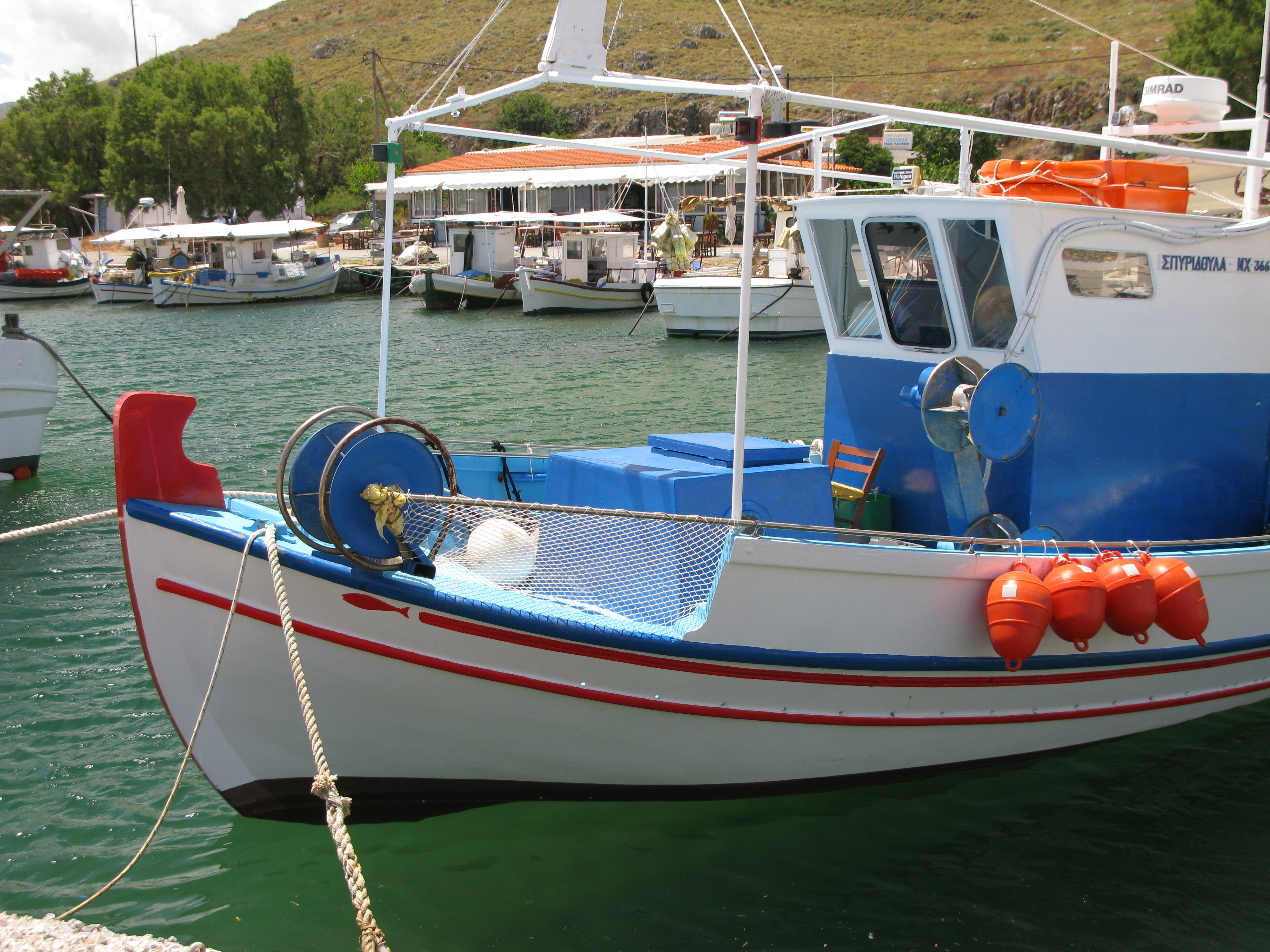
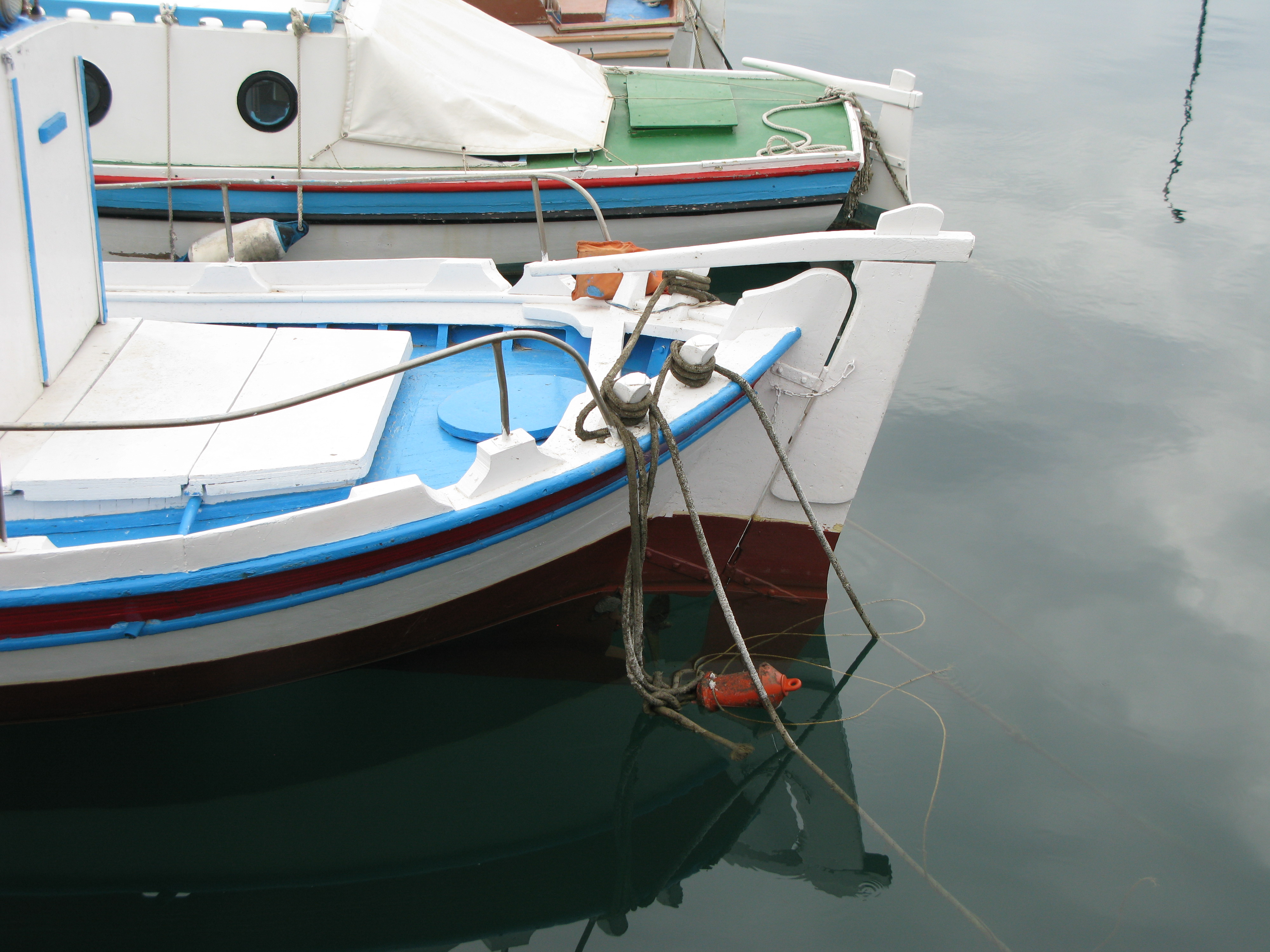
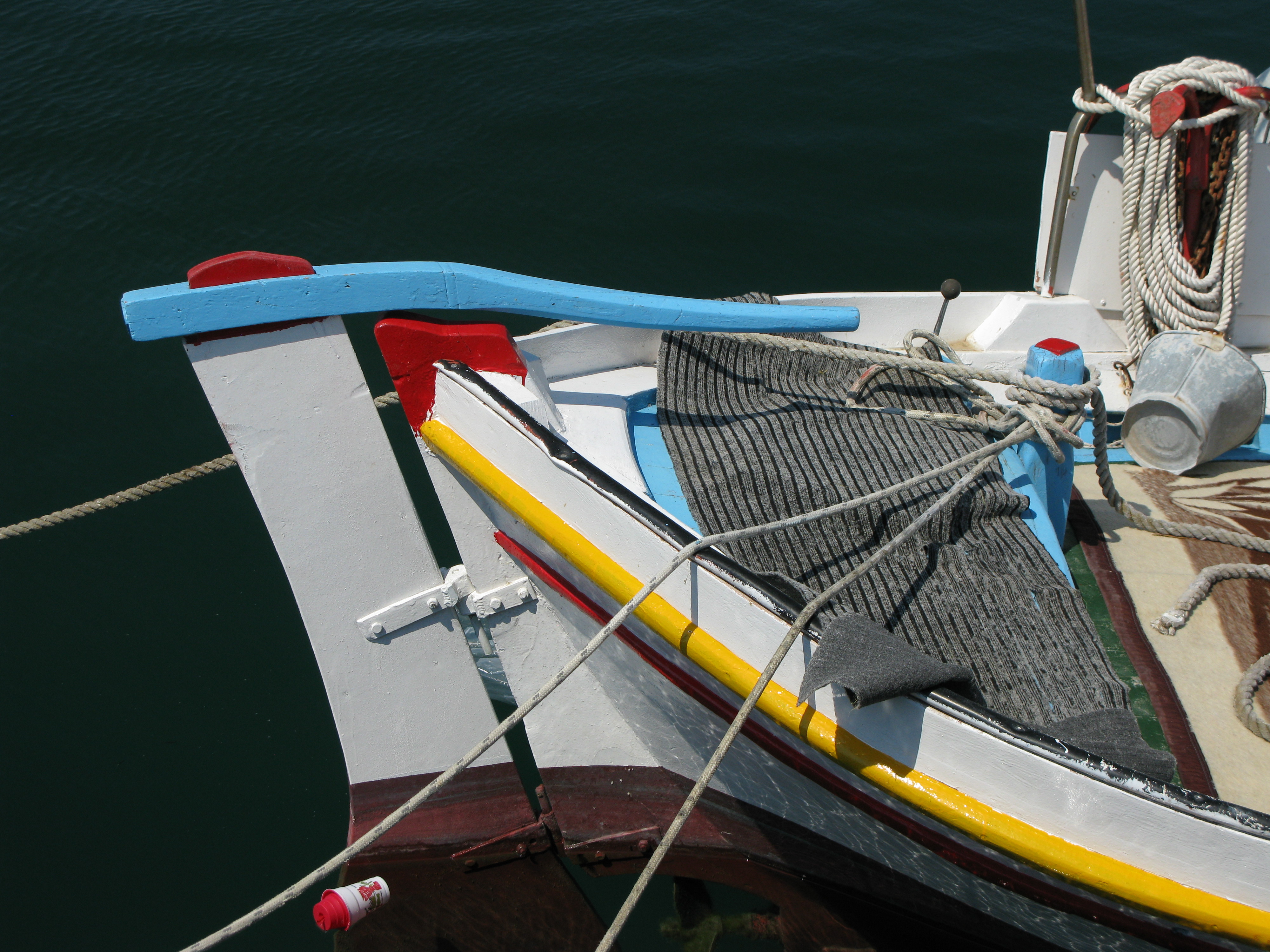
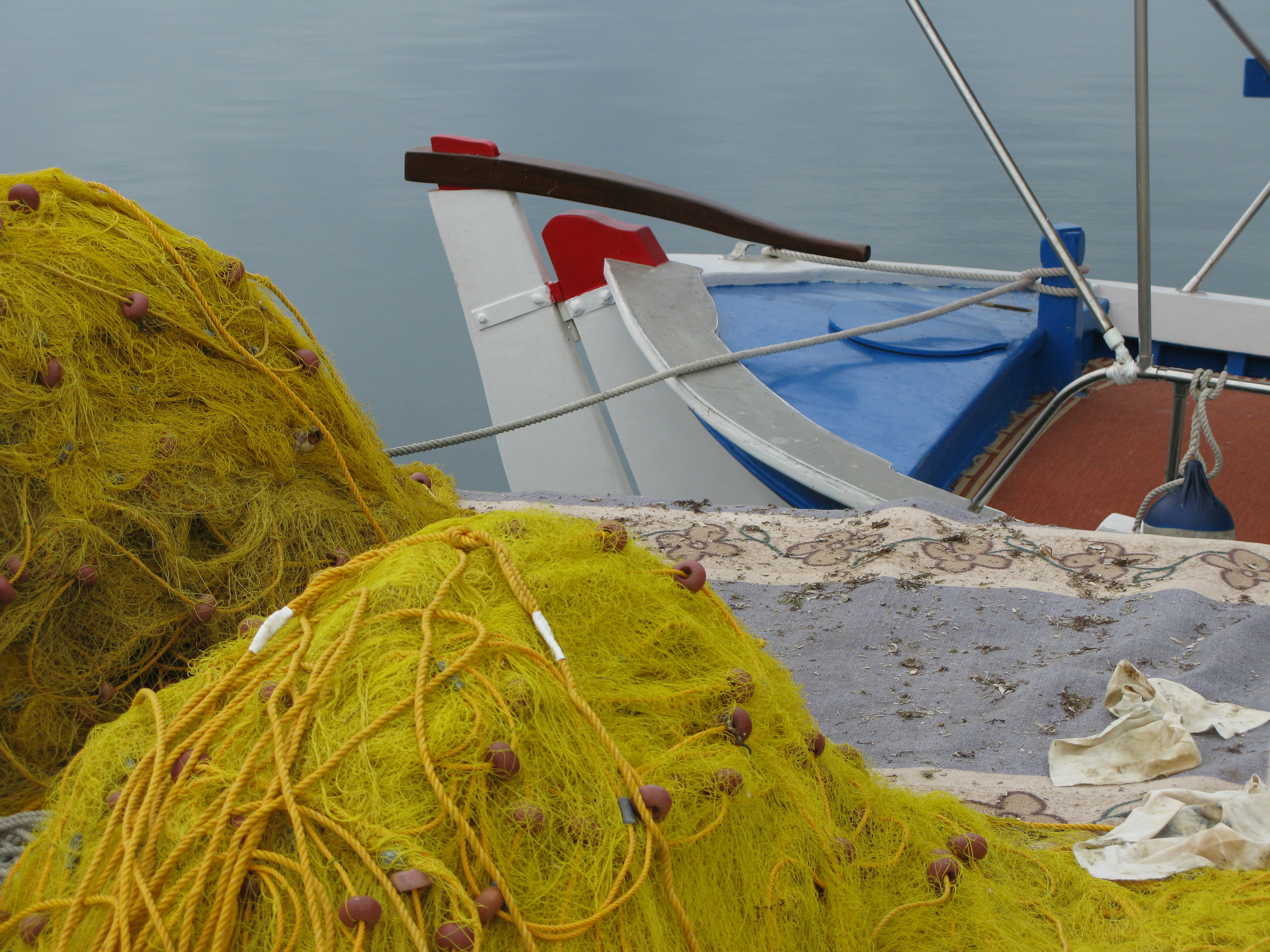
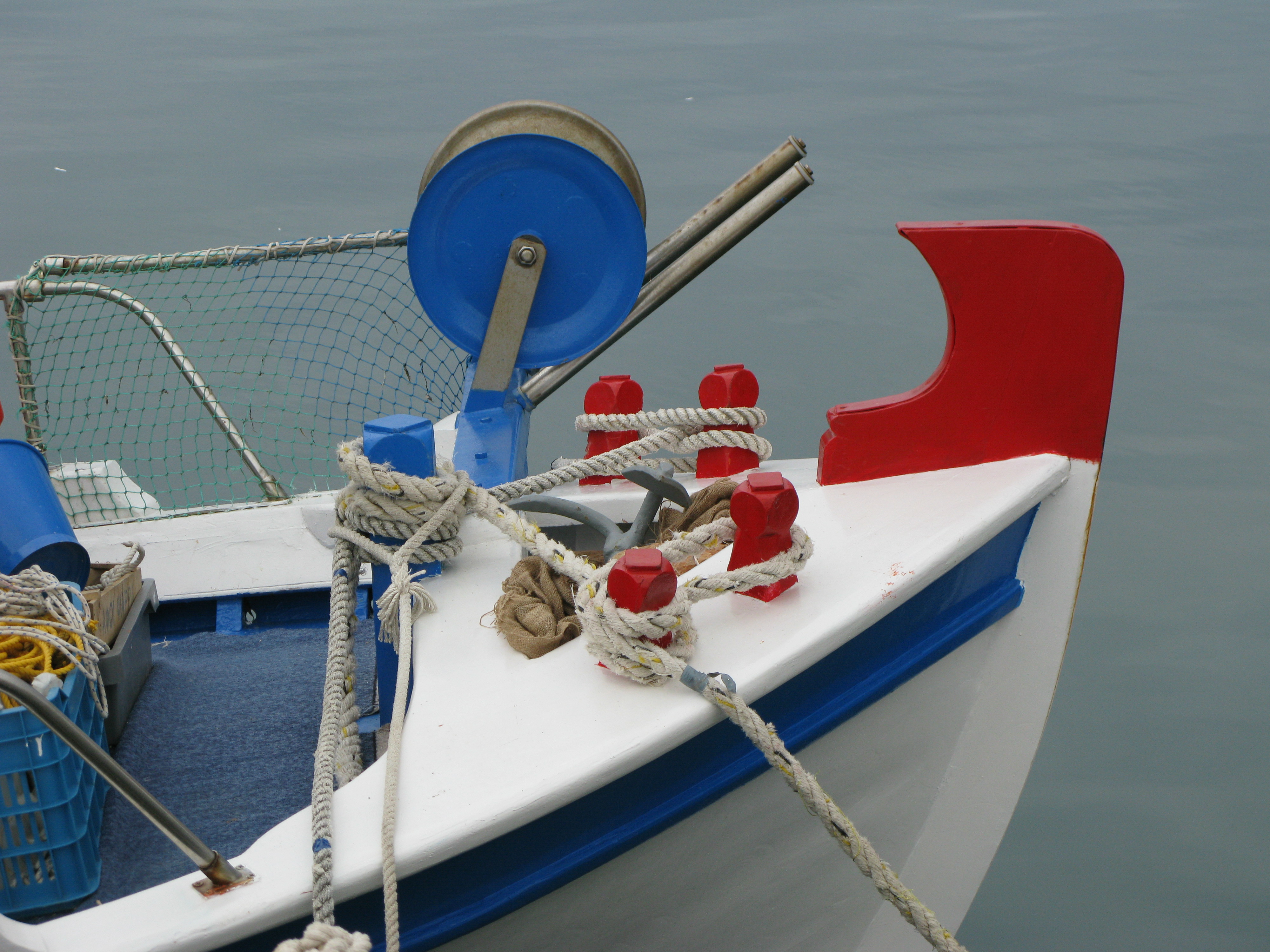
2/7: Nine bow posts

I don’t know the Greek for bow post.

They are very distinctive to the small inshore boats in Crete and throughout Greece.

(Click image to enlarge)

“Greek island fishing boats destroyed”.  The website is Greek Island Travel and there is an understandable slant  towards preserving these boats for people to enjoy their holidays in Greece. OK, if that what it takes. But these are essentially work boats.

I have plenty of images of boats that are no longer used for fishing, many of them fine-looking craft in their own right.

But it is the fishermen himself that gives life to his boat – gives it its unique character.  Lose the fisherman, you lose the character.

I will try and demonstrate this in later posts.

in the For Love of  a Boat series.

1/7: Four tillers

This is a continuation of the For Love of a Boat series.

From my last post, you can see I have been thinking about Crete.

Here – and in a number of posts to come (I don’t know how many yet), I am putting together groups of ‘boat pictures’ taken in Crete over the past ten years.

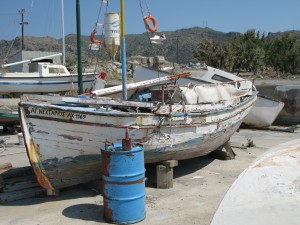
Time goes on. Political, economic and social pressures mean that some (many?) boats will end up like this:

This boat happened to be in Crete, but there are boats like this all over the world. They become neglected, then irreparable – and then they disappear. Whatever the reasons for it – and there are reasons aplenty, most of us would prefer to see boats maintained and cared for. There follows a record of some of these :

~~~

Four tillers (click on an image to enlarge it)

~~~

On being left-handed

On being left-handed

Have you ever been shown how to tie a knot by a right-handed person? “The end goes round this, over that, round again and under the other.OK? . . . Now you do it.”  Good teaching, useful learning – if you’re right-handed.

But it can be a real trial if you’re left-handed. A left-hander will pick up the rope and find that what s/he sees in front of him/her is different from the demonstration. It’s not necessarily the fault of the teacher, from the start it just doesn’t “look right”. S/he has to think it through again. Sometimes this takes time and the student appears slow, sometimes not.

I have spent most of my life bemused by the gap between how I am told I should be doing this or that task and how I end up doing it. I have driven several severely right-handed teachers wild with frustration. Older now and hopefully a little wiser, I am still left-handed and that gap between theory and action has not diminished.

In fact, I have come to enjoy it. Within what I always think of as a deceptively slow approach, life neither follows a straight line nor flashes by in black and white. There is an opportunity to stand back and observe. And there is an opportunity to be creative.

On the boat, it is not the left or right hand that is so important, it is the wish to observe, and, from that, the desire to create.

Image

Image

Seb and Maya

Back in the fifties, my dad bought an LP. He played it a lot – Uffa Sings.

As a young boy, I remember being fascinated by Uffa’s introduction to one of the sea shanties:

“‘A Roving’ – that’s a rollicking song but you can only sing about the first three verses of that because this is a song the sailors sung at sea and they weren’t always virtuous in their words.”

How I longed to hear the fourth verse!

I was reminded of this while watching Seb’s clips on You Tube.

Earlier in the year, Seb and I met at Newbury train station. He bought Blue Mistress’ old spray hood which is now attached to Maya somewhere in the Mediterranean.

I mentioned Seb at the start of his voyage. He is on a great adventure that he should one day look back on with pride. The lessons learnt will be there for ever.

He is sharing those lessons with us via short video clips from his phone. Perhaps, one of those lessons should be that because he is ‘less than virtuous in his words’, what works at sea doesn’t necessarily work for those us on land, sitting on our comfortable chairs gazing at glasses screens. (To be fair he has toned it down as time has gone on).

Here is the dilemma in the use of language. Is he recording events for himself and a small group of friends, in which case he has the right to say what he likes – (always remembering it’s difficult to put anything on media without someone misunderstanding you –  it’s totally unrealistic to think that no one else will see it – and better your friends see it first), or for a wider group – us.

I am sure we can all handle the language individually, but I would have avoided watching the clips with my mother if she were still with us – and I am certain my children would prefer to watch with me out of the room.

All the above because I, for one, am fascinated by these clips, firstly because Seb is sailing a boat like mine, secondly because he is doing something I’ve always wanted to do, and thirdly because he has found a way of recording the voyage with an intense immediacy. If he takes care in putting it all together it will be a valuable resource to him in future.

Here is Maya rounding Cabo Vincente:

You can find the rest of his clips by searching Sebinasia on You Tube.

Be(a)ware and enjoy

When all is said and done,  I’m home here talking about it, Seb’s out there doing it.

Wherever they go, I wish him and Maya fair winds  – (whenever they blow).

Ceres – a suitable resting place

On 24th November 1936, Ceres went down in Bideford Bay.

“The 125 years old “Ceres”, veteran of the merchant service, her course now run, lies at the bottom of Bideford Bay, somewhere off Baggy Point.

The “Ceres” sprang a leak on Tuesday night while on a voyage from South Wales to Bude, and foundered after her crew had put off in her boat and had been picked up by the Appledore lifeboat. The Captain is Mr Oswald Jeffery, a married man, whose home is in Richmond Road, Appledore, and the mate Mr Walter Ford, a married man of Irsha Street,  Appledore. They reached Appledore in the lifeboat at about 11 o’clock, and on arrival the Rev Muller offered a short prayer of thanksgiving for their safety.

Captain Jeffery said,” We left Swansea on Tuesday bound for Bude with a cargo of slag.  Because of the weather we intended to go in over the Bar for the night as it was too rough to venture on to Bude.  At 8 o’clock I went below to rest for an hour, leaving the mate in charge.  An hour later he told me there was water in the engine room. We manned the pumps. We tried to get the ship over the Bar, but the water made her roll badly, and I gave the order for the ship’s rowing boat to be launched. I fired two rockets, and we abandoned the vessel. We lay in the shelter of the “Ceres” which was sinking, and were taken onboard the lifeboat.”

Dr. Valentine stood by in case medical assistance was needed, but although wet through, neither the captain nor his mate appeared any the worse for this ordeal.

The “Ceres” was owed by a Bude firm of coal merchants, and was built in Salcombe.

~~~

“. . . lies at the bottom of Bideford Bay, somewhere off Baggy Point.”

On 12th March 2011, 74 years and 108 days after she went down, we took a walk on Baggy Point.
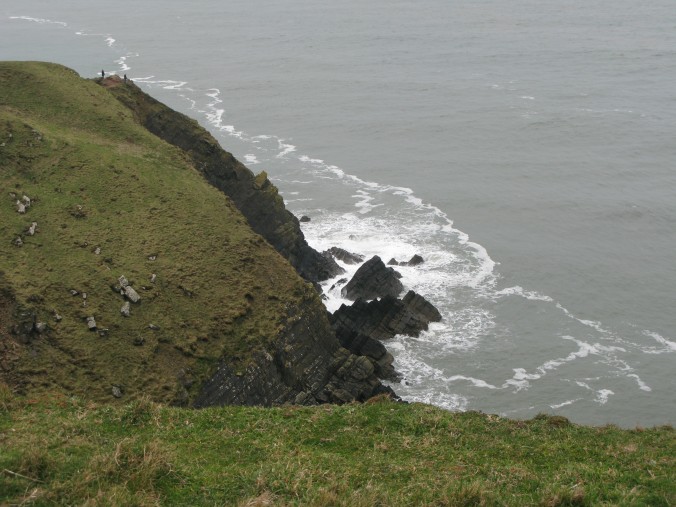
The day was hazy with rain forecast for the afternoon.  The air was warm for March – the sea calm, Lundy Island almost lost in the haze.

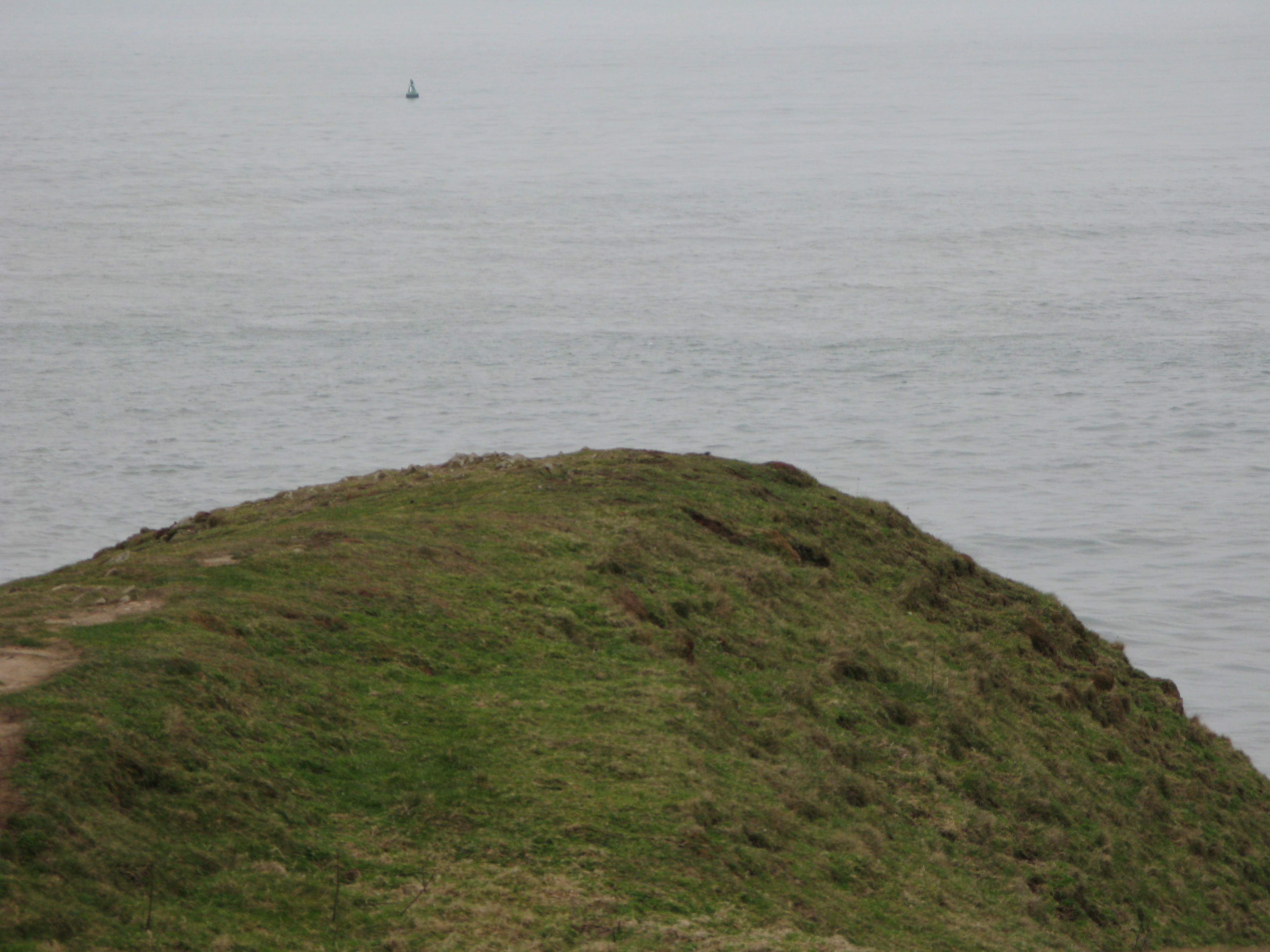
There is a green navigation buoy off the Point, guiding ships away from the rocks that mark this coast.

I wondered if it was there the day Ceres went down.

(Which reminds me, the original charts still exist. I will check and let you know.)

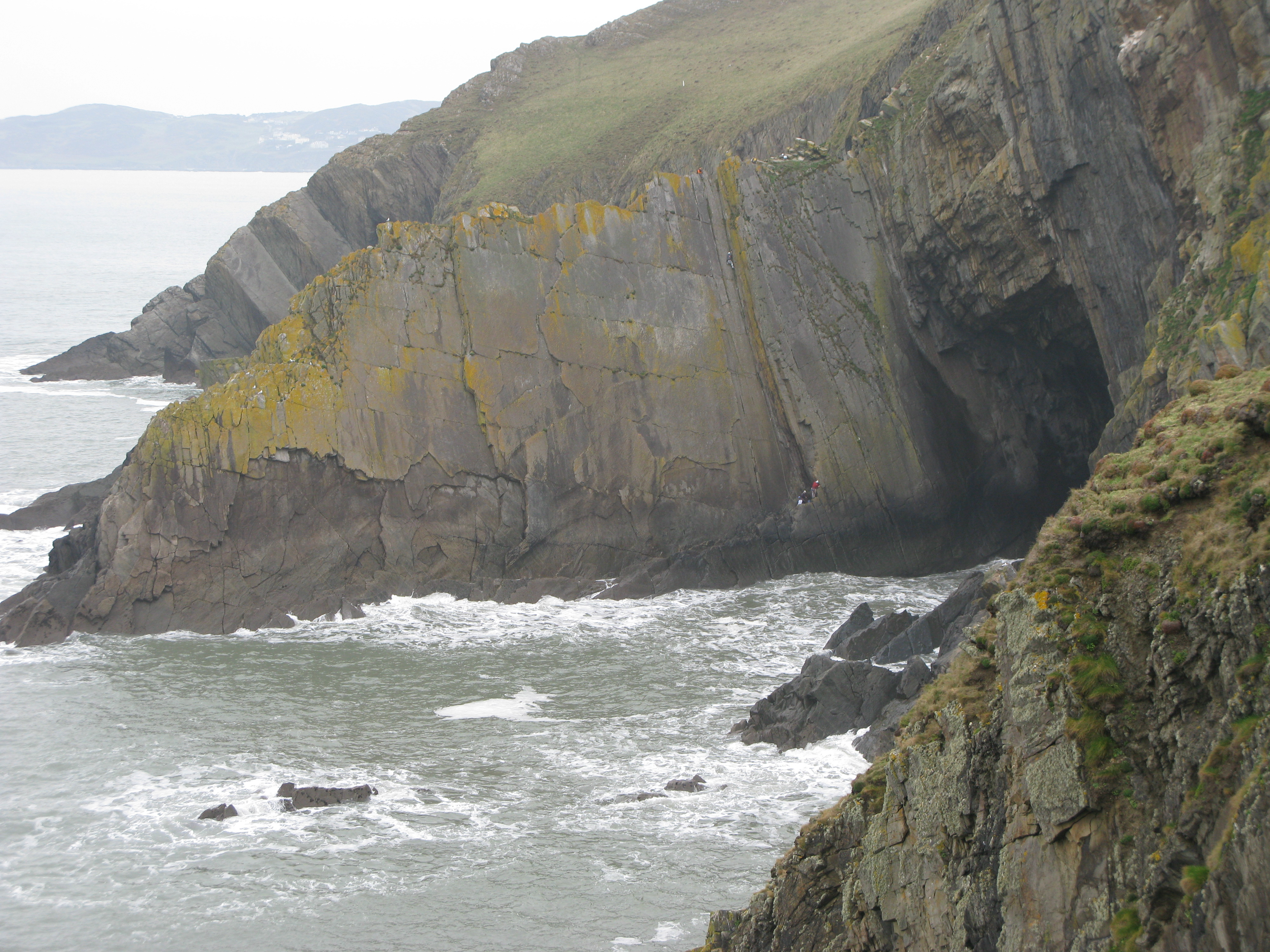
You have to get close to the Point and then start to climb down before you discover just how spectacular it is.
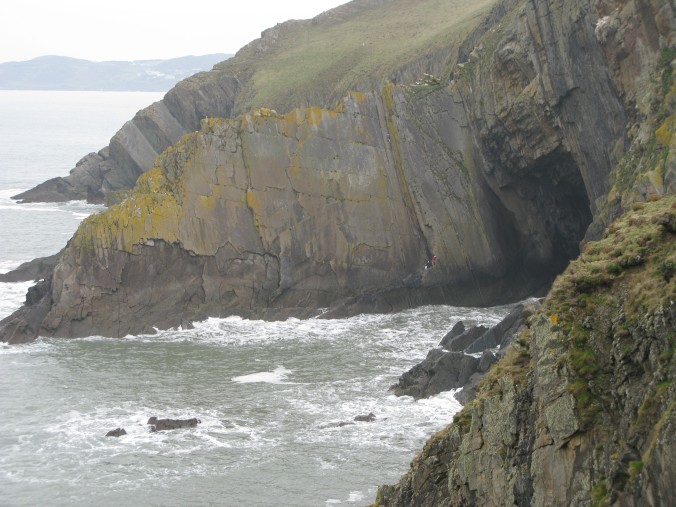
The sea and the weather whittle away at this coast hour on hour, day on day, year on year, century on century.

The climbers on the rock face are lost in the sculpture.

~~~

This is no place to be late at night in a westerly gale.

“. . . Because of the weather we intended to go in over the Bar for the night as it was too rough to venture on to Bude.”

It is approximately 12 nautical miles across Bideford Bay from Baggy Point to Hartland Point and another 12 nautical miles or so down an inhospitable, west-facing coast to the difficult entrance to Bude Haven.
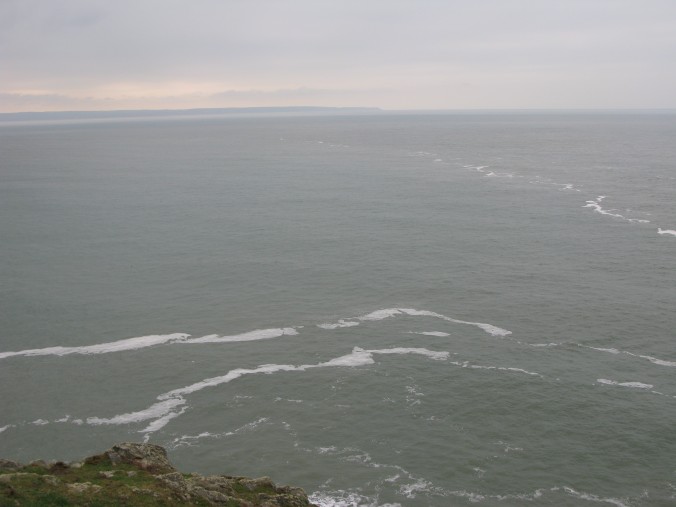
Better to make for shelter inside Bideford Bar and accept the twelve nautical miles from there back to Hartland Point as a cost worth bearing.

In noting the features of navigating the Bristol Channel  the Cruising Almanac states:

“There are races off many headlands in particular Hartland Point and Bull Point on the S side and St Gowans Head, Oxwich Point and Mumbles Head on the N, together with dangerous races, the Hen and Chickens and White Horses off the NW and NE of Lundy and also S of Lundy. Overfalls are widespread, sometimes in mid-channel and a short, steep sea sets up quickly with wind against tide . . .”

~~~

There are two footpaths from Baggy Point to Croyde.

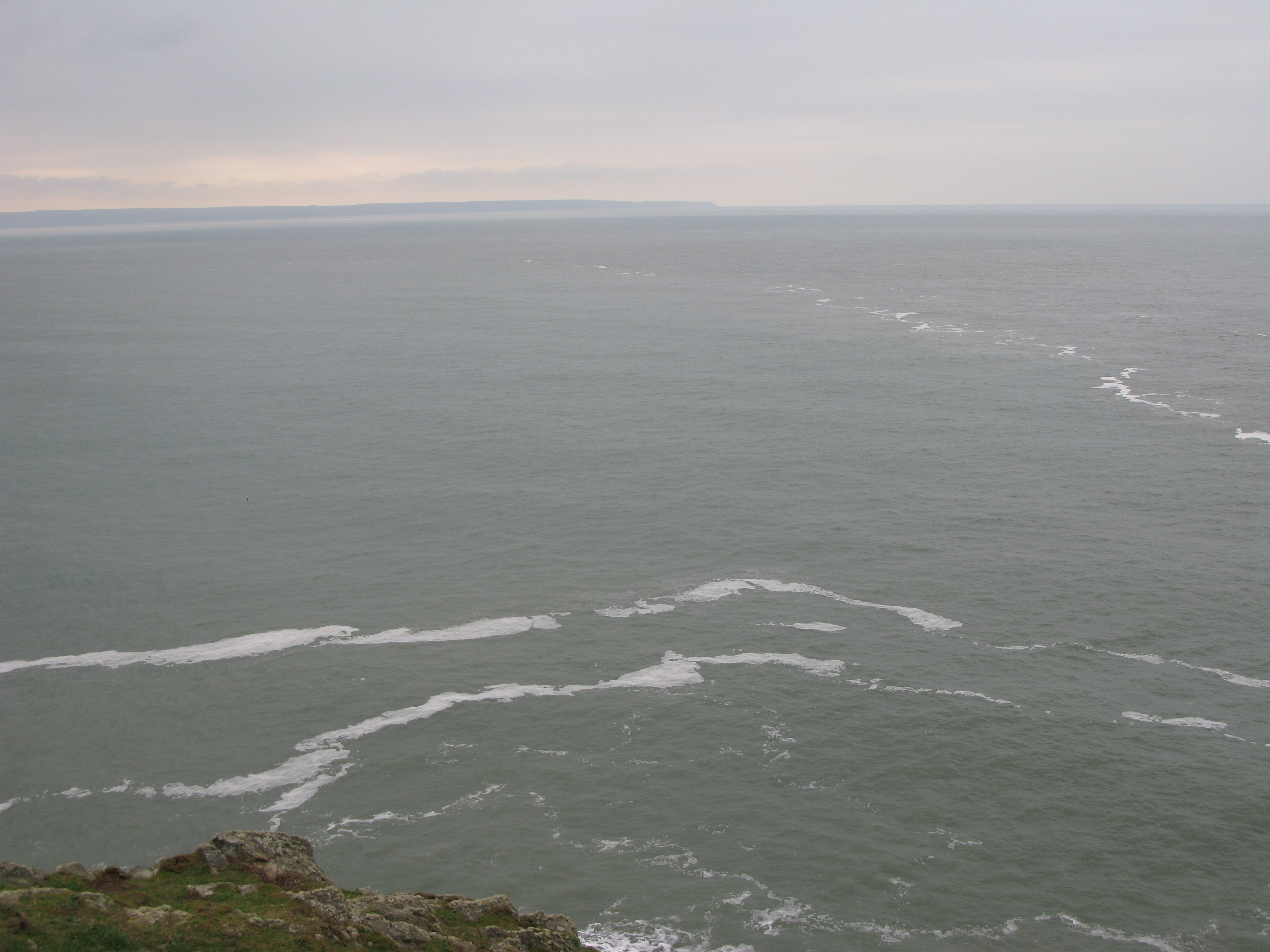
The lower one gives a perfect view of the Bay across to Bideford Bar.
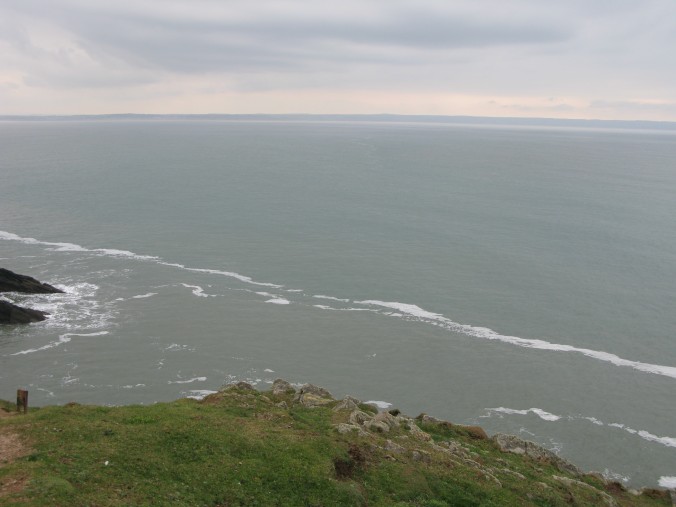
The Cruising Almanac again: ” Bideford Bar has about 1m (at LAT – the lowest depth at the lowest of low spring tides). Bar and sands are continuously shifting and buoys may be moved to allow for this. It is dangerous if a heavy ground swell is running. Oc Ldg Lts are moved to suit the fairway. If a sea is running on the bar a good rise of tide should be waited. Under bad conditions the entrance may be difficult and dangerous . . . The tide may be awaited in Clovelly Bay with winds S of W. . . 

“Approach: In thick weather make Downend or Westward Ho! and thence shape a course for Bideford Fairway RWVS with sph topmark Fl.10s NNW of Rock Nose, Westward Ho! . . .”
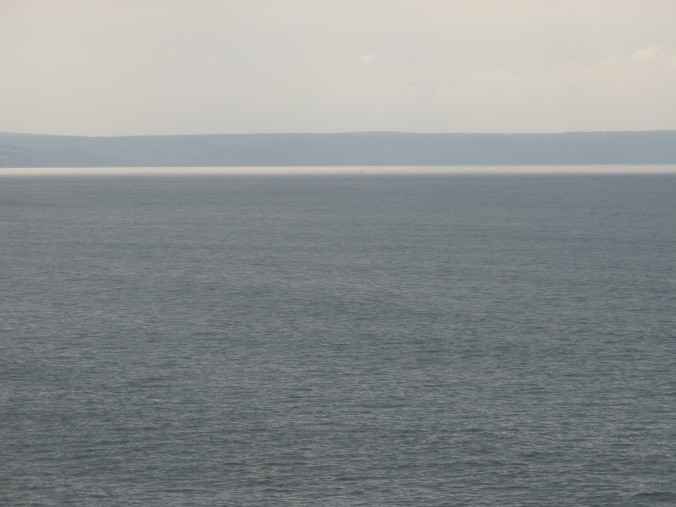
So there it is: in the middle of the thin line of sunlit water across the Bay, the Bideford Fairway buoy can be faintly seen . . .

. . . and somewhere beneath this Bay lies Ceres.

~~~

The others walk on and I sit for a while . . .

forget the photographs, forget the newspaper cuttings, forget the family stories, this is here and now.

She’s been down there for nearly 75 years . . .

. . . . and I am left wondering how the loss of a sailing vessel so long ago can be so deeply moving to someone who wasn’t even born then.

What was it about those ships?

~~~

But time it comes to ships and men when sailing days are past,

Even such as hail from Devon where they mostly build to last,

And her seams began to open and the Severn tide came through

And the water kept on gaining spite of all that they could do.

They did their best to beach her but they couldn’t do no more

And she foundered at the finish there in sight of Appledore.

And her bones’ll never flicker blue on any ‘longshore fire,

For she’ll lie there and she’ll moulder as an old ship might desire

And hear the vessels passing by, and dream about the past,

And the great old times in Devon where they built her once to last.

from The Ketch “Ceres” 1811 – 1936 by C.Fox Smith
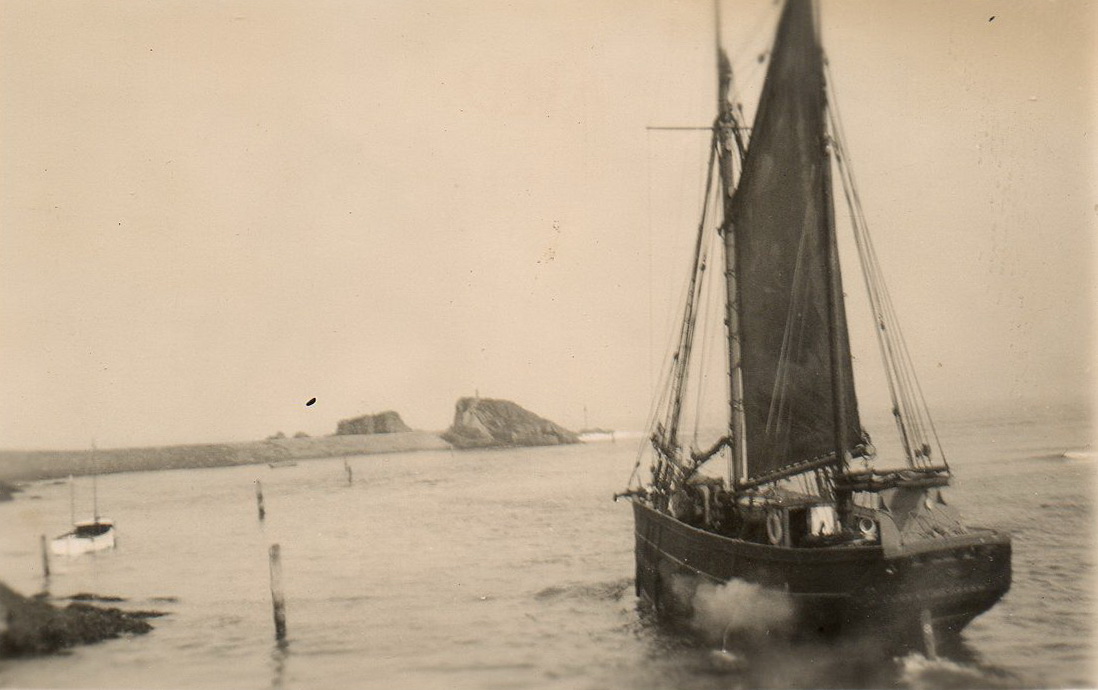
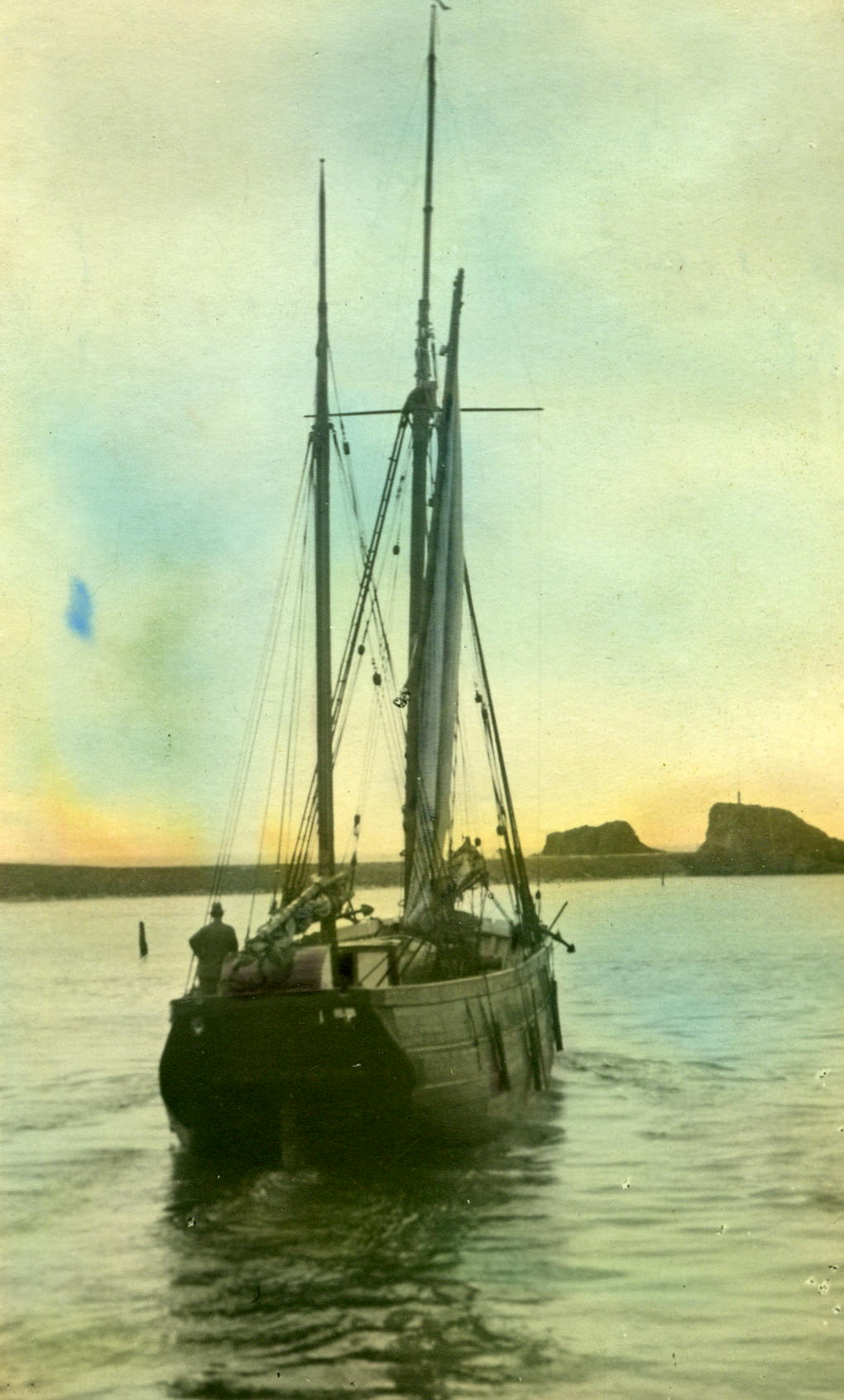
Ceres – putting to sea

~~~

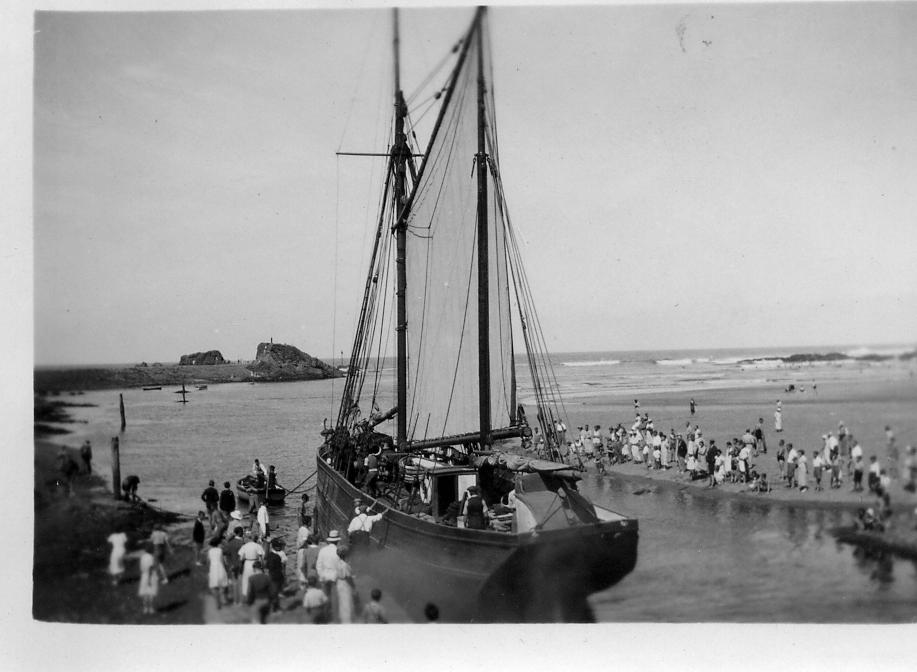
Watching the merchant ships leaving Bude must always have been a event

~~~

On the back of this photograph, my grandfather has written, “Can see her noble shape in this.”

~~~

~~~

From a series of recently rediscovered photographs that had lain pressed in a book for the past ten years.

For the previous sets hereherehere and here, for an overview of the harbour at Bude here

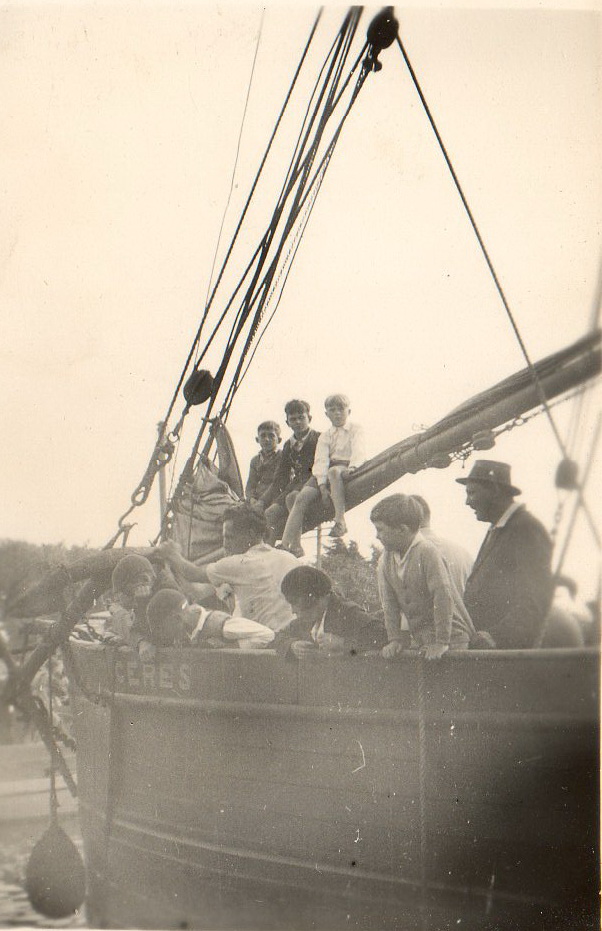
Ceres – between trips

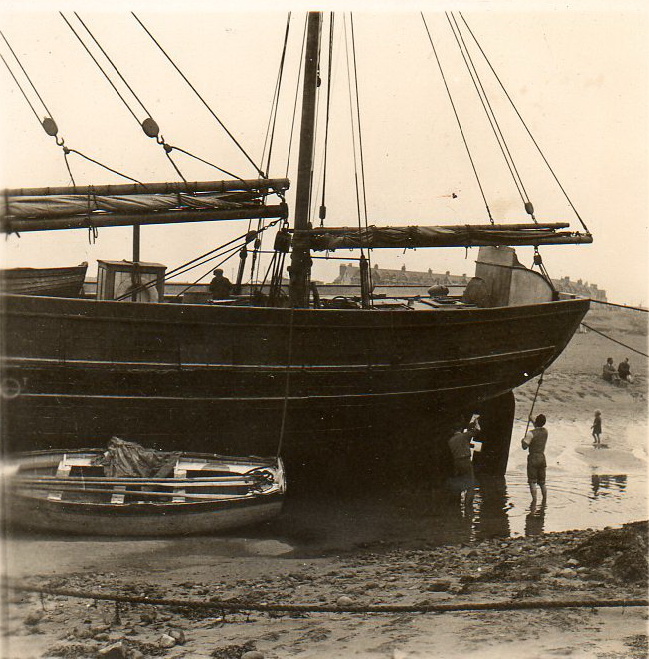
Taking advantage of low tide.

Enjoy the detail in this photograph – rudder, blocks, hobble boat, people on beach, men working.

“Mr Health and Mr Safety, all of these children gained from the experience.”

The definition is not so good in the photo, but the sentiment is.

~~~

From a series of recently rediscovered photographs that had lain pressed in a book for the past ten years.

For the previous set herehere and here, for an overview of the harbour at Bude here

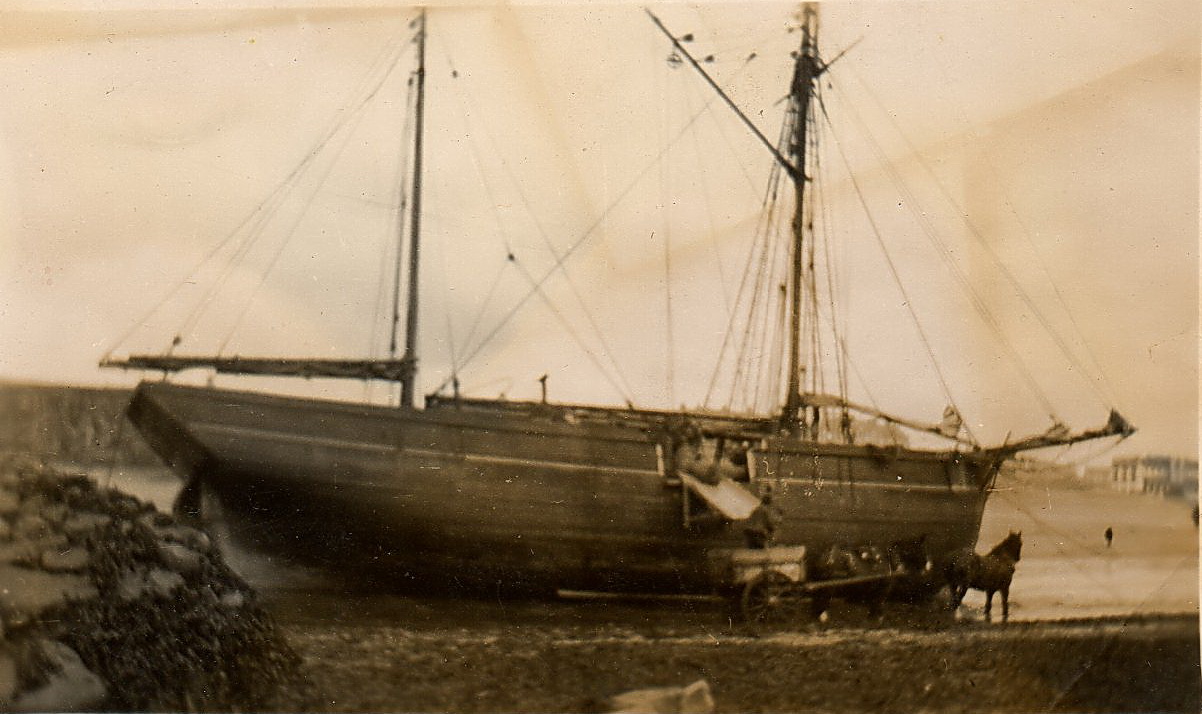
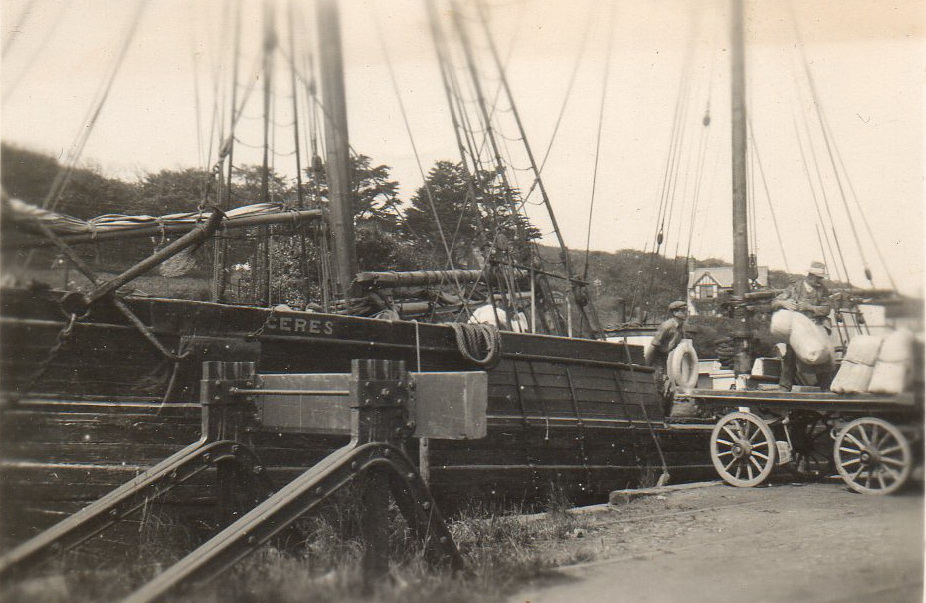
Ceres offloading

The turn-around had to be quick and slick between tides . . .

. . . with an eye on the weather

~~~

Horses worked better then vehicles on the beach, but . . .

~~~

. . . here, on the lower wharf in Bude Canal Basin, the trains are preparing to take over.

~~~

From a series of recently rediscovered photographs that had lain pressed in a book for the past ten years.

For the previous set here and here, for an overview of the harbour at Bude here

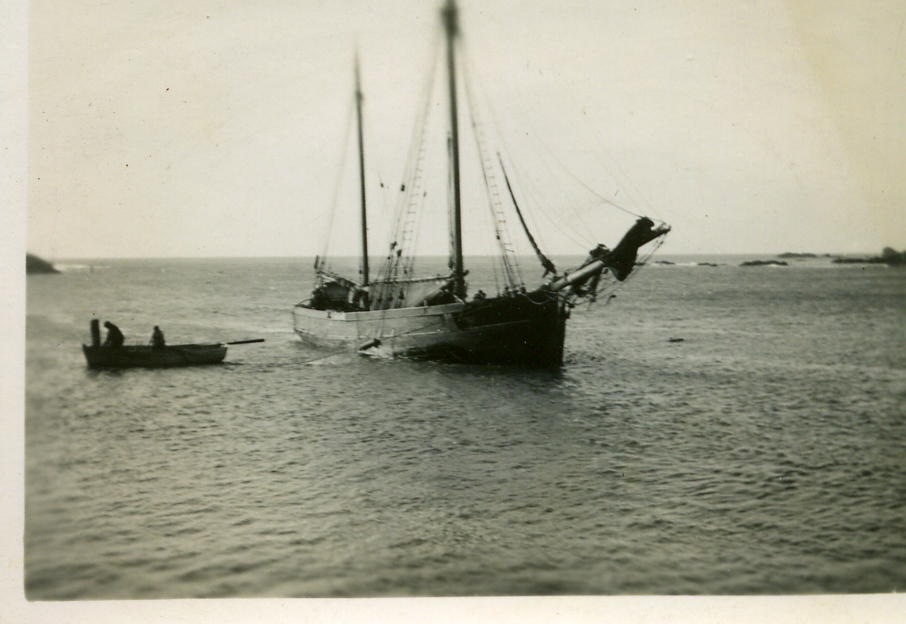
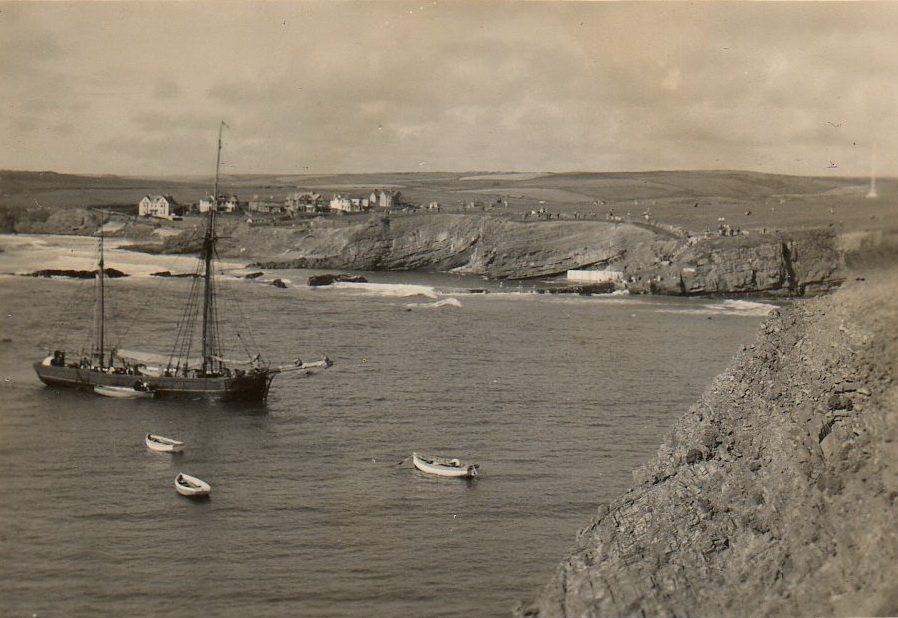
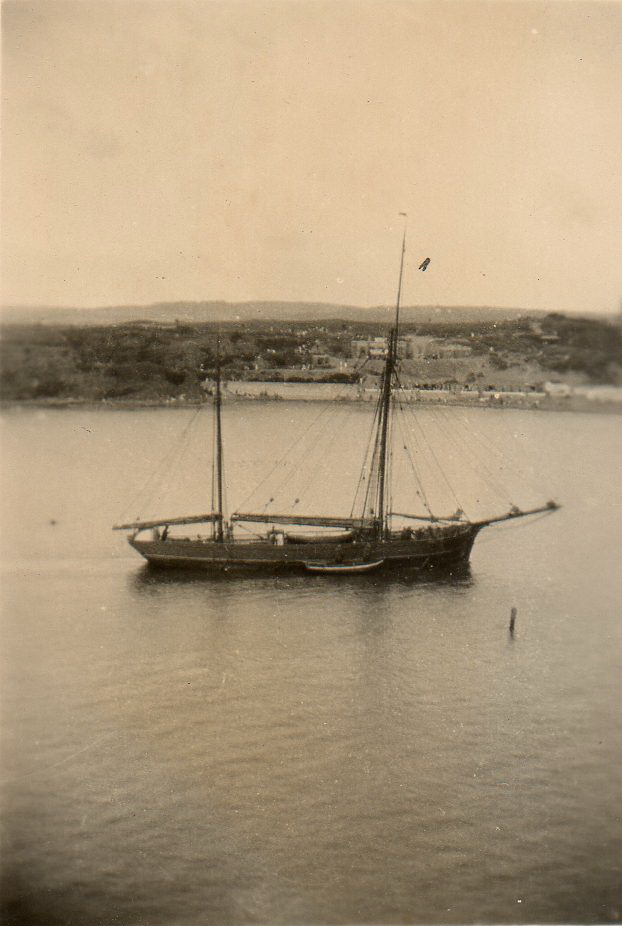
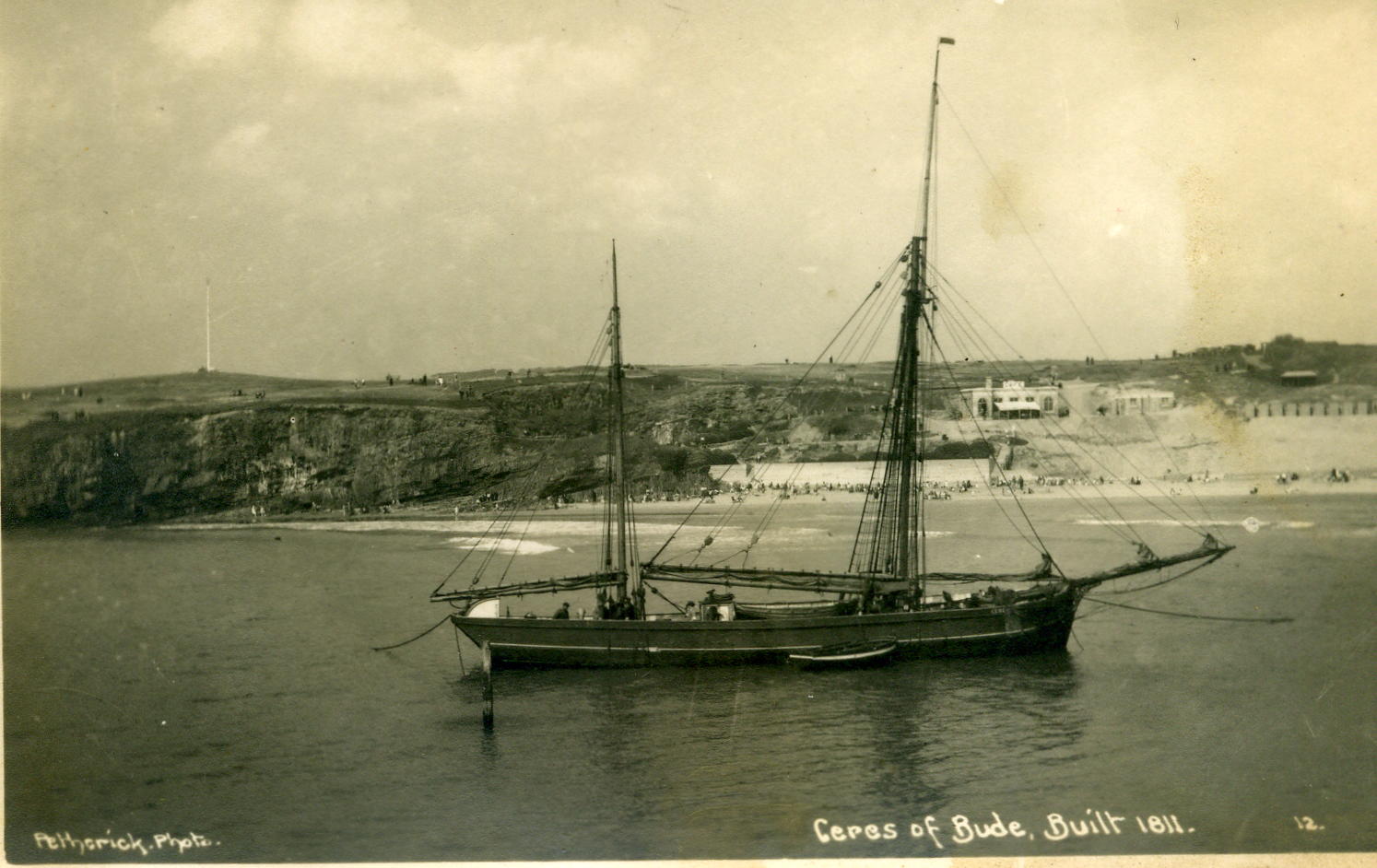
    Ceres at anchor

    These photographs were taken at full tide.

    A few hours later, she would be high and dry on the sand.

    The hobble boat taking a line to the mooring post

    ~~~

    ~~~

    ~~~

    ~~~

    From a series of recently rediscovered photographs that had lain pressed in a book for the past ten years.

    For the previous set here, for an overview of the harbour at Bude here