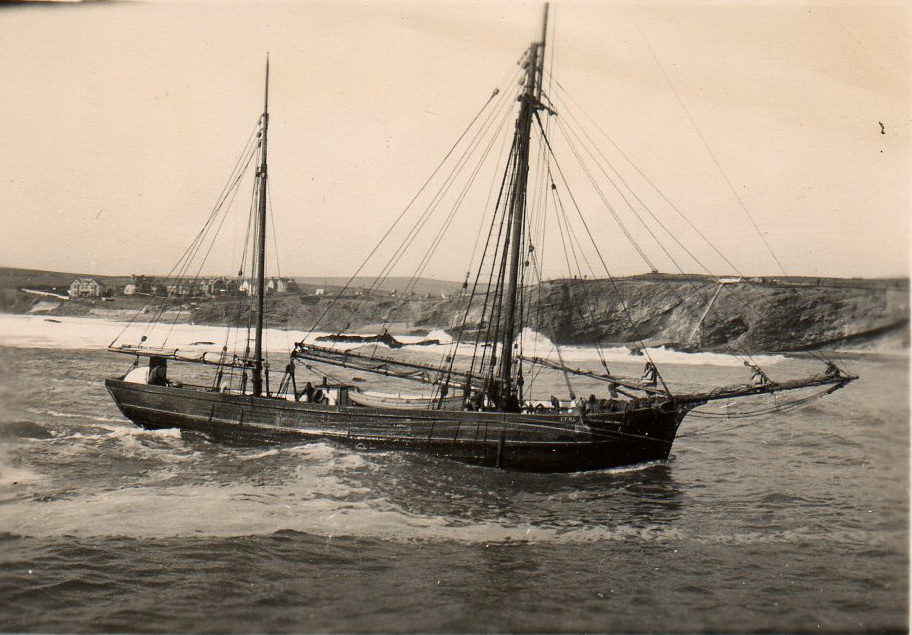
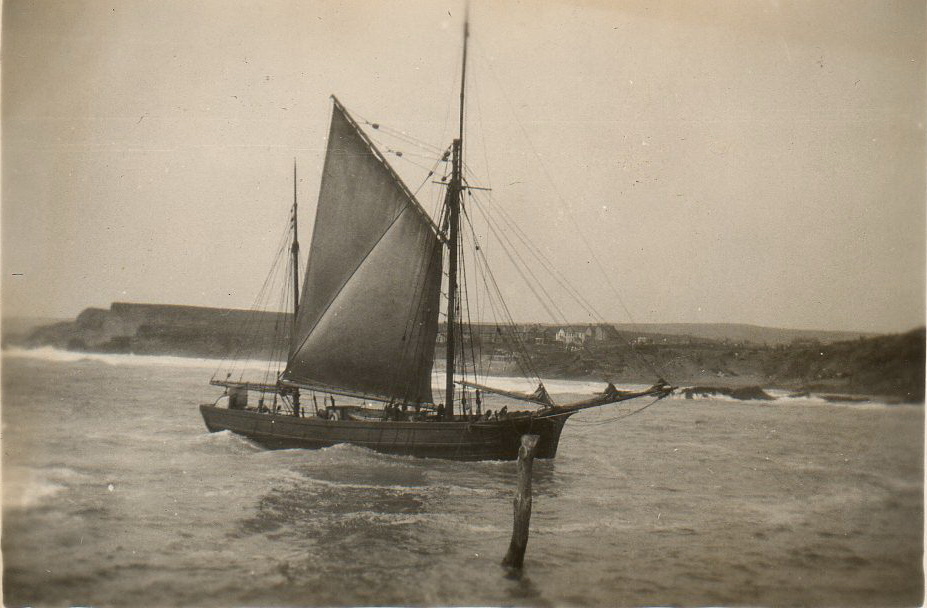
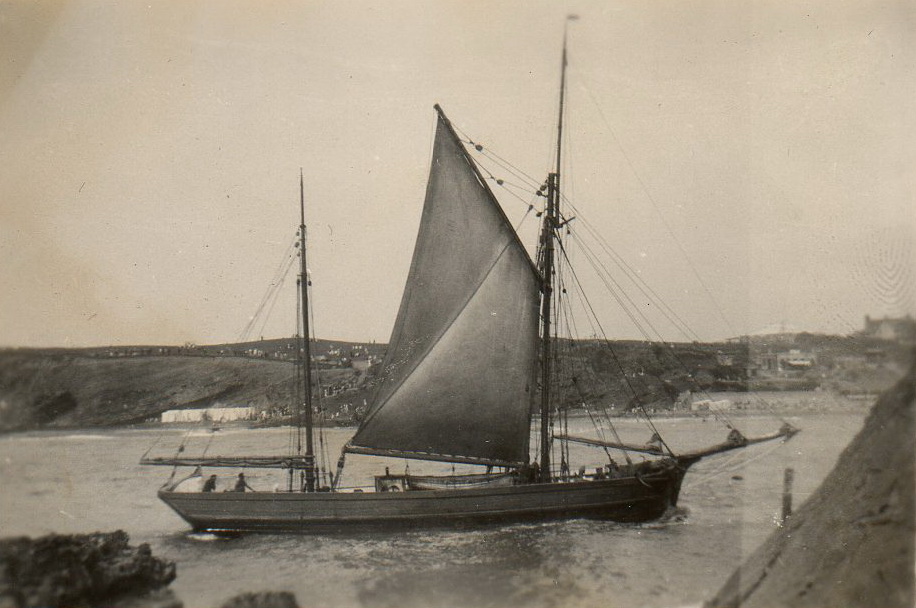
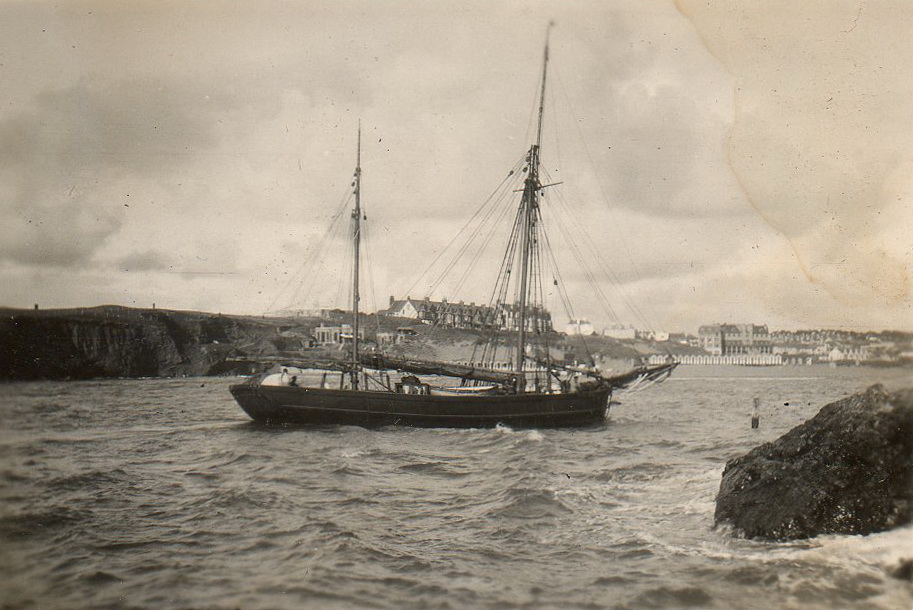
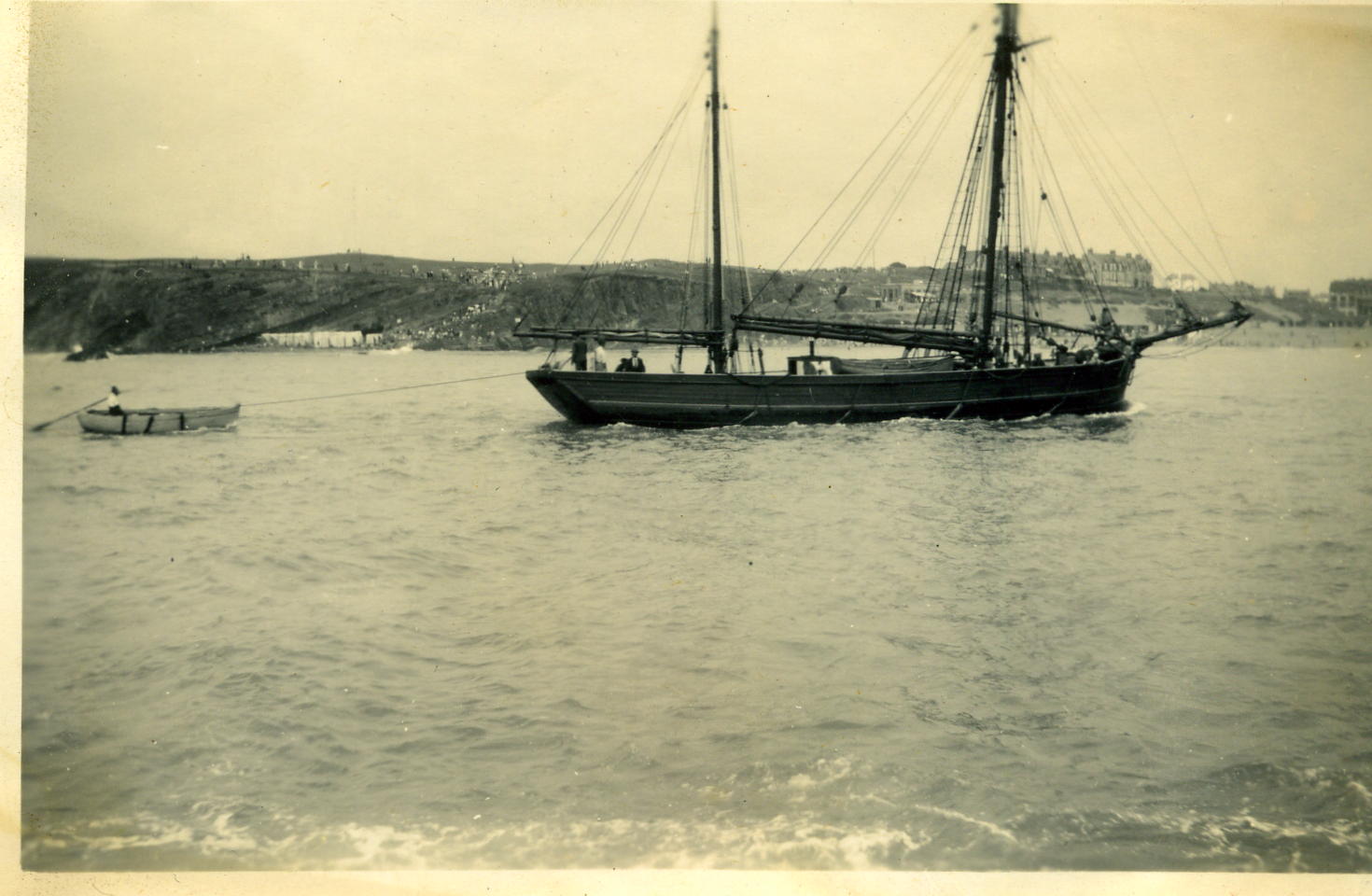
The ketch ‘Ceres’ entering Bude


Six pictures of Ceres found recently – pressed between the pages of an old volume.

Several years ago years, a sudden flood swamped the old leather suitcase they’d been lying in. They were all damaged – water-marked and curled. The flattening-them-out-in-an-old-book trick seems to have worked.

~~~

Here she is rounding Barrel Rock. A hobble boat is waiting just inside Chapel Rock

The crew are working hard, preparing mooring lines; the helmsman barely visible in the stern.

On another occasion, she enters Bude with her mainsail set.

Bude seawater swimming pool is to the right of the picture

By the size of the bow wave, the main seems to be helping the engine, perhaps on a falling tide.

With hobble boat in tow

~~~

There were several more old photos of Ceres in those pages.

I will group together and post them as a series.

On sailing a Folksong – Self-steering gear

Earlier in the year, Seb (Mischief) asked about self-steering gear on a Folksong. He was interested in a bracket to carry it.

I know he has now fitted a Hasler gear and has since sailed from the Tamar to Portsmouth with it, so I hope to hear how he got on.

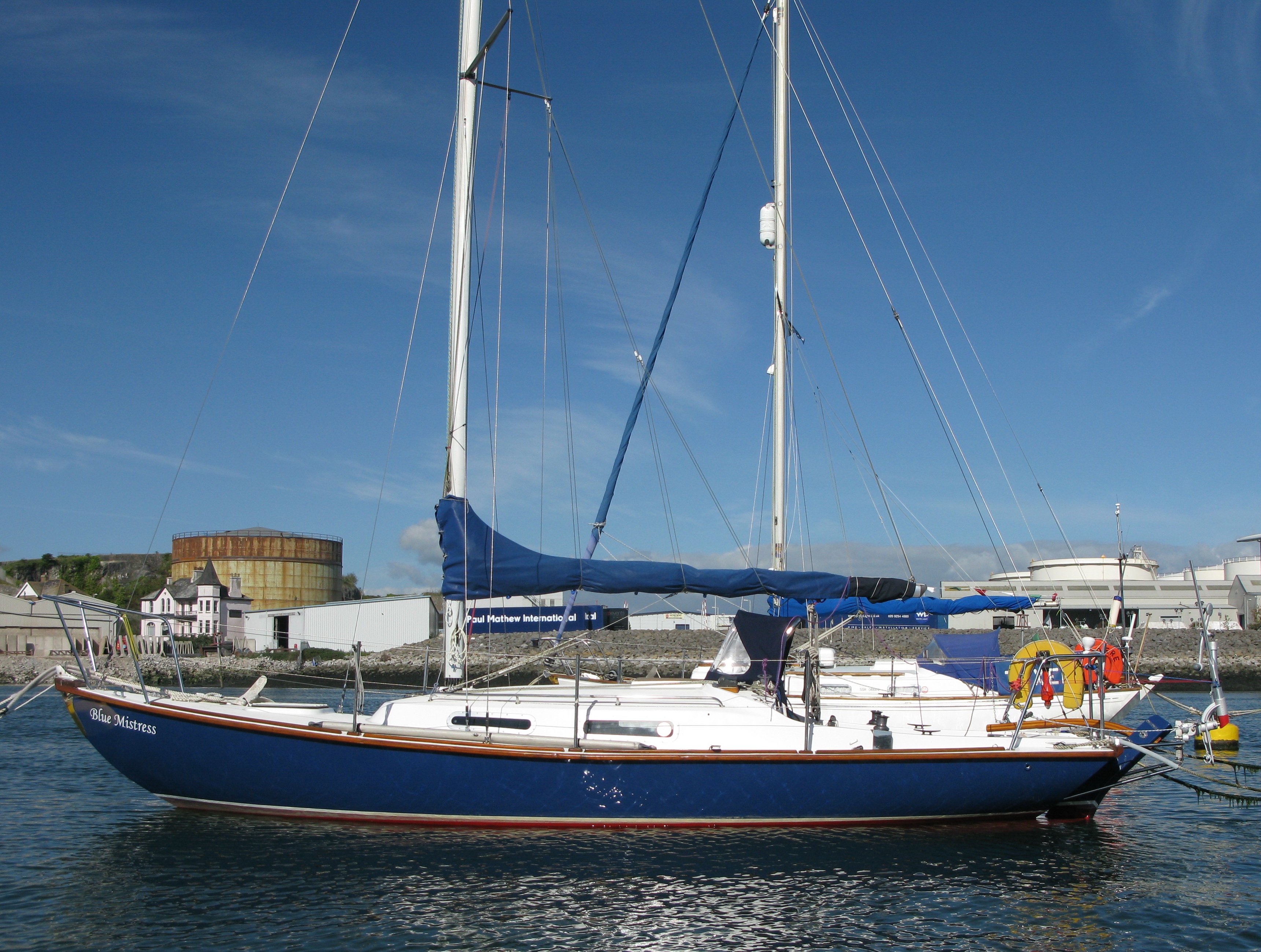
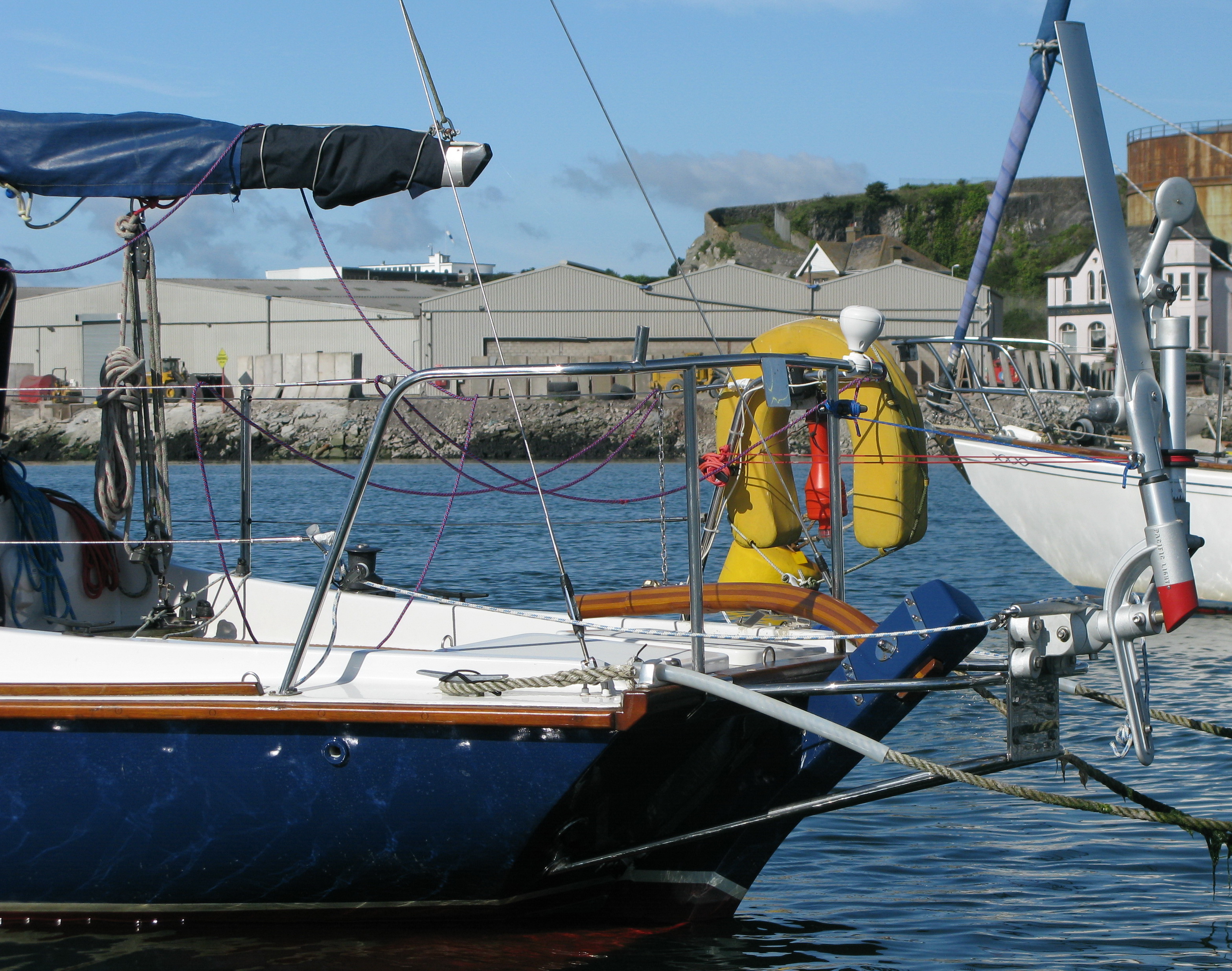
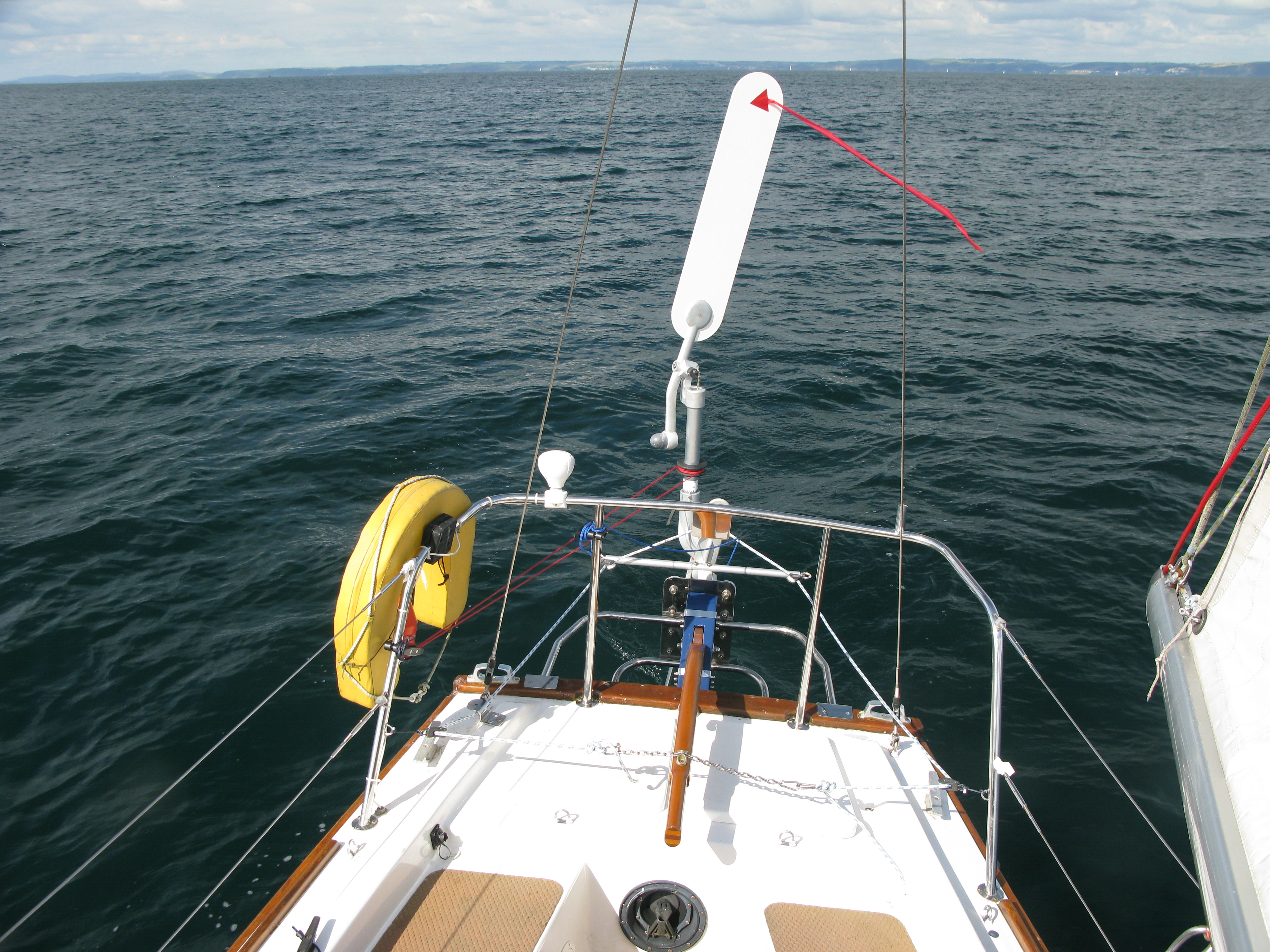
In the meantime, this is the gear I picked for Blue Mistress – the Windpilot Pacific Light.

One of the reasons I like the Folksong is that there are no predetermined class rules. You have to make up your own mind. So, having  decided which self-steering would suit me, then comes the problem of how to mount it on the stern with a rudder post that stretches as far aft of the transom as that on the Folksong?

This is what we eventually decided:

The Pacific Light is relatively simple to fit on most boats and Peter Foerthman of Windpilot is immensely helpful. However, there are always problems to overcome in any project like this. If anyone with a Folksong would like more detail, let me know.

There is a learning curve. I have already discovered a great deal about sail balance using the gear . . . but there is a long way to go, and, as only way to learn  is to get out there and do it, I am going to keep Blue Mistress in the water through the winter and stick at it.

On sailing a Folksong – Ossian

Ossian

Ossian

Eddie writes:

“Only had the boat 7 months, previous owner had her based at Loch Melford near Oban, spent the first three months of the year traveling backwards and forwards every weekend getting her ready for the water.

Once launched we sailed around to the Loch Crinan then through the canal to Ardnishaig  then 54 NM dash down the Clyde to our home port of Irvine.”

As you know, I’m biased – but what a good-looking boat.

I’m particularly interested in the furling headsail – difficult to get my head round the ease of use against having a choice of sails.

As I get older, the prospect of the plunge forward becomes less appealing – on the other hand . . .

On sailing a Folksong – A ‘come-in’ for Blue Mistress

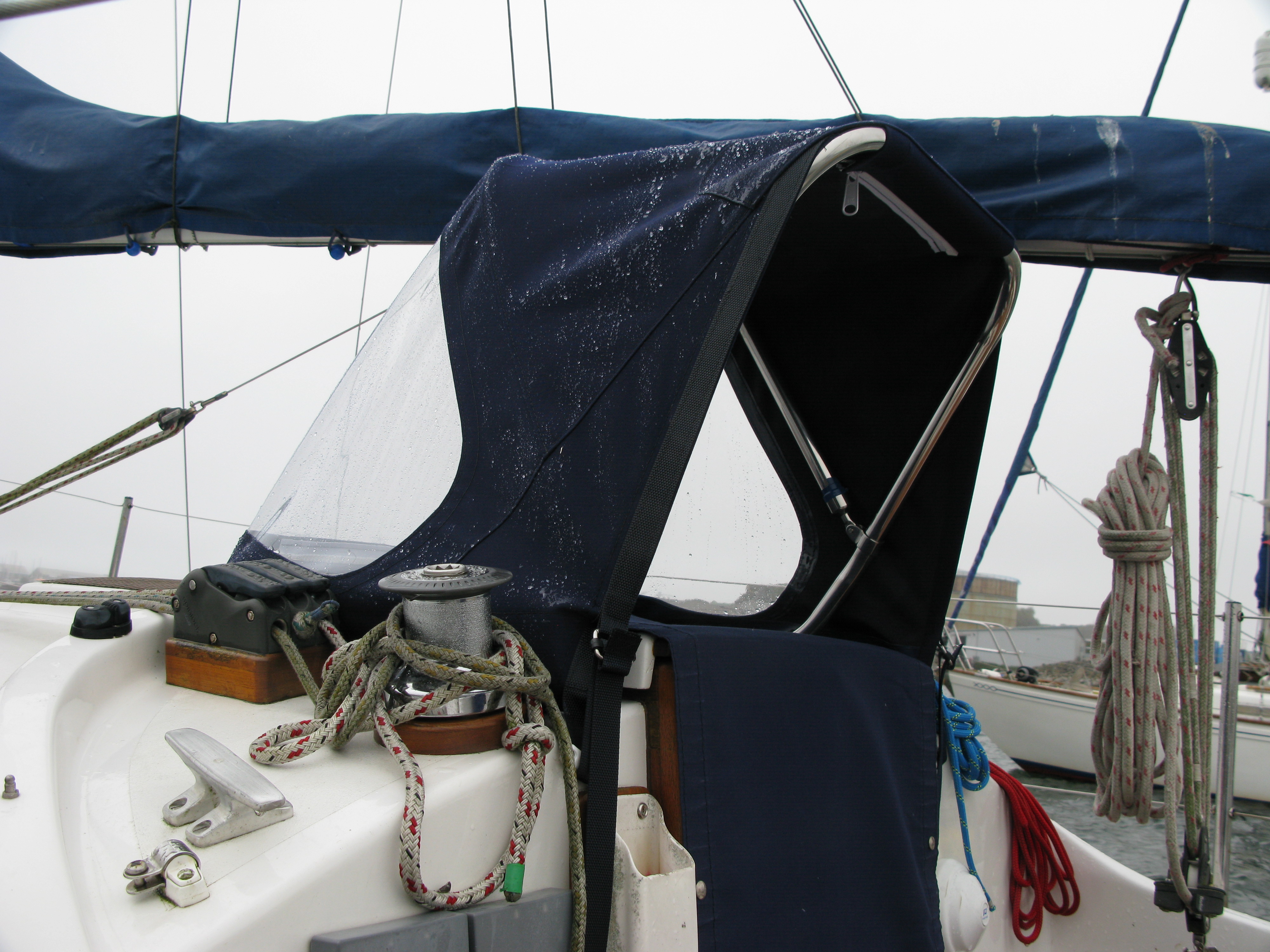
I have had a small ‘come-in’ fitted on Blue Mistress.

This is not the large, curved, ‘extra-room’ spray-hood seen on most modern cruising yachts but a small, upright pram hood over the companionway. I believe this design is called a racing spray-hood, but I prefer ‘come-in’ – (a description I came across in a book written in the 1950’s),  for the comfort of the name.

I can now sit in my favourite spot out of the weather – on the companion way sill with my feet on the engine housing and a good view forward.

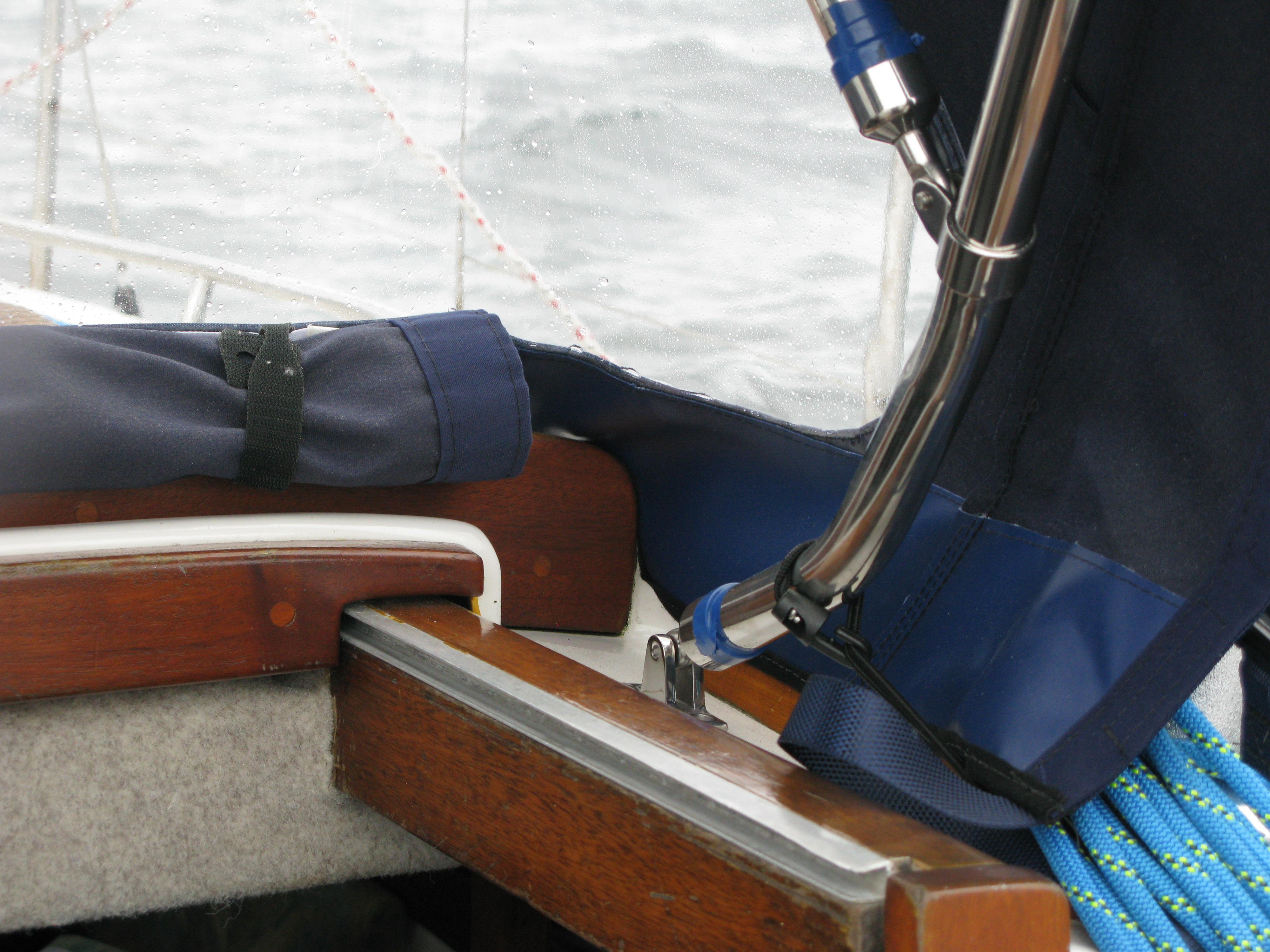
The frame is well-constructed and robust (Dicky B Marine). It is designed to fold flat onto the deck with an angle to clear the wooden bar at the front end of the hatch. In the upright position, it is secured firmly onto the bulkhead either side of the companionway with straps.

The canvas zips onto the frame and is attached to the aforementioned bar with studs – it can be shipped in a trice. The original design had the attachment further forward to give it an elegant slope and also create some room to stow a camera etc. This would have involved fitting a new batten across the hatch housing. However, bolts through the deck here would have stopped the hatch sliding forward. In the event,  it has been kept as small as possible.

The opening is just too small for me to enter and leave without having to push the trailing edge forward about six inches. Initially that meant lowering it completely every time I went below. The problem has been solved with two short lengths of shock cord stretched from the angle at the bottom of the frame to the point where the retaining straps are fastened. These straps are very secure but it is fiddly to keep releasing and tightening them. The shock cord does the job perfectly.

I particularly like this design because it leaves the winches and lines clear. I can go forward easily without tripping over it.

Also, the window is big enough not to block the view forward from the tiller.

. . . I’ve yet to trial it in a gale

. . . and get used to the interruption to the lines of the boat!

From Steeple Point – coincidence

This afternoon I finished reading John Howlett’s book – ‘ Mostly About Boats’.

In the last chapter, acknowledging the experience at his disposal – (a lifetime sailing and having designed a number of his own boats), he describes the boat that he would now build for himself. One that he could sail single-handed if need be.

Remember, he was writing in 1956, when he was in his sixties.

He gives a sail plan:

I looked at the plan and thought, *Surely, I’ve seen a boat with a sail plan like that recently. . .”

From Steeple Point – character and individuality

I found John Howlett’s book in my favourite second-hand bookshop – Books by the Sea in Bude.

‘Mostly About Boats’ could have been the title of this blog.

Three pages in: “We are so controlled and directed and generally bedevilled from the cradle to the grave, that any activity engendering personal initiative and self-reliance – qualities in serious danger of extinction, is surely laudable in itself . . .”

I’m beginning to like this man.

Talking of a trip to Flushing and the Scheldt, “. . . we were so fortunate as to see a Schevingen Bom. Nearly as broad as she was long and completely rectangular, save that the angles were rounded off, she was immensely strong, and was built to run in anywhere on the sands, where she was loaded or unloaded from carts at low water. Like so many things of character and individuality, they are now extinct.

. . . and about cruising: “Escapism? Well, that is an easy taunt to throw at those who ignore the values of the herd; but if we seek contentment and, perhaps, some enlightenment on those same values, here is a road for those who will take it.”

. . . and then a sentence that resonates: “The flood of man’s ingenuity has overwhelmed his power to create beauty.”

I looked at the short biography of the author on the cover – Mr Howlett, the Editor of the Cruising Association Bulletin, who calls his book a “hydrobiograpy” . . .

The date of publication? – 1956.

He must have been more or less the same age as I am now.

What would he think of 2010?

For love of a boat – Kalkan 2010

The purpose of this series is to observe the small, traditional working boats that are still out there.

And to do so without being too sentimental – times change – the world moves on.  Most of the boats I am looking at will have disappeared within a generation.

However,  it’s not just the boats that are disappearing.  There is a human element to this.

Local skills that have evolved over many lifetimes are being lost in favour of shorter-term technical skills designed to serve a blander, more uniform world – one that demands quicker and quicker solutions. I am not knocking  technical skills – I am using their product as a write.  However, the fact is that within a remarkably short time (years? no . . . months) this laptop will have been superceded by a more technically advanced unit. I will never really get to grips with this one because it will not last long enough for me to master it. It’s the speed (and, often, shallowness) of this continuous innovation and change that is the problem.

For each one of us, trying to keep up with change puts a permanent pressure on the deeper human values that bind individuals, families and communities. We have to continually adjust. The pressure will always be there. It’s the failure to acknowledge it that’s the mistake.

~~~

For example, this boat moored in the harbour of Kalkan.

How many men did it take to build it – one, two? How many men fish from it – three? How many people will it feed? Not many.

It has a small engine, but the thole pin positions would indicate a time before the engine . . .

Four nets are ready to set . . .

In the early evening, two men come out to lay the nets – one to work it, one to man the oars . . .

Early the following morning, they come back to bring raise them again, bringing an extra crew member . . .

Now there is now one man to raise the net, one to clear and stow it, one to steady the boat with the oars . . .

~~~

I hope these men will forgive my intrusion on their work, but their’s is part of a story that runs deeper than my images show. Like many people, they live in an area where the local skills to build a boat, to work with it and to make a living for their family is becoming less viable.

Tourism is now sweeping along this coast, and with it an infrastructure of villas, apartments and restaurants plus the inevitable increase in living costs. Local craft is caught up in the need to satisfy a universal demand.

I appreciate the economic benefits of tourism. For many, it is a good thing. A lifestyle becomes affordable that was never there before. But deeper down there is surely a change of identity as local attitudes are reshaped to cope with the new commercial reality.

As far as fishing is concerned,  the tourist industry needs all the fish it can get to cater for the fickle tastes of  the visitors – but on such a scale that the viability of the smaller boat is compromised.

Now bigger boats with their enormous nets moor snugly in the same harbour – travelling further, catching more fish, more often.

This is a worldwide phenomenon – the number of places where small scale fishing is still viable is decreasing, and with it the boats and the skills of the boat-builders. It is not necessarily that people find it a dissatisfying occupation, it is because it is more and more difficult to make a living from it.

I wonder if the young man on the tiller will be available next year to help the gentleman (his grandfather?) . . . or will he like so many others be swallowed into the tourist industry?

If I’m sentimental, it’s because the character of those that built and worked them are reflected in their boats – together with the coast they serve. I remember admiring such men when I was a child. Perhaps they still exist here. They are certainly less in evidence. As I say, priorities have changed now and with them a whole set of attitudes.

The friendliness, hospitality and sheer goodwill of those we met in the Kalkan were outstanding. We really enjoyed our time there as we have in so many parts of the Mediterranean and Aegean.

I wish these men in their fine boat good fishing.

~~~

For the origins and full set of images in this series, here.
On sailing a Folksong – Betsy

The last I heard of Betsy, she was fitting out for a trip from the Algarve to Lisbon.

I look forward to hearing how they got on.

~~~

In terms of maritime history, this is a coast of great importance, the early Portugese navigators leaving a legacy that is still relevant to us today.

Looking through the links, I came across this report – The Wreck Report for ‘Hantoon’ and ‘Rothesay’ 1882, which occurred some 50 miles north of Cape St Vincent. Although it doesn’t compete with the early use of astronomical tables for navigation (or even events like the Battle of Cape St Vincent), for those  interested in seamanship, particularly where the Collision Regulations are concerned, it’s worth reading – and remembering even though it happened over a century ago, it could have been yesterday.