We sailed round to The Yealm thinking, if we got it right, we could have lunch in Newton Ferrers. I wasn’t familiar with the river and certainly not sure about the tide – a high spring tide which would still be ebbing when we got there. The wind was from the west.
Leaving Oreston just after the top of the tide, we made fast progress even though the wind was light.
There is a wind level – low Force 2-3, when Blue Mistress‘ weight and shape tell against her when compared with less heavily keeled boats. A couple of yachts passed us in style.
We enjoyed the sail, boiling the kettle and making tea, talking of this and that.
However, rounding Great Mew Stone with plenty to spare, we had to concentrate as we headed into Wembury Bay on a dead run, the genoa goose-winged to port.
There seemed to be more wind here and we occasionally surfed as the sea and wind piled up against the tide pouring out of the Yealm. The sun reflected off the tops of the waves and boats not too far away disappeared hull down, to rise immediately on the next wave. Several boats were motoring out from the river, lifting their bows and showing their keels, as they worked into wind and sea.
We followed a boat ahead who seemed to know where she was going and watched as the foresail came down and she disappeared into the narrow entrance.
Our turn next. Not wanting to risk any sail inside, we lowered the genoa first, Charles negotiating the tricky task of keeping it inboard. Then into the wind, momentary chaos and the main came down. Then, boom secured with mainsheet, a few minutes of grabbing, rolling, hurriedly tying flogging canvas – a less than neat job (below) but good enough on a moving deck.
We motored past the bar, watching the tide flow round the two port hand buoys before following the leading marks across the river, then through the many moorings to the first pontoon.
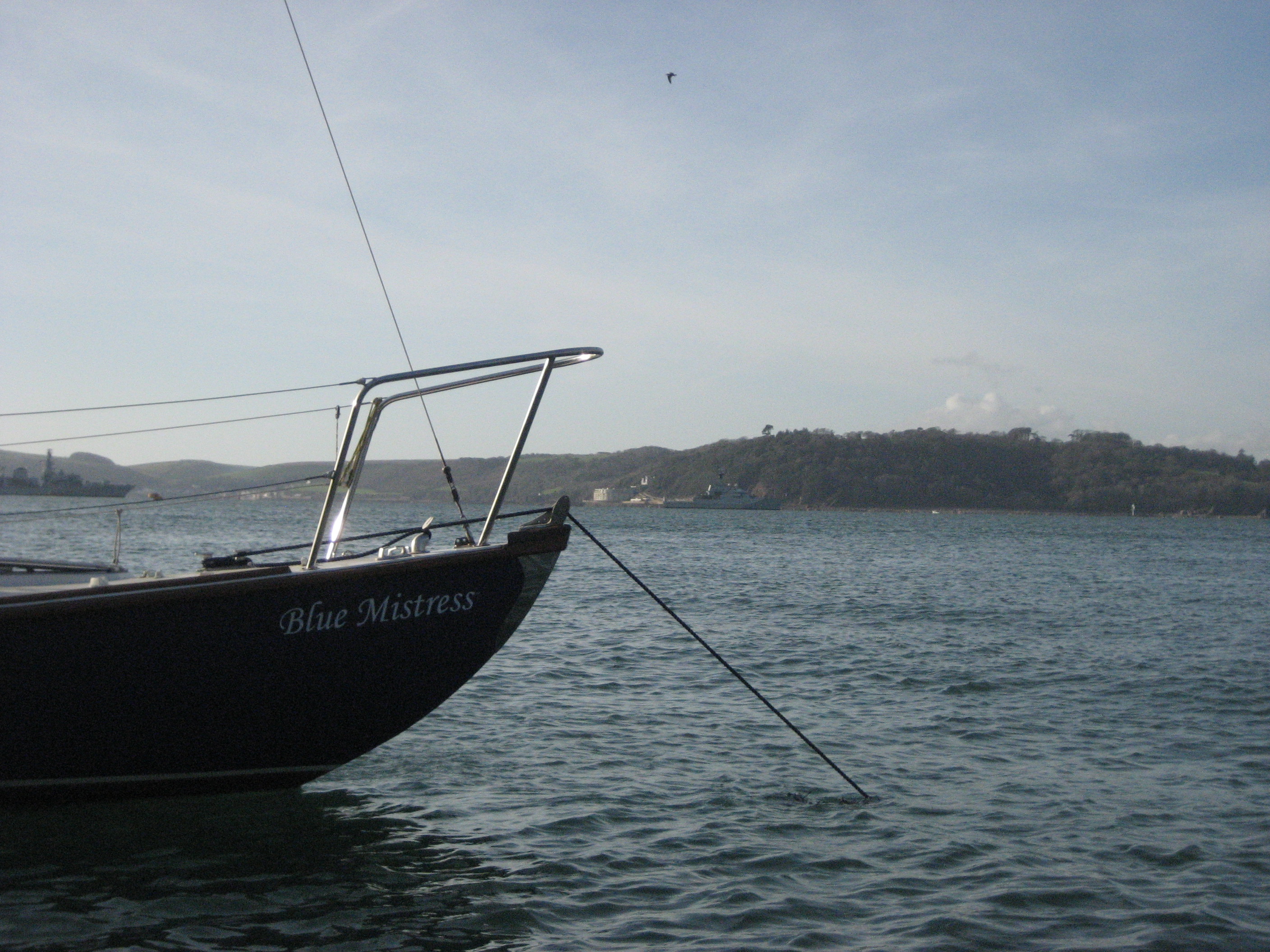
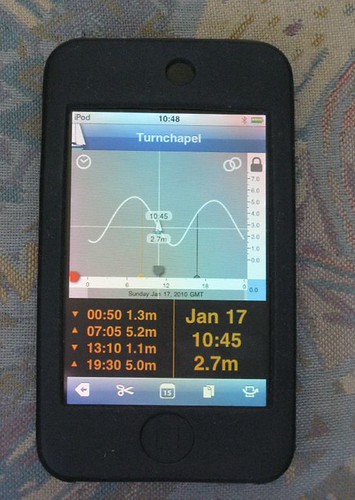
Choosing the outside of the pontoon to avoid the possibility of rafting, we accepted the weight of the tide would hold us against it. I hadn’t bargained for just how strongly it would hold us. The direction and force of the outgoing tide can be seen in the image below. Mooring lines were almost superfluous. Getting off would obviously be interesting – but first thing first – lunch.

It was good too -:)
It was about 1400 when we got back. Low tide at The Yealm entrance was 1500, giving 0.8 m clearance above LAT, enough for us if we kept to the narrow channel.
As expected. the weight of the tide was still holding the boat against the pontoon, but it had slackened enough for the two of us to push the boat off and move our large round fender to the starboard quarter. Removing the mooring lines had no effect. A combination of heavy push with boat hook at the bow and gentle astern on the engine with the tiller to port, brought her quarter onto the fender and her bow away. Briskly forward on the throttle and we left the pontoon headed upstream looking for space to turn – briskly because there is a certain point when the tide will catch her and she turns downstream whatever I do – in this case it would have been into the cruiser moored astern of us.
The ferryman had mentioned that they would be playing cricket on the sand bar today to celebrate the particularly low spring tide. The short entrance to the river is very narrow, a few yards wide, rocks on one side, sand bar on the other. The light surf was clearly visible on the exposed sand bar as we crossed the river towards it.

Yealm sand bar – Great Mew Stone behind
There were yachts moored in Cellar Bay as well as many dinghies on the beach. People were on the sand bar – the whole area a hive of activity.

Yealm sand bar – exposed at low spring tide
A few minutes later we were through the entrance into an altogether different sea to the one we had met in the morning.

Yealm entrance – the extreme right hand yacht is in the channel.
Sailing close-hauled across the Bay towards Great Mew Stone, we noted the exposed Inner and Outer Slimers, tacked across to clear the Western Ebb Rocks, tacked again before we reached them, cleared Mewstone Ledge and eased away onto a close reach across to Cawsand. Then home on the incoming tide.
It was one of those days. No broken records, no prizes, just a great day sailing.









 Beyond Steeple Point